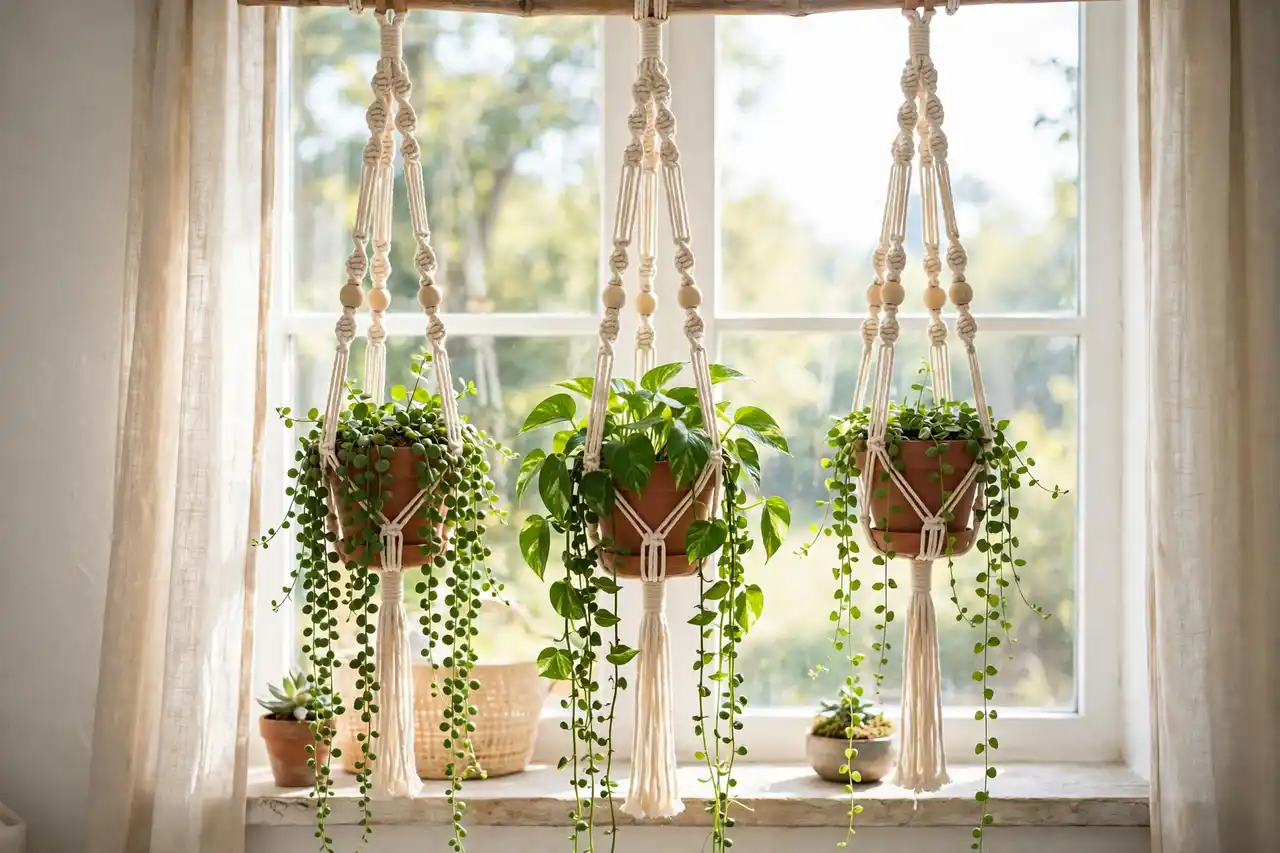
Macrame plant hangers turn ordinary pots into beautiful hanging displays, and they are one of the most useful macrame projects for plant lovers. A well-made hanger holds a pot securely, shows off trailing leaves, and adds handmade warmth to any bright corner.
A helpful companion is how to start digital art in 2026, which shares the same focus on color, texture, and careful handwork.
This guide covers choosing cord and pots, learning the essential knots, sizing a hanger correctly, and hanging it safely. A related craft is acrylic pour painting.
What Is Macrame Plant Hangers?
A macrame plant hanger is a net of knotted cords that cradles a pot, with a loop or ring at the top for hanging from a hook or ceiling mount. Designs range from simple four-cord nets to elaborate panels with beads, fringe, and decorative knots.
Plant hangers suit trailing plants especially well, since leaves cascade over the cords and soften the structure. They also save shelf and floor space, which makes them popular in apartments and small homes across the United States.
Once the basics feel comfortable, a related craft such as colored pencil drawing can show how similar skills transfer to a new medium, and it often sparks ideas for your next project.
Tools and Materials for Macrame Plant Hangers
Plant hanger supplies are simple and affordable, though pot weight and hanging safety deserve careful attention.
- Cotton macrame cord, 3mm or 4mm for most pots
- A metal ring or wooden ring for the top hanging loop
- A pot with a saucer or a liner to catch water
- Sharp scissors and a measuring tape
- Wooden beads for decoration, if your design includes them
- A sturdy ceiling hook or wall bracket rated for the pot weight
Always check the weight rating of hooks and ceiling mounts, since a watered pot weighs far more than an empty one. Buy the basics first and add specialty items later, once you know which parts of the process you enjoy most and where your current kit falls short.
Macrame Plant Hangers Techniques to Learn First
Four knot skills cover most plant hangers, from simple nets to decorative designs.
Mounting and gathering
Mounting attaches cords to the top ring with lark head knots, while a gathering knot bundles cords neatly below the ring. Count cords carefully and keep tension even so the hanger hangs straight instead of twisting. A related craft is charcoal drawing techniques, where balanced setup also prevents lopsided results.
Square knot net
Square knot nets alternate knots across cord groups to form a cradle that grips the pot. Knot rows at even intervals, test the net around the pot often, and keep the net snug but not so tight that it distorts the pot shape.
Spiral and decorative knots
Spiral knots twist cords into decorative columns, adding visual interest between net sections. Use spirals sparingly on plant hangers, since too much decoration can weaken the cradle or distract from the plant.
Finishing and fringe
Finishing gathers cords below the pot into a knot, tassel, or fringe, securing the pot from below. Trim fringe evenly, check that the pot sits level, and test the hanger with weight before hanging it permanently.
Step by Step: Your First Macrame Plant Hangers Project
A classic four-cord net hanger is a perfect first project, since it teaches mounting, netting, and finishing in one piece.
- Measure your pot and calculate cord lengths, allowing generously for knots.
- Mount eight cords on a ring with lark head knots, giving sixteen working cords.
- Knot a gathering section, then work square knot net rows around the pot shape.
- Test the net around the pot after every few rows to check fit.
- Gather cords below the pot, knot securely, and add fringe or a tassel.
- Hang the empty hanger first to check level, then add the pot and check again.
Work slowly through each step the first few times, and do not worry if early results look rough, since steady repetition is what builds real skill. A related skill worth exploring is mixed media art for beginners.
Common Mistakes to Avoid
Plant hanger problems usually mean poor fit, weak mounting, or unsafe hanging hardware.
- Cutting cords too short, which makes the net too tight or unfinished.
- Sizing the net for an empty pot, then finding a watered pot too heavy or wide.
- Using a hook not rated for the weight, which risks falling pots.
- Skipping the level test, so the hanger tilts and water drains unevenly.
Most of these mistakes come from rushing, so slowing down by even a few minutes usually prevents them and improves the result noticeably. For fresh inspiration, browse pottery for beginners.
Tips for Better Results
Safe, beautiful plant hangers come from measuring twice and testing before final hanging.
- Use a pot liner so watering never soaks the cords.
- Rotate hanging plants regularly so growth stays even.
- Check cords yearly for wear, especially near the ring and knots.
- Make hangers in batches for matching displays across a room.
Short, regular sessions beat rare long ones, and a simple routine you actually keep will carry your skills further than any single tutorial. Two crafts that pair well with this one are acrylic painting techniques for beginners and watercolor techniques for beginners.
Macrame Plant Hangers Project Ideas to Try Next
Once your first piece is finished, the best way to keep improving is to try a small project that stretches one skill at a time. The ideas below move from simple to slightly more ambitious, so you can pick one that matches your confidence today.
- Knot a simple net hanger for a small trailing pothos plant.
- Make a set of matching hangers in different lengths for a window display.
- Create a beaded hanger with wooden beads for a boho-style room.
- Design a double hanger that holds two pots from one ring.
- Knot a long hanger for a plant that trails dramatically from a high hook.
Common Questions About Macrame Plant Hangers
How do I size a macrame plant hanger?
Measure the pot diameter and height, then test the net around the actual pot as you knot. A good net grips the pot snugly without squeezing it, and the pot should sit level when hung.
What cord strength do I need for plant hangers?
Use sturdy cotton cord, usually three or four millimeters, and check that knots and rings suit the pot weight. A watered pot weighs far more than an empty one, so test with weight before hanging permanently.
Can macrame hangers hold heavy ceramic pots?
Yes, with strong cord, secure knots, and a hook rated for the full watered weight. For very heavy pots, use thicker cord, add extra net rows, and choose ceiling mounts over adhesive hooks.
How do I water plants in macrame hangers?
Use a pot with a saucer or liner to catch water, and water slowly so excess drains before it soaks cords. Remove the pot for thorough watering when possible, since soaked cords weaken and stain over time.
Displaying and Caring for Your Macrame Plant Hangers Work
Check hanger cords yearly for wear near rings and knots, keep cords dry by using liners, and replace any hanger with frayed or weakened cord. Rotate hanging plants for even growth, and dust cords gently to keep them looking fresh.
Finished pieces also make thoughtful gifts, especially when you include a short note about the materials and the making process. A personal note turns a handmade object into a story, and recipients tend to treasure that story as much as the piece itself.
Setting Up a Workspace for Macrame Plant Hangers
A comfortable workspace makes macrame plant hangers far more enjoyable, because you will practice more often when setup takes minutes rather than half an hour. Choose a sturdy table you can wipe clean, keep your cotton macrame cord, 3mm or 4mm for most pots, a metal ring or wooden ring for the top hanging loop, and a pot with a saucer or a liner to catch water within easy reach, and add a bright lamp so you can see detail clearly in the evening. Store supplies in labeled boxes or a single tote, keep finished pieces away from heavy items that could crush or scratch them, and protect the table surface if your craft involves water, paste, dust, or dye. A tidy, ready-to-use corner invites daily practice, and daily practice is what turns a beginner into a confident maker.
After your first project, revisit the techniques in this guide, Mounting and gathering, Square knot net, Spiral and decorative knots, Finishing and fringe, and practice each one on a small sample before your next finished piece. Short focused practice sessions build muscle memory faster than long unfocused ones, and a shelf of samples becomes a useful reference whenever you plan something new. Over time you will notice which techniques feel natural and which need more work, and that awareness is the real sign of growing skill.
Getting Started With Macrame Plant Hangers
Macrame plant hangers combine practical skill with decorative charm, and a secure, well-fitted hanger shows off plants beautifully. Start with a simple net, master sizing, then add beads and patterns. For more fiber ideas, explore calligraphy for beginners.
Choose a favorite trailing plant, measure its pot, and knot a first hanger this weekend. Your plants and your walls will both look better for it. You may also enjoy resin art for beginners.