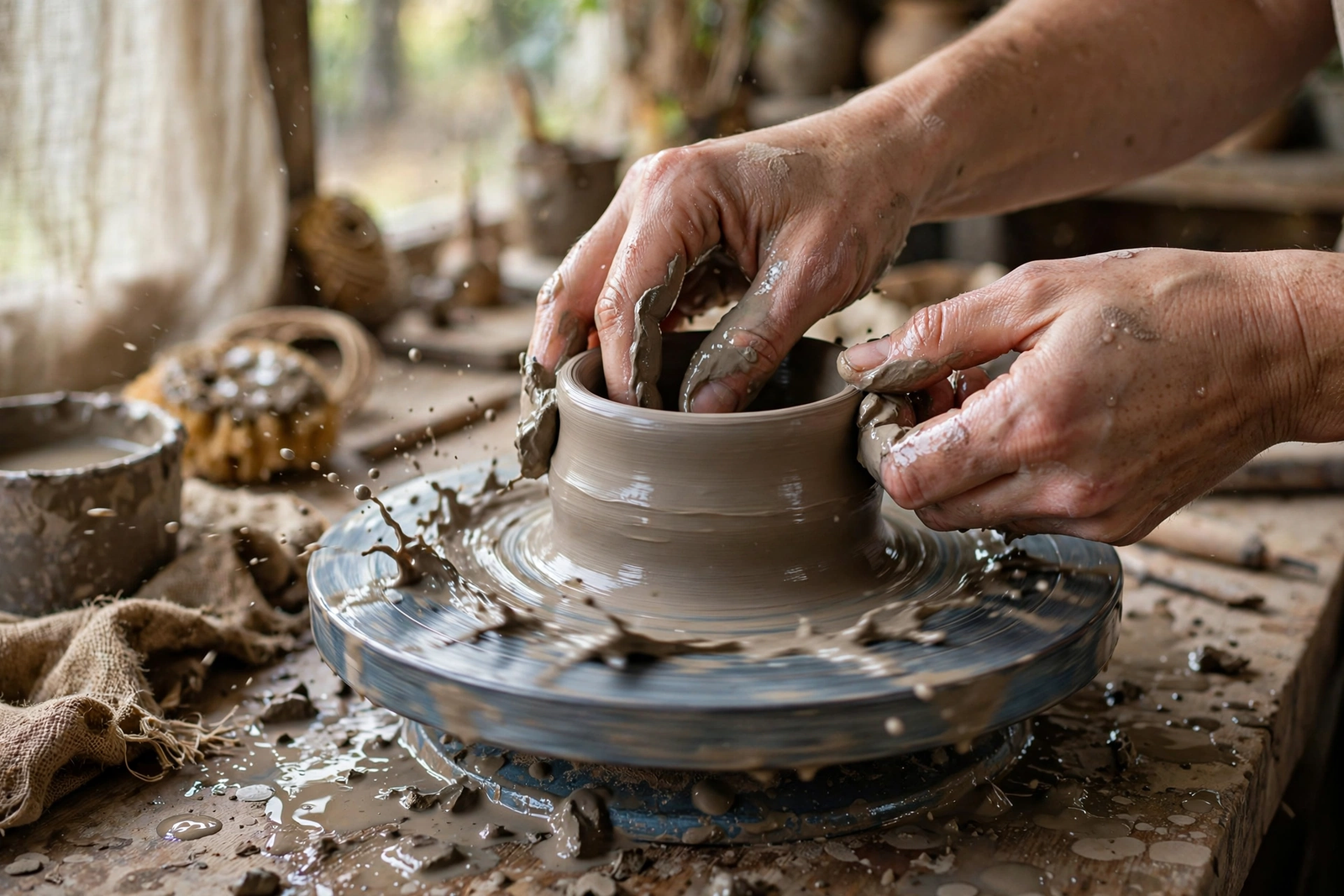
There’s something magical about shaping a lump of clay into a bowl with your own hands. Pottery is one of humanity’s oldest crafts — and one of the most satisfying hobbies you can pick up in 2026. Whether you dream of throwing elegant vases on a wheel or hand-building rustic mugs, this beginner’s guide covers the tools, techniques, and tips you need to start your pottery journey.
Why Pottery? The Benefits of Working with Clay
Pottery isn’t just about making things — it’s therapy you can hold. Studies consistently show that working with clay reduces stress, improves focus, and builds fine motor skills. Unlike screen-based hobbies, pottery engages all your senses: the cool slipperiness of wet clay, the hum of the wheel, the earthy smell of the studio. It’s a mindful, meditative practice that leaves you with beautiful, functional art. Many crafters who love traditional darning and handcrafts find pottery scratches the same creative itch — the joy of making something real with your hands.
Hand-Building vs. Wheel Throwing: Where to Start
Beginners usually start with one of two approaches. Hand-building (pinch pots, coil building, and slab construction) needs minimal equipment and teaches you how clay behaves. Wheel throwing looks effortless on video but takes practice — expect wobbly cylinders for your first few sessions, and that’s completely normal. Most instructors recommend trying hand-building first to understand the material, then moving to the wheel. Community studios and adult-education centers across the US offer 6–8 week beginner courses for $150–$300, and they’re the best investment a new potter can make.
Essential Tools for Beginners
You don’t need much to start. A basic pottery toolkit ($20–$40) includes a wire clay cutter, wooden modeling tools, a rib, a sponge, and a needle tool. If you’re hand-building at home, add a canvas work surface, a rolling pin for slabs, and an apron — clay gets everywhere. Air-dry clay is a great no-kiln option for practicing forms at home before you commit to studio classes.
Understanding Clay Types
Not all clay is the same. Earthenware fires at lower temperatures and has a rustic, porous finish — great for decorative pieces. Stoneware is the workhorse of functional pottery: durable, versatile, and food-safe when properly glazed. Porcelain is the diva — beautiful, translucent, and challenging for beginners. Start with stoneware; it’s forgiving, widely available, and perfect for the mugs, bowls, and planters you’ll want to make first. Your studio will stock the right clay and, just as importantly, handle the firing for you.
Your First Projects: What to Make
Begin with a pinch pot — the simplest vessel, made by pressing your thumb into a ball of clay and shaping the walls. Graduate to coil pots (stacked ropes of clay, smoothed together) and slab-built boxes. On the wheel, your first goal is a cylinder; your second is a bowl. These humble projects teach centering, wall thickness, and trimming — the foundations of everything else. Display your early pieces proudly; a handmade mug on your desk or a coil vase styled into your living room decor beats store-bought every time.
Glazing Basics
Glazing turns fragile bisqueware into finished, functional pottery. Beginners usually dip or brush on commercial glazes — no chemistry degree required. Key tips: apply two to three even coats, keep glaze off the bottom (it fuses to the kiln shelf), and always test on a small tile first. Glazes look nothing like their fired result, so keep notes on what you used. That speckled oatmeal glaze that looks beige in the jar might fire to a gorgeous toasted finish.
Setting Up a Home Pottery Corner
Once you’re hooked, a small home setup lets you practice between classes. You need a sturdy table, a wedging surface (canvas-covered plaster or wood), basic tools, and storage for clay (kept moist in sealed bags). A compact tabletop wheel runs $200–$500 — a worthwhile investment if you’re throwing weekly. Firing is the one thing you can’t easily do at home; partner with a local studio for kiln access, or look into community kiln-sharing programs. Keep your space tidy with healthy, dust-conscious cleaning habits — clay dust is the one real hazard in pottery, so wipe surfaces with a damp sponge and never dry-sweep.
Common Beginner Mistakes (and How to Avoid Them)
Working with clay that’s too wet or too dry. Learn the “leather-hard” stage — firm but carvable — for trimming and attaching handles.
Trapped air bubbles. Always wedge your clay before using it. Air pockets become cracks (or small explosions) in the kiln.
Uneven wall thickness. Thin, even walls dry uniformly. Thick bottoms with thin walls are the classic recipe for cracks.
Rushing the drying. Cover pieces loosely with plastic and let them dry slowly over several days. Patience now prevents heartbreak later.
Learning Resources for New Potters
Beyond classes, there’s a wealth of learning material. YouTube channels from professional potters demonstrate every technique in close-up detail. For deeper inspiration, explore transformative reads on craft and creativity that reframe how you think about handmade work. Instagram’s pottery community (#pottery, #ceramics) is wonderfully supportive — post your wobbly first bowls and watch the encouragement roll in. And don’t overlook the meditative overlap with other visual arts; many potters find that studying fine-art photography sharpens their eye for form, shadow, and glaze color.
Pottery rewards patience like few other crafts. Your first mug will be lopsided. Your tenth will be charming. Your hundredth might be genuinely beautiful. Start where you are, embrace the wobble, and enjoy the feeling of clay between your fingers — you’re joining a tradition that stretches back ten thousand years, and it’s just getting started with you.