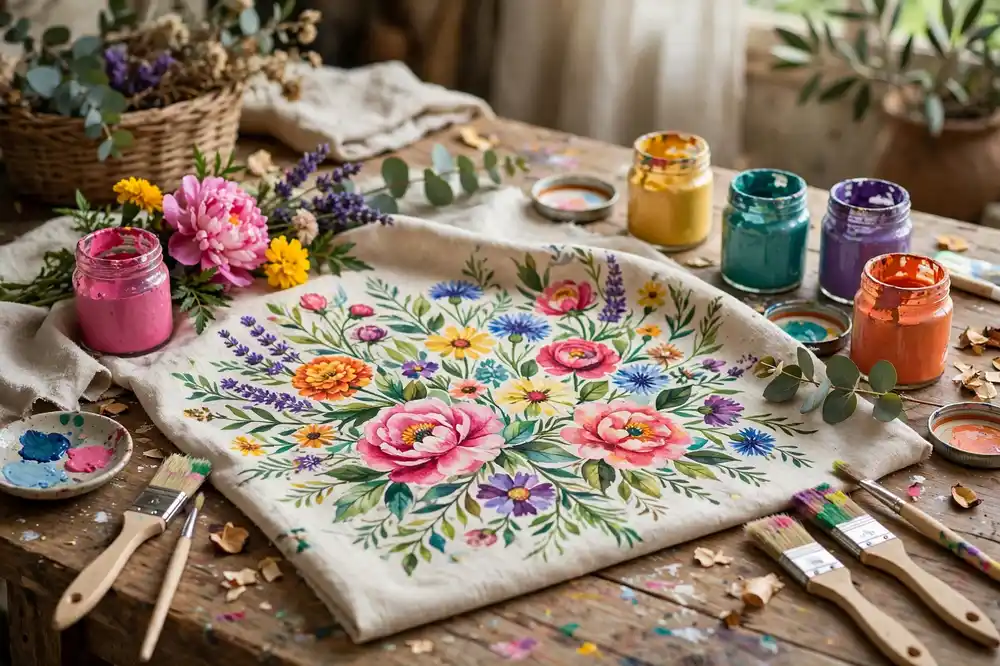
Fabric painting techniques let you turn plain shirts, tote bags, pillowcases, and curtains into custom pieces that reflect your own taste. With the right paint and a little practice, you can create bold graphics, soft watercolor effects, and detailed patterns at home.
Custom-painted clothing and home textiles are popular across the United States, from market stalls to personalized gifts. If you already enjoy color work, acrylic painting techniques for beginners covers color mixing skills that transfer directly to fabric.
What Is Fabric Painting Techniques?
Fabric paint is made to flex with cloth and survive washing when it is applied and heat-set correctly. Unlike ordinary craft paint, it bonds with fibers instead of sitting stiffly on top, so the finished piece stays soft enough to wear.
Techniques range from freehand painting and stenciling to stamping, splatter, and fabric marbling. Each gives a different look, and beginners can combine them once the basics feel comfortable.
Whether you are a complete beginner or returning to a craft you enjoyed years ago, fabric painting techniques rewards steady practice. Small projects build confidence, and each finished piece teaches you something useful for the next one.
Tools and Materials for Fabric Painting Techniques
You can begin fabric painting techniques with a small, affordable kit. The list below covers the essentials, and you can add specialty items later once you know which parts of the craft you enjoy most. A related skill such as pottery for beginners uses some of the same basic tools.
- Fabric paint or textile medium mixed with acrylics
- Flat and round brushes in several sizes
- A plain prewashed cotton garment or fabric
- Cardboard to place inside garments while painting
- An iron for heat-setting the finished design
Keep your kit together in one box or bag so you can start quickly whenever you have a spare half hour. Having tools ready removes one common barrier to regular practice.
Techniques in Fabric Painting Techniques
The techniques below form the core of fabric painting techniques. Practice each one on a small sample before using it in a finished piece, and do not worry if early attempts look uneven.
Freehand painting
Sketch lightly with chalk, then paint with steady strokes, working from large shapes to details. Thin layers dry more evenly than one thick coat, so build color gradually. As you practice, compare your work with examples in resin art for beginners and notice how experienced makers handle the same challenge.
Stenciling
Tape a stencil flat, dab paint with a nearly dry sponge or stencil brush, and lift carefully. Light coats prevent paint from bleeding under stencil edges. As you practice, compare your work with examples in origami for beginners and notice how experienced makers handle the same challenge.
Stamping
Press foam stamps, carved potatoes, or commercial stamps into paint and onto fabric. Test each stamp on scrap cloth first to check pressure and paint amount. As you practice, compare your work with examples in calligraphy for beginners and notice how experienced makers handle the same challenge.
Watercolor effects
Thin fabric paint with water or textile medium and let colors blend on damp fabric. This soft look suits florals, skies, and abstract designs on light-colored cloth. As you practice, compare your work with examples in resin art for beginners and notice how experienced makers handle the same challenge.
Building a Steady Practice Habit
A steady practice habit matters more than long, rare sessions when you are learning fabric painting techniques. Short, regular practice keeps your hands familiar with the tools, helps you remember techniques, and makes it easier to spot small improvements from one project to the next. Many makers find that two or three short sessions each week work better than waiting for a large block of free time that rarely arrives.
Keep a simple notebook or photo record of your projects, noting what worked, what felt difficult, and what you would change next time. Looking back at early work is encouraging, and it turns mistakes into useful lessons. Related creative guides such as origami for beginners, calligraphy for beginners, and botanical illustration for beginners show how other makers build the same kind of steady, enjoyable practice in their own crafts.
Step by Step: Your First Fabric Painting Techniques Project
Follow these steps for a first project in fabric painting techniques. Take your time, check your work as you go, and remember that a finished project matters more than a flawless one.
- Prewash fabric without fabric softener and let it dry fully.
- Place cardboard inside the garment to stop paint soaking through.
- Sketch or stencil your design lightly before painting.
- Paint in thin layers, letting each layer dry before adding detail.
- Heat-set with an iron following the paint instructions, then wash gently.
When you finish, step back and look at the whole piece before judging details. Beginners often notice flaws up close that no one else sees from a normal viewing distance, and embroidery stitches for beginners offers a useful reminder that handmade character is part of the appeal.
Common Mistakes to Avoid
Every maker makes these mistakes at first. Knowing them in advance helps you avoid the most frustrating ones and fix the rest without starting over.
- Using regular acrylic paint without textile medium, which can crack and feel stiff.
- Painting on unwashed fabric, where sizing can stop paint from bonding.
- Applying one thick coat that dries unevenly and peels.
- Skipping heat-setting, so the design fades quickly in the wash.
Tips for Better Results
These habits help your fabric painting techniques projects look more polished and last longer, whether you keep them, give them, or sell them.
- Test every color on scrap fabric before painting the real piece.
- Keep a damp cloth nearby to fix small mistakes while paint is wet.
- Work from light colors to dark colors for cleaner edges.
- Store painted pieces inside out to protect designs in the wash.
For more inspiration, explore linocut printing for beginners and sketching for beginners, which cover related materials and design ideas that pair well with fabric painting techniques.
Frequently Asked Questions About Fabric Painting Techniques
Will fabric paint survive washing?
Yes, when you use fabric paint and heat-set it as directed. Wash painted items inside out in cold water for the longest life.
Can I paint dark fabric?
Yes, but choose opaque fabric paints or add a light base layer first, since thin colors can disappear on dark cloth.
Do I need to be good at drawing?
No. Stencils, stamps, and simple geometric designs give polished results without freehand drawing skill.
Project Ideas to Try Next
Once you understand the basics of fabric painting techniques, try a few small projects that stretch your skills without overwhelming you. Related guides such as origami for beginners and calligraphy for beginners show how other makers combine materials and color in their own work.
- A small first project that uses only the core technique, finished in a single session so you can learn what the material feels like.
- A gift project for a friend or family member, which gives you a deadline and a reason to finish neatly.
- A slightly larger project that combines two techniques you have practiced, such as a main method plus a decorative finish.
- A seasonal project that uses colors or themes from the time of year, which keeps your practice fresh and gives you something timely to display.
Caring for and Displaying Your Finished Piece
How you store and display a finished piece affects how long it lasts and how good it looks. Keep finished work away from prolonged direct sunlight, damp rooms, and heavy handling when possible, and clean it gently using methods suited to its materials. A piece that is cared for well will keep its color, shape, and detail far longer than one left in a harsh spot.
Display also matters for enjoyment. Place your work where you will see it daily, whether that is a wall, a shelf, a table, or a spot by a window with soft light. Seeing your own finished work regularly is motivating, and it reminds you how much your skills have grown since your first attempt at fabric painting techniques.
Getting Started This Week
You do not need a perfect studio or a large budget to begin fabric painting techniques this week. A simple plan keeps the craft enjoyable and helps you build a habit that lasts.
- Gather your basic kit and set up a small, comfortable workspace with good light.
- Choose one small project and read through all the steps before you begin.
- Work in short sessions, taking breaks to check your progress from a little distance.
- Finish the project, note what worked well, and choose one small improvement for next time.
A steady practice routine beats occasional long sessions for most makers. Even twenty minutes a few times a week builds skill faster than waiting for a perfect free day, and each session makes the next one easier.
Related Ideas to Explore Next
Once your first project feels comfortable, related guides such as charcoal drawing techniques, colored pencil drawing, and watercolor techniques for beginners can broaden your skills. Each one builds a different part of your creative toolkit, and working through them in any order will strengthen your fabric painting techniques practice.
Final Thoughts on Fabric Painting Techniques
Fabric Painting Techniques rewards patience, observation, and regular practice more than talent or expensive materials. Start with simple projects, practice the core methods one at a time, and let your skills grow through short, enjoyable sessions. Your next piece will be better than your last, and the one after that better still.