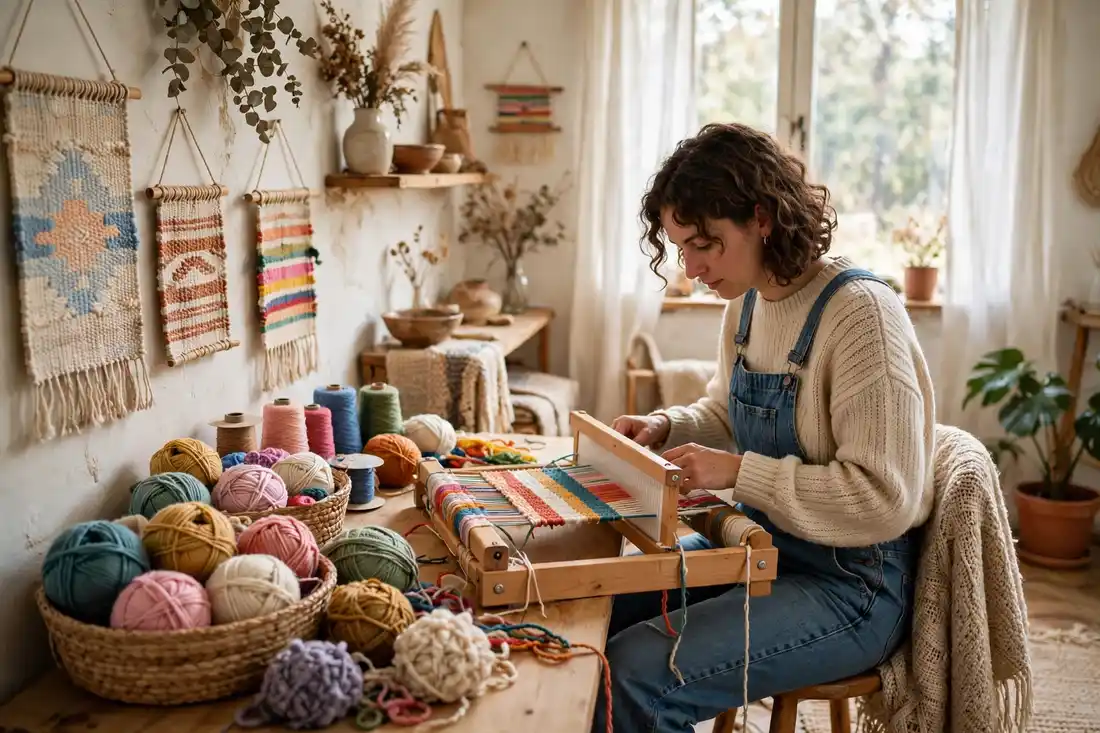
Weaving techniques for beginners open a craft that humans have practiced for thousands of years, yet a simple frame loom and some yarn are enough to start today. Weaving is rhythmic, relaxing, and deeply satisfying, since every row visibly builds toward a finished textile.
A helpful companion is embroidery stitches for beginners, which shares the same focus on color, pattern, and patient handwork.
This guide covers frame looms, warp and weft, basic patterns, and finishing, so you can weave a first wall hanging with confidence. A related craft is botanical illustration for beginners.
What Is Weaving Techniques Beginners?
Weaving interlaces two sets of yarn: the warp, which runs lengthwise on the loom under tension, and the weft, which passes over and under the warp to build cloth. Changing the over-under pattern creates different textures and designs, from plain weave to twills and decorative floats.
Frame looms are the best starting point for beginners, because they are affordable, portable, and easy to warp. Floor looms and rigid heddle looms offer more speed and width later, but a frame loom teaches every fundamental skill a weaver needs.
If you enjoy this kind of hands-on work, gouache painting for beginners is a natural next step, since it builds the same patience, observation, and attention to detail.
Tools and Materials for Weaving Techniques Beginners
A beginner weaving kit is small, affordable, and easy to store between projects.
- A wooden frame loom with notches or nails for warping
- Cotton warp yarn strong enough to hold tension
- Wool or cotton weft yarn in colors you love
- A weaving shuttle or needle for passing weft yarn
- A fork or comb for beating weft rows into place
- Scissors and a tapestry needle for finishing ends
Use strong, smooth warp yarn even if weft yarn varies, since weak warp snaps under tension and ruins a piece mid-weave. A small, well-chosen kit beats a large one you never use, so start simple, keep everything in one place, and upgrade one tool at a time.
Weaving Techniques Beginners Techniques to Learn First
Four techniques carry beginners from first row to finished textile, and each one builds on the last.
Warping the loom
Warping winds warp yarn around the loom under even tension, with consistent spacing between threads. Even tension matters more than speed, since loose warp threads create uneven cloth and tight ones snap. A related craft is figure drawing for beginners, where careful setup also decides the result.
Plain weave
Plain weave passes weft over one warp thread and under the next, alternating each row, which creates strong, even cloth. Keep weft tension relaxed, beat rows gently, and leave a small arc of slack in each pass so edges do not pull inward.
Pattern and color
Pattern comes from changing weft colors, thread counts, or over-under sequences to form stripes, checks, and shapes. Plan color changes on paper first, carry unused yarns along the edge neatly, and weave sample strips before committing to a large piece.
Finishing and fringe
Finishing secures the woven cloth by knotting, braiding, or hemming warp ends, then trimming fringe evenly. Remove the piece from the loom carefully, steam or press it lightly if the fiber allows, and hang or hem it for display.
Step by Step: Your First Weaving Techniques Beginners Project
A small wall hanging is the ideal first weaving project, since it teaches warping, weaving, and finishing quickly.
- Warp your frame loom with even tension and consistent spacing.
- Weave a few rows of plain weave to settle the warp and check tension.
- Add color stripes or simple shapes, keeping weft slack relaxed in each pass.
- Beat rows gently and evenly, checking edges often for pulling or flaring.
- Finish with a header row, then remove the piece and secure the warp ends.
- Trim fringe, press lightly, and hang your finished weaving.
Repeat the sequence on small practice pieces before starting a finished work, so mistakes stay cheap and lessons stay clear. A related skill worth exploring is ink drawing techniques for beginners.
Common Mistakes to Avoid
Weaving mistakes usually mean tension problems, which show up as wavy edges or uneven cloth.
- Pulling weft too tight, which draws edges inward into an hourglass shape.
- Warping with uneven tension, which creates loose and tight stripes in the cloth.
- Beating rows unevenly, so the textile looks striped in density rather than color.
- Skipping a sample, so a pattern problem appears only in a large finished piece.
If a piece goes wrong, treat it as a test piece rather than a failure, since it still teaches you exactly what to change next time. For fresh inspiration, browse oil painting techniques for beginners.
Tips for Better Results
Relaxed, rhythmic weaving produces the most even and enjoyable results.
- Weave in good light so you can see warp threads clearly.
- Keep a weaving journal of yarns, patterns, and tension notes.
- Try different fibers in small samples before large projects.
- Join a local weaving guild or online group for pattern ideas and help.
Share finished work with friends or a local makers group when you feel ready, since honest feedback often points out strengths you cannot see yourself. Two crafts that pair well with this one are best drawing tablets and golden hour photography tips.
Weaving Techniques Beginners Project Ideas to Try Next
Once your first piece is finished, the best way to keep improving is to try a small project that stretches one skill at a time. The ideas below move from simple to slightly more ambitious, so you can pick one that matches your confidence today.
- Weave a small wall hanging with stripes in three favorite colors.
- Create a table runner in plain weave with a simple border pattern.
- Weave a set of coasters to practice even edges and tension control.
- Try a twill sample strip to learn a new over-under pattern.
- Make a woven bag panel and sew it into a simple tote.
Common Questions About Weaving Techniques Beginners
What loom should a weaving beginner buy?
A wooden frame loom is the best beginner loom, since it is affordable, portable, and easy to warp. Rigid heddle looms suit weavers who want wider cloth and faster weaving later, but frame looms teach every fundamental skill.
Why do my weaving edges pull inward?
Edges pull inward when weft tension is too tight, a common beginner problem called draw-in. Leave a small arc of slack in each weft pass, beat gently, and check edge width often as you weave.
What yarn works for warp and weft?
Warp yarn must be strong and smooth to survive tension, so cotton warp yarn is a safe choice. Weft yarn can vary widely, from wool to cotton to textured fibers, since it carries color and pattern rather than tension.
How long does a first weaving project take?
A small wall hanging may take a few evenings, including warping and finishing. Larger pieces take longer, but weaving itself is rhythmic and relaxing, so many makers enjoy the slow pace.
Displaying and Caring for Your Weaving Techniques Beginners Work
Display woven pieces away from direct sun to prevent fading, vacuum gently with a brush attachment for dust, and store textiles flat or rolled rather than folded. Hand wash pieces only when the fiber allows, and block them back into shape while drying for a crisp finish.
Finished pieces also make thoughtful gifts, especially when you include a short note about the materials and the making process. A personal note turns a handmade object into a story, and recipients tend to treasure that story as much as the piece itself.
Setting Up a Workspace for Weaving Techniques Beginners
A comfortable workspace makes weaving techniques beginners far more enjoyable, because you will practice more often when setup takes minutes rather than half an hour. Choose a sturdy table you can wipe clean, keep your a wooden frame loom with notches or nails for warping, cotton warp yarn strong enough to hold tension, and wool or cotton weft yarn in colors you love within easy reach, and add a bright lamp so you can see detail clearly in the evening. Store supplies in labeled boxes or a single tote, keep finished pieces away from heavy items that could crush or scratch them, and protect the table surface if your craft involves water, paste, dust, or dye. A tidy, ready-to-use corner invites daily practice, and daily practice is what turns a beginner into a confident maker.
After your first project, revisit the techniques in this guide, Warping the loom, Plain weave, Pattern and color, Finishing and fringe, and practice each one on a small sample before your next finished piece. Short focused practice sessions build muscle memory faster than long unfocused ones, and a shelf of samples becomes a useful reference whenever you plan something new. Over time you will notice which techniques feel natural and which need more work, and that awareness is the real sign of growing skill.
Getting Started With Weaving Techniques Beginners
Weaving techniques for beginners reward slow, rhythmic work with textiles that feel personal and handmade in the best sense. Start on a frame loom, master plain weave, then grow into pattern and color. For more textile ideas, explore how to start digital art in 2026.
Warp a small loom this week and weave a first wall hanging, even if it is simple. Finished cloth teaches more than any amount of reading about weaving. You may also enjoy acrylic pour painting.