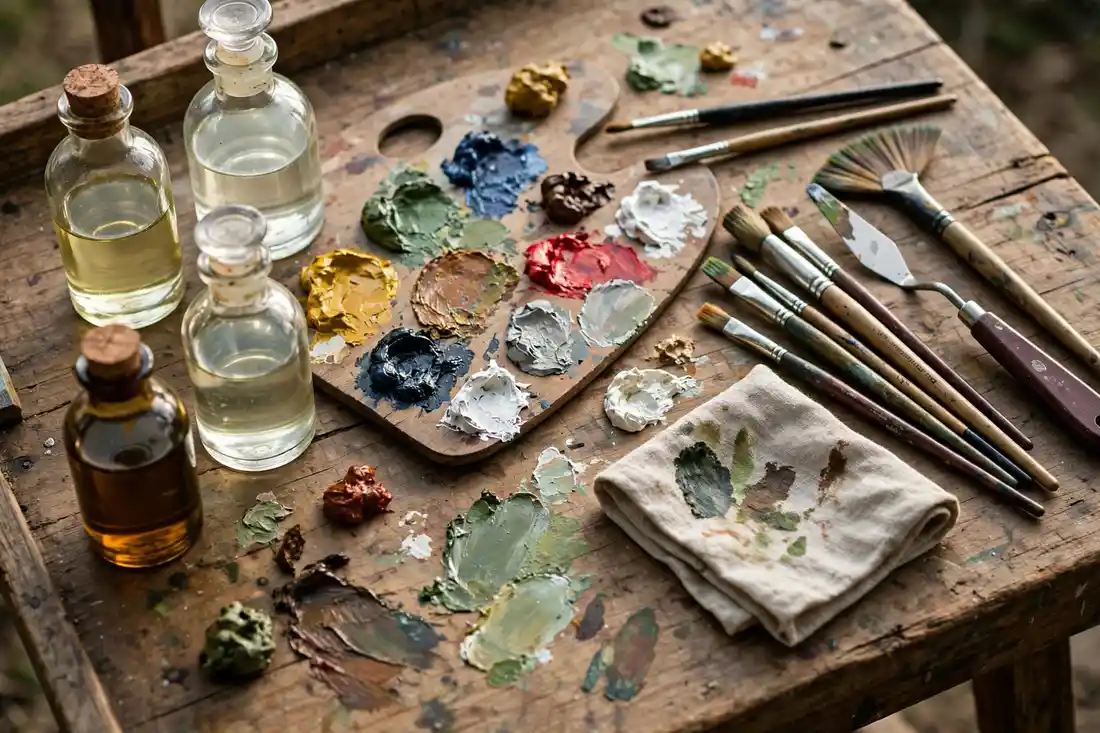
What oil paint mediums guide Means for Artists
Oil paint mediums are the liquids painters mix with oil paint to change how it flows, dries, glosses, and levels, and understanding them is essential for safe, lasting oil painting. Without a medium, oil paint straight from the tube can feel stiff and dry slowly in uneven ways, while the right medium can make paint flow smoothly for glazing, hold texture for impasto, or dry faster for layered work. This guide explains the main mediums in plain language, so you can choose confidently instead of guessing at the art store.
Mediums matter because oil painting is a chemical process as well as an artistic one, and the wrong medium choice can cause cracking, yellowing, wrinkling, or a painting that never fully dries. The fat over lean rule, which requires each layer to contain at least as much oil as the layer beneath it, exists to keep paintings flexible as they age, and mediums are how painters control that fat content. A painter who understands mediums can build a painting that lasts for generations, while a painter who ignores them may create a beautiful surface that fails within years. A related guide is oil painting techniques every beginner should know.
Why oil paint mediums guide Matters
Linseed oil is the traditional workhorse medium, pressed from flax seeds and used for centuries to thin paint, increase flow, and add gloss. Refined linseed oil dries reliably and adds a warm gloss, while cold-pressed linseed oil is prized for its clarity and slower drying. Linseed oil does yellow slightly over time, especially in dark storage, so it is often used in moderation and balanced with other mediums for lighter colors and whites.
Stand oil, which is linseed oil heated to thicken it, behaves differently: it levels beautifully, resists yellowing better than raw linseed oil, and creates a smooth, enamel-like surface ideal for glazing. It dries more slowly than linseed oil, so it suits patient, layered painting rather than fast alla prima work. Other mediums, including walnut oil, poppy oil, alkyd mediums, and cold wax, each offer different drying speeds, gloss levels, and handling qualities, and choosing among them depends on your painting method and your patience. For more on a nearby skill, see acrylic painting techniques for beginners.
Tools and Materials You Will Need
Start with a small, reliable kit rather than buying everything at once. The items below cover most early projects, and you can add specialty supplies later as your interests narrow. This pairs well with color theory for beginners.
- Refined linseed oil for general thinning and glazing
- Stand oil for smooth, level glazes and enamel-like surfaces
- Odorless mineral spirits for thinning paint and cleaning brushes
- An alkyd medium for faster drying in layered painting
- Cold wax medium for matte, textured, and impasto effects
Key Techniques to Practice
Linseed oil medium
Mix a small amount of linseed oil into paint to increase flow and gloss for glazing and general painting. Use it sparingly, since too much oil creates a slick, slow-drying surface, and remember that linseed oil yellows slightly, so use it cautiously in whites and pale colors. You may also enjoy landscape painting for beginners.
Stand oil for glazing
Mix stand oil with transparent paint for smooth, streak-free glazes that level into an enamel-like surface. Stand oil’s slow drying suits patient glazing, and its resistance to yellowing makes it a good choice for light colors and portraits.
Solvents for thinning
Use odorless mineral spirits or turpentine to thin paint for underpainting and early layers, keeping those layers lean according to fat over lean. Solvents evaporate rather than becoming part of the paint film, so they should be used for lean layers, not for rich, final glazes. A useful companion guide is how to draw faces.
Alkyd and fast-drying mediums
Use alkyd mediums when you need faster drying for layered work, since they speed the oxidation process and allow a new layer within a day or two. Alkyds add gloss and flow, but they should still follow fat over lean, and they are best used consistently within a painting rather than mixed randomly with traditional oils.
Step by Step: Your First Project
- Decide your painting method first, since glazing, alla prima, and impasto each favor different mediums.
- Start with a lean underpainting thinned with solvent, keeping the first layers low in oil. For a related approach, see still life drawing for beginners.
- Add medium gradually in later layers, following fat over lean, and test each mixture on a scrap panel.
- Use only one or two mediums consistently within a painting, rather than mixing many different mediums randomly.
- Record the mediums you used on the back of the canvas or in a notebook, so future conservation and varnishing decisions are informed. This connects naturally with sketching for beginners.
Common Mistakes to Avoid
- Using too much medium, which creates a slick, weak paint film that can wrinkle or remain tacky.
- Breaking fat over lean by painting a lean, solvent-thinned layer over a fat, oily layer, which risks cracking. A helpful next read is mixed media art for beginners.
- Mixing incompatible mediums randomly, which can cause unpredictable drying, adhesion problems, or clouding.
- Using turpentine or solvents without ventilation, which exposes the painter to harmful fumes unnecessarily.
Practical Tips That Make a Difference
- Start with the simplest medium setup, such as linseed oil and odorless mineral spirits, before exploring specialty mediums. For broader context, see gouache painting for beginners.
- Buy mediums in small bottles first, since a little medium goes a long way and large bottles can go stale.
- Keep medium bottles tightly closed and away from heat, since oil-soaked rags and open solvents are fire hazards.
- Test every new medium on a scrap panel before using it on a finished painting, noting its drying time, gloss, and flow. A related topic worth exploring is charcoal drawing techniques.
Choosing Materials and Subjects
For buying, a beginner needs only refined linseed oil and odorless mineral spirits to start, with stand oil as the next useful addition for glazing. Alkyd medium is worth adding when you begin layered painting and want faster drying, while cold wax medium suits painters interested in matte texture and impasto. Avoid buying every medium on the shelf at once: a small, understood set will serve you better than a large, confusing collection, and you can expand as your methods become clearer. This builds nicely on visiting an art exhibition.
For safety, treat all oil mediums and solvents with respect, since oil-soaked rags can spontaneously combust if left crumpled in a bin, and solvent fumes require ventilation. Store rags flat or in a sealed metal container, dispose of them according to local rules, and paint in a room with fresh air or an exhaust fan. Those simple habits protect both you and your paintings, and they are as much a part of oil painting skill as color mixing or brushwork.
A Four-Week Practice Plan for oil paint mediums guide
A short, regular practice plan will improve your oil paint mediums guide faster than occasional long sessions, because skills consolidate between sessions and each week builds on the last. Treat the plan as a guide, not a rigid rule, and adjust the pace to fit your schedule and energy.
- Week one: focus on fundamentals. Spend three short sessions on basic exercises for oil paint mediums guide, keeping each session under an hour and noting what felt easy and what felt difficult in a sketchbook.
- Week two: apply the fundamentals to a simple finished piece using oil paint mediums guide, working slowly and comparing your result with your reference or your earlier exercises at each stage.
- Week three: try a slightly harder subject or a new material related to oil paint mediums guide, and deliberately practice the part you found hardest in week one, since targeted practice improves weak areas fastest.
- Week four: complete a small project that combines everything you practiced, share it with a friend or an online art community for feedback, and choose one skill to carry into your next month of practice.
Frequently Asked Questions
What is the best oil painting medium for beginners?
Refined linseed oil, used sparingly with odorless mineral spirits for thinning, is the best starting combination. It is traditional, reliable, and easy to understand, and it covers glazing, general painting, and underpainting needs.
What does fat over lean mean?
Fat over lean means each paint layer must contain at least as much oil as the layer beneath it, so upper layers remain flexible and do not crack over leaner layers. Lean, solvent-thinned layers go first, and oil-rich glazes go last.
Is stand oil better than linseed oil?
Neither is universally better: stand oil levels smoothly, yellows less, and dries more slowly, which suits glazing, while linseed oil dries faster and is more versatile for general painting. Choose based on whether you need smooth leveling or faster, general-purpose flow.
Are oil painting mediums toxic?
Some solvents and mediums can irritate lungs and skin, so paint with ventilation, avoid skin contact, and never eat or drink near painting materials. Odorless mineral spirits are less irritating than turpentine, but they still require fresh air and careful storage.
Final Thoughts
This oil paint mediums guide comes down to a simple principle: use the least medium that achieves the effect you want, follow fat over lean, and choose a small set of mediums you understand well. Start with linseed oil and odorless mineral spirits, add stand oil for glazing and alkyd for faster layers as needed, and always paint with ventilation and safe rag disposal, because a painting built on sound medium choices will keep its color, surface, and beauty for a lifetime. For another angle, see how to sell art online.