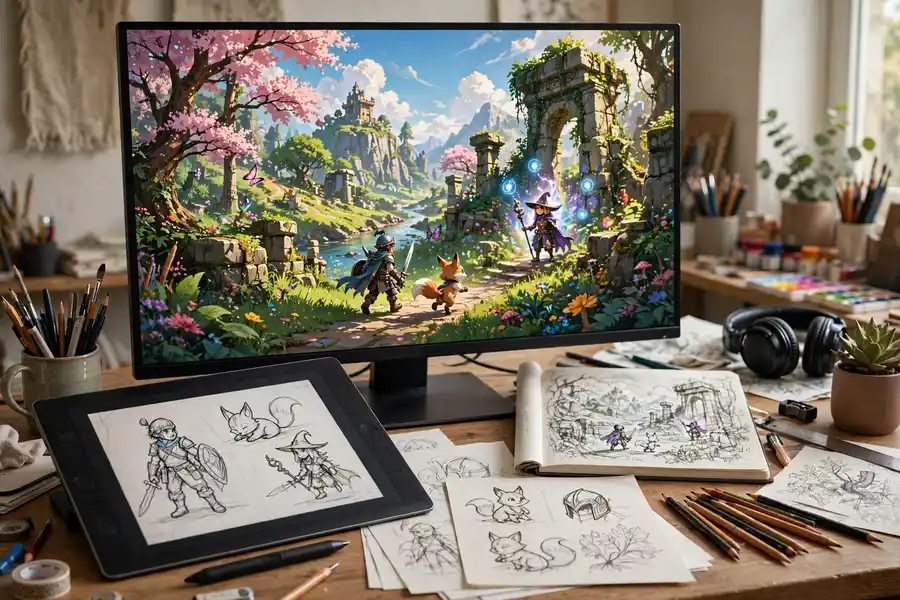
Learning game art design is one of the most rewarding ways to grow as an artist, whether you are picking up a pencil for the first time or returning to drawing after a break. This guide walks through the ideas, tools, and practice habits that make game art design approachable, enjoyable, and genuinely useful in real artwork.
You do not need expensive equipment or years of training to begin. What you need is a clear starting point, a few simple exercises, and a habit of looking closely at your subject. A good companion skill is how to start digital art in 2026, which builds the same hand control and observation you will use here.
By the end of this guide, you will understand how game art design works, which materials suit it best, and how to practice in short sessions that fit a busy week. You will also find related ideas, such as best drawing tablets, to explore once the basics feel comfortable.
What Is Game Art Design?
Game art is art with a job: it must look beautiful and help players understand a game instantly — where to go, what is dangerous, and what can be picked up. The most successful game art balances style with clarity, so players feel immersed without feeling confused.
This guide covers game art design from style guides to asset creation, including characters, environments, props, and user interface art, with practical advice for artists working solo or on small teams.
That is why game art design suits artists at every level. Beginners gain a structured way to practice, while experienced artists use it to sharpen observation, experiment with new materials, or break out of a creative rut. The key is to start simple, work slowly, and judge progress over weeks rather than single sessions.
Tools and Materials for Game Art Design
You can begin game art design with a small, affordable kit. The list below covers the essentials; add specialty items only after you know which parts of the process you enjoy most.
- A tablet and painting or 3D software
- A style guide document for the game's look
- Reference boards for games with a similar mood
- A test build or screenshots to check art in game
- A palette and material sheet for consistency
Keep your kit together in one bag or box so practice feels easy to start. When setup takes only a minute, you are far more likely to draw every day.
Core Game Art Design Methods
The core of game art design comes down to a handful of methods. Practice each one separately first, then combine them in finished pieces. A related guide worth reading alongside this section is Procreate drawing tutorial for beginners.
Defining a visual style
Choose a style — realistic, stylized, pixel, or painterly — and write down its rules for shapes, colors, and detail levels. A clear style guide keeps a whole game looking like one world, even when many artists contribute.
When you practice defining a visual style, work on a small test piece before using it in a finished drawing. Notice how pressure, speed, and tool choice change the result, and keep the test beside you as a reference. Small, deliberate experiments like this build confidence faster than rushing into a large piece and hoping it works out.
Readability and gameplay clarity
Make important gameplay elements brighter, larger, or more contrasting than background decoration. Players should spot enemies, exits, and items at a glance, even during fast action.
When you practice readability and gameplay clarity, work on a small test piece before using it in a finished drawing. Notice how pressure, speed, and tool choice change the result, and keep the test beside you as a reference. Small, deliberate experiments like this build confidence faster than rushing into a large piece and hoping it works out.
Characters and animation-ready design
Design characters with clear silhouettes and simple, separated parts that animate well. A character that reads clearly in a still image and moves cleanly in game is worth more than a detailed design that blurs in motion.
When you practice characters and animation-ready design, work on a small test piece before using it in a finished drawing. Notice how pressure, speed, and tool choice change the result, and keep the test beside you as a reference. Small, deliberate experiments like this build confidence faster than rushing into a large piece and hoping it works out.
Environments and props
Build environments from reusable pieces — walls, trees, props — that share materials and colors. Modular design lets small teams build large worlds efficiently while keeping a consistent look.
When you practice environments and props, work on a small test piece before using it in a finished drawing. Notice how pressure, speed, and tool choice change the result, and keep the test beside you as a reference. Small, deliberate experiments like this build confidence faster than rushing into a large piece and hoping it works out.
Game Art Design Step by Step
Follow this workflow for your first few finished pieces. Once the steps feel familiar, adapt the order to suit your own habits.
- Write a one-page style guide with colors and shape rules.
- Design the main character and test readability at game size.
- Build a small test environment from modular pieces.
- Playtest with screenshots and note what players miss.
- Refine contrast and clarity before adding decoration.
After your first attempt, compare the result with your subject and note one improvement for next time. That single note is often more valuable than a long list of corrections, and it keeps practice focused. For broader drawing foundations, graphic design tips for beginners is a helpful next read.
Common Game Art Design Mistakes to Avoid
Every artist makes the same handful of mistakes when learning a new method. Knowing them in advance helps you spot them early, while they are still easy to fix.
- Prioritizing beauty over gameplay readability.
- Changing art style halfway through a project.
- Designing assets that are too detailed to animate well.
- Never testing art inside the actual game view.
If a drawing goes wrong, treat it as information rather than failure. Save it, note what happened, and try the same subject again with one change. Artists who learn this way improve steadily, and guides such as color theory for beginners show how the same patient approach works in other media.
A Simple Game Art Design Practice Plan
A simple weekly plan works better than occasional long sessions. Try three short sessions of twenty to thirty minutes, each focused on one skill: one for observation, one for technique, and one for a finished piece. Short sessions keep your hand fresh and your attention sharp.
Keep a practice sketchbook separate from finished work, and date your pages. Looking back over a month of dated practice is one of the best motivators, because progress that feels invisible day by day becomes obvious across weeks. If you enjoy structured practice, sketching for beginners pairs naturally with this routine.
Share your work occasionally, even if it feels unfinished. Feedback from other artists, a local class, or an online community often highlights strengths you overlooked and suggests the next skill worth practicing.
Tips for Better Game Art Design Results
These tips help you get more from every session, whether you are practicing at a desk, outdoors, or in a classroom.
- Play games critically, noting what art guides your eye.
- Make a style guide for a game you invent.
- Test all art at actual gameplay size and speed.
- Keep a consistent palette across a whole level.
Frequently Asked Questions About Game Art Design
How long does it take to learn game art design?
Most beginners notice real improvement within a few weeks of regular practice, though mastery takes much longer and that is perfectly normal. Focus on steady progress rather than speed: a few short sessions each week will teach you more than one long, exhausting session. Keep early work to compare later, and you will see growth sooner than you expect.
What materials do I need to start game art design?
You need only basic, affordable materials to begin game art design, and the tools list earlier in this guide covers them. Start simple, learn what you enjoy, and add specialty supplies gradually as your skills and interests develop. Expensive materials never replace practice, so invest your time first and your money second.
Can beginners try game art design?
Yes, game art design is well suited to beginners, because the basic ideas are simple even though skilled work takes practice. Start with easy subjects, follow the step-by-step workflow in this guide, and accept imperfect early results as part of learning. Every experienced artist started with the same first, uncertain attempts.
How often should I practice game art design?
Three short sessions a week is a realistic and effective rhythm for most people learning game art design. Short, focused practice keeps your hand loose and your eye sharp without turning drawing into a chore. If you miss a week, simply return to the next session without guilt — consistency over months matters far more than perfection in any single week.
Related Drawing Guides
Keep exploring with charcoal drawing techniques, mixed media art for beginners, landscape painting for beginners, how to sell art online, acrylic painting techniques for beginners, watercolor techniques for beginners, modern abstract art trends 2026. Each of these guides builds a skill that complements game art design, and working through them in any order will broaden your drawing toolkit.
Final Thoughts on Game Art Design
Game Art Design rewards patience, observation, and regular practice more than talent or expensive materials. Start with simple subjects, practice the core methods one at a time, and let your skills grow through short, enjoyable sessions. Your next drawing will be better than your last — and the one after that better still.