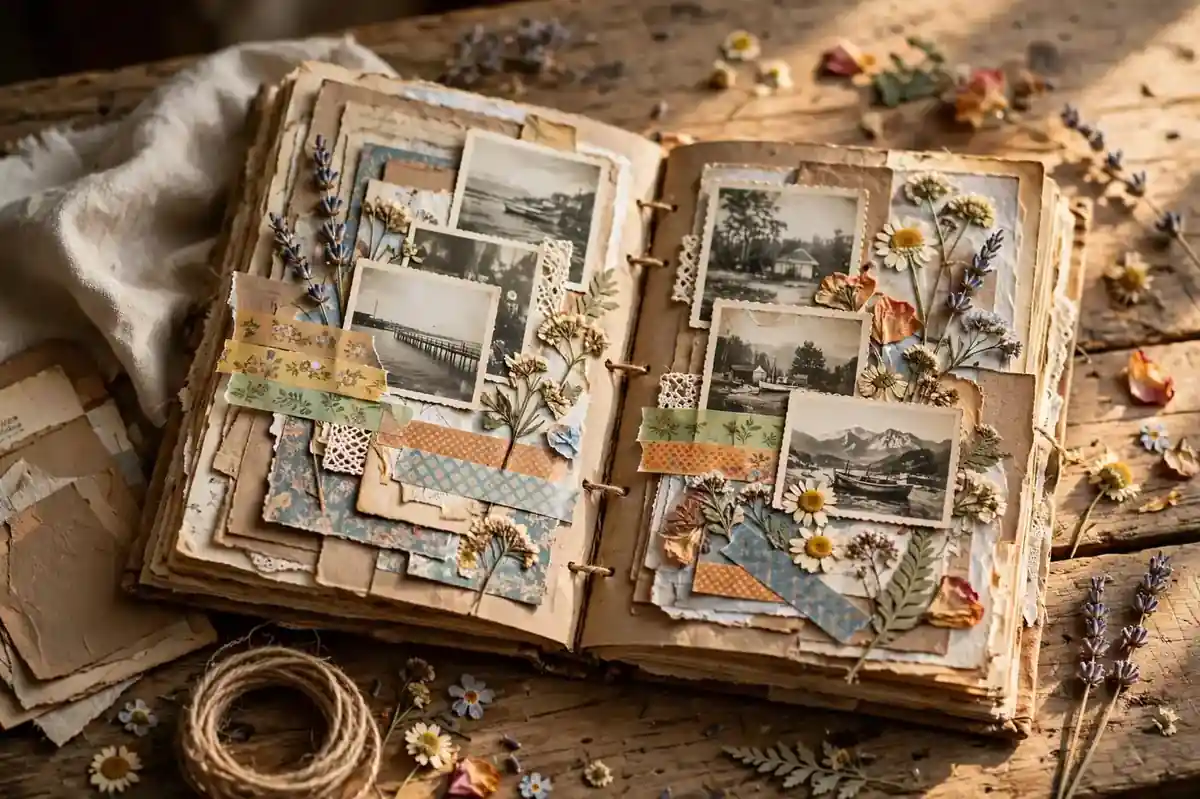
Junk journaling is having a massive moment. Searches for junk journaling are up 63 percent year over year, and millions of Americans are trading screen time for glue sticks, vintage papers, and ticket stubs. But what exactly is a junk journal, and where do you find junk journal ideas that go beyond the same recycled Pinterest spreads? This guide has you covered.
A junk journal is a handmade book built from recycled and found materials: old envelopes, magazine pages, fabric scraps, postcards, and anything else with character. There are no rules, no expensive supplies, and no way to do it wrong. Whether you want a travel diary, a memory keeper, or a creative playground, these junk journal ideas will spark your first pages and keep your creativity flowing for months.
What Is a Junk Journal? The Basics
At its core, a junk journal is a book you make yourself from “junk” — papers and ephemera that would otherwise be thrown away. The cover might be a cereal box, an old book cover, or a paper bag. The pages are a mix of whatever you have: coffee-dyed printer paper, sheet music, maps, brown paper bags, and envelopes that become pockets.
Unlike a traditional journal with its blank lined pages, a junk journal gives you prompts built right in. A pocket begs to hold a ticket stub. A tag asks for a word or date. A flip-out page invites a hidden photo. This structure makes junk journaling perfect for people who freeze at a blank page. And because the materials cost almost nothing, there is zero pressure to be perfect. If you love working with your hands, you will find a similar joyful messiness in our resin art beginners guide.
Essential Junk Journal Ideas for Your First Pages
Every junk journal needs a few anchor pages. Start with a title page made from your favorite paper, decorated with your name and the journal’s theme. Follow it with a “currently” page listing what you are reading, watching, and loving. A pocket page made from a sewn envelope gives you instant storage for ephemera, and a waterfall page, a series of stacked flaps that flip down, adds satisfying interactivity.
Other easy wins: a collage page built entirely from magazine cutouts in one color family, a washi tape sampler page where you stick down every roll you own, and a coffee-dyed page that instantly makes any journal look vintage. These foundational pages teach you the basic techniques, layering, adhering, and embellishing, that every later spread builds on.
Theme Ideas: Give Your Junk Journal a Purpose
Themed journals are easier to fill than random ones because every piece of ephemera you find has a home. Popular junk journal ideas for themes include a travel journal for one specific trip, a seasonal journal capturing one autumn or summer, a gratitude journal with one thankful note per page, and a “year in review” journal built month by month.
Other themes Americans love: a recipe journal with stained, well-loved recipe cards; a garden journal with pressed flowers and seed packets; a music journal with ticket stubs and setlists; and a “letters never sent” journal for emotional processing. Choose a theme that matches ephemera you already have lying around, and the journal practically fills itself. If preserving memories appeals to you, handmade keepsakes also make wonderful gifts, much like the projects in our DIY soy candle making guide.
Junk Journal Ideas Using Things You Already Own
You do not need to buy a single supply to start. Raid your recycling bin and junk drawer first. Junk mail envelopes become pockets and tuck spots. Old calendars become beautiful background pages. Paper grocery bags, crumpled and flattened, make wonderfully textured covers. Tea-stained printer paper looks authentically aged with zero cost.
Look for these treasures: postage stamps, clothing tags, business cards, receipts from meaningful purchases, maps from road trips, greeting cards, fabric scraps, ribbon, buttons, and dried flowers. The whole philosophy of junk journaling is that beauty comes from the discarded, which makes it one of the most sustainable crafts you can practice. This resourceful spirit connects it to timeless handmade traditions like those in our guide to old-fashioned darning and craftsmanship.
15 Creative Junk Journal Ideas to Try This Week
1. The envelope flip book. Sew or glue five envelopes along one edge to make a mini journal where every page is a pocket.
2. Coffee-dyed paper stack. Soak printer paper in strong coffee, bake it dry at low heat, and you have instant vintage pages.
3. Ticket stub timeline. Dedicate a spread to every concert, movie, or flight, arranged in chronological order with washi tape borders.
4. Fabric scrap collage. Glue small fabric pieces into a patchwork background, then journal right over it.
5. Hidden journaling spots. Tuck small folded notes behind photos and flaps for private thoughts within a shareable journal.
6. Monthly cover pages. Start each month with a themed divider page using that month’s colors and ephemera.
7. Nature pressings. Press leaves and flowers between wax paper, then adhere them to pages with clear tape for a botanical spread.
8. Blackout poetry pages. Take a newspaper page and black out words with a marker until a poem remains.
9. Photo booth strips. Print your phone photos as small strips and layer them with patterned paper.
10. Quote collection. Dedicate pages to quotes you love, lettered by hand. Practicing your lettering? Our calligraphy for beginners guide will level up these pages fast.
11. Menu and recipe spreads. Save menus from favorite restaurants and paste them beside your own recipe cards.
12. Dream log pages. Keep a section for recording dreams with surreal collage backgrounds.
13. Color-themed spreads. Challenge yourself to build an entire spread from one color, hunting through your stash for every shade.
14. Interactive waterfall cards. Layer three or four small cards on a single anchor so they cascade when flipped.
15. Future letters. Write letters to your future self, seal them in handmade envelopes, and date them to open in one year.
Binding Methods: How to Assemble Your Junk Journal
You have several options for binding, and none require special tools. The simplest is the pamphlet stitch: fold your pages into signatures, punch three holes along the fold, and sew them together with embroidery thread. It takes ten minutes to learn and holds up beautifully.
For a chunkier journal, use a three-ring or disc binding system that lets you add and rearrange pages freely. Some junk journalists skip binding entirely and use a sturdy folder or an altered vintage book as the base, gluing new pages over the old ones. Choose the method that matches how you work; if you like rearranging, go ring-bound, and if you like commitment, go stitched. Makers who enjoy structural crafts often branch into pottery for beginners next, which scratches a similar handmade itch.
Decorating Techniques Every Junk Journaler Should Know
A few simple techniques make every page look richer. Distressing, roughing up page edges with scissors or an ink pad, instantly adds age. Layering, stacking three or more papers with slightly offset edges, creates depth. Clustering, grouping three embellishments in a triangle, looks professionally designed with no effort.
Stamping with acrylic paint and found objects like bottle caps and leaves adds texture. Stenciling with inexpensive craft stencils fills backgrounds quickly. And simple doodle borders drawn with a fine liner pull a busy page together. You do not need all of these; pick two or three favorites and repeat them. Consistency of technique is what makes a journal feel cohesive rather than chaotic.
Junk Journal Ideas for Gifts and Selling
Handmade junk journals make extraordinary gifts because they are one of a kind by definition. A travel-themed journal given before a friend’s trip, pre-filled with maps and pockets, shows thought no store-bought gift can match. A baby’s first-year journal, a wedding guest book made from a junk journal, or a recipe collection for a new homeowner all become treasured keepsakes.
Many crafters also sell their journals on Etsy and at craft fairs, where buyers pay premium prices for the time and curation involved. If you go this route, photograph your journals beautifully; presentation sells handmade work, as any jewelry maker knows from guides like our polymer clay earrings tutorial and this deep dive into the allure of earrings. Finished journals also photograph wonderfully as decor, fitting right in with curated spaces like those in our bedroom wall art ideas and living room makeover ideas. For fashion-adjacent inspiration, browse the latest kasulaperu jewelry designs to see how traditional embellishment elevates handmade work.
Common Junk Journaling Mistakes to Avoid
Buying too many supplies first. Start with what you have. Supply hoarding is the number one way beginners stall; the journal gets made from action, not shopping.
Aiming for perfection. Junk journals are supposed to look handmade and layered. Embrace crooked edges and visible glue; that is the aesthetic.
Copying spreads exactly. Use others’ junk journal ideas as starting points, then make them yours with your own ephemera and stories.
Never finishing a journal. It is better to complete a small, simple journal than to abandon an ambitious one. Finish, then start the next.
Conclusion: Start Your Junk Journal Today
The best junk journal ideas are the ones you actually make. Grab an old envelope, a magazine, and a glue stick, and build your first pocket page tonight. Do not wait for the perfect supplies or the perfect theme. The magic of junk journaling is that it turns the ordinary scraps of your life into something beautiful and permanent.
A year from now, you will open that first lumpy, glue-heavy journal and love it more than anything perfect you could have bought. That is the power of making things by hand. Start today, and keep every ticket stub from here on out.