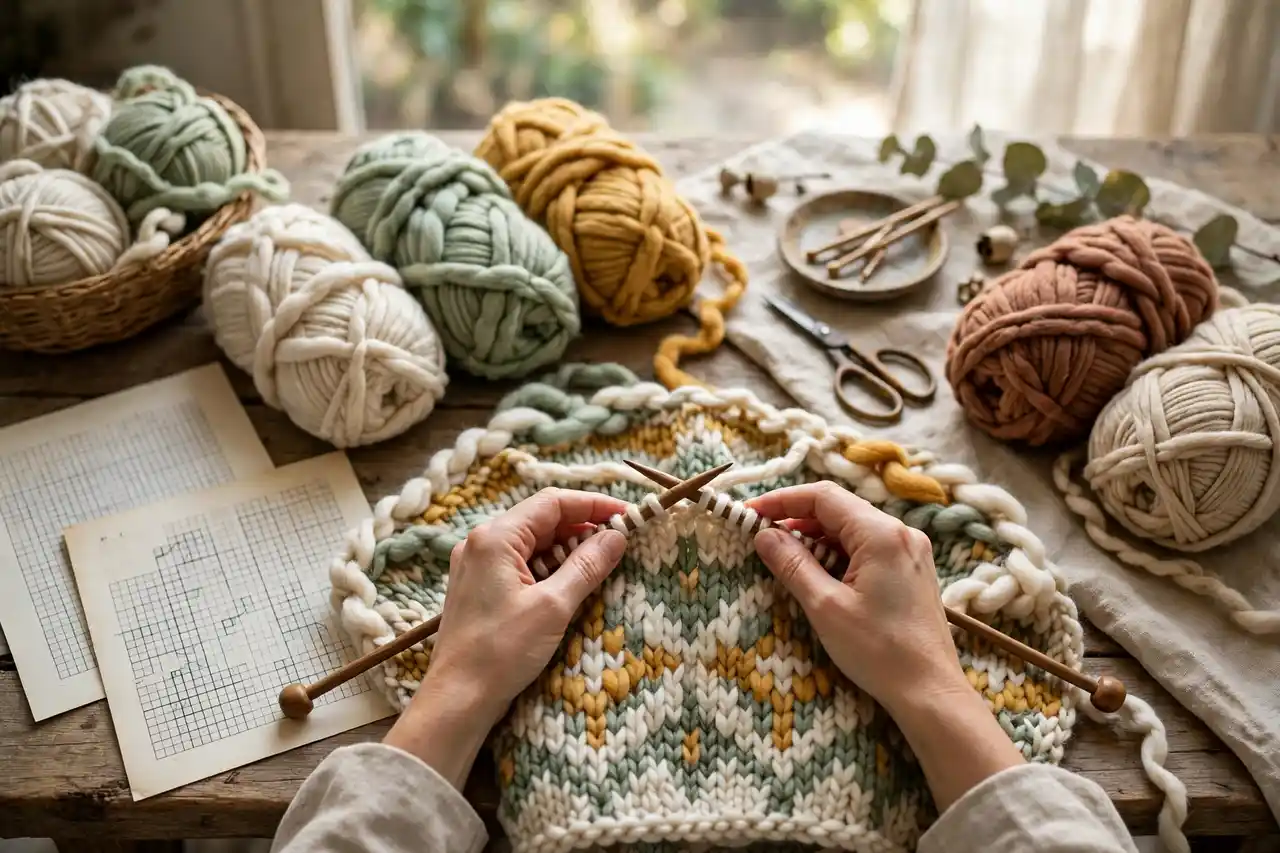
Knitting patterns as art turn yarn and needles into color, texture, and pattern that can rival painting for visual richness. From bold colorwork sweaters to delicate lace shawls, knitted fabric carries design in every stitch.
A helpful companion is calligraphy for beginners, which trains the same eye for color and composition that knitting design demands.
This guide covers reading patterns, cables, colorwork, lace, and designing your own motifs, so you can move from following patterns to creating them. A related craft is resin art for beginners.
What Is Knitting Patterns Art?
Knitting builds fabric from loops on two needles, with stitch patterns creating texture and color patterns creating pictures. Unlike crochet, knitting holds many live stitches at once, which allows complex colorwork and lace that flows across a whole garment.
Knitting as art includes fair isle colorwork, aran cables, lace shawls, and intarsia pictures, each with its own history and visual language. Many American knitters blend traditional motifs with modern colors, creating pieces that feel both timeless and personal.
Many makers find that exploring how to sell art online alongside this craft keeps practice fresh, because a second medium often solves a problem the first one could not.
Tools and Materials for Knitting Patterns Art
Knitting needs needles, yarn, and pattern tools, plus a few notions that make complex patterns manageable.
- Knitting needles in straight, circular, or double-pointed styles
- Yarn in weights suited to your project, from fingering to chunky
- Stitch markers, a row counter, and a cable needle
- A pattern chart or printed pattern with a ruler for tracking rows
- A yarn needle for weaving ends and seaming
- Blocking mats and pins for finishing knitted pieces
Swatch every new pattern and yarn combination, since gauge decides whether a sweater fits or a shawl drapes as intended. Keep your tools clean and stored together between sessions, because a tidy kit makes it far easier to sit down and practice regularly.
Knitting Patterns Art Techniques to Learn First
Four pattern families carry most knitting art, and each one teaches different skills.
Cables
Cables twist stitches over each other to form braids, ropes, and lattice patterns, using a cable needle to hold stitches while others cross. Keep cable crossings consistent, follow charts row by row, and block finished cables so they relax into even shapes. A related craft is bedroom wall art ideas, where repeating patterns also reward careful counting.
Colorwork
Colorwork includes stranded knitting, where two colors alternate across a row, and intarsia, where color blocks use separate yarn supplies. Keep floats loose in stranded work, twist yarns at color changes in intarsia, and swatch color combinations before committing.
Lace
Lace combines yarn overs and decreases to create open, airy patterns of leaves, flowers, and waves. Use stitch markers between repeats, count stitches at the end of every pattern row, and block lace firmly to open the pattern fully.
Texture stitches
Texture stitches such as seed stitch, moss stitch, and bobbles add depth without color change, giving garments subtle richness. Texture shows best in solid or lightly variegated yarn, and it pairs beautifully with simple garment shapes.
Step by Step: Your First Knitting Patterns Art Project
A colorwork hat or cabled scarf is a strong first art project, since it teaches pattern reading in a small, wearable piece.
- Choose a pattern slightly above your comfort level, with one new technique to learn.
- Knit a gauge swatch in pattern, wash and block it, then measure carefully.
- Read the whole pattern before starting, noting repeats and special stitches.
- Work slowly through the first repeat, using markers and a row counter.
- Check gauge and size midway, adjusting needle size if needed.
- Block the finished piece, weave in ends, and photograph it in natural light.
Take a photo of each finished step while you learn, because comparing early and later work shows progress that is easy to miss day to day. A related skill worth exploring is embroidery stitches for beginners.
Common Mistakes to Avoid
Knitting art mistakes usually come from gauge, counting, or tension problems that grow with the project.
- Skipping the swatch, which leads to garments that do not fit.
- Losing place in a chart, so pattern repeats shift and look wrong.
- Pulling floats too tight in colorwork, which puckers the fabric.
- Skipping blocking, which leaves lace closed and cables uneven.
Keep notes on what went wrong and what fixed it, because that short record becomes your most useful guide as projects grow more ambitious. For fresh inspiration, browse botanical illustration for beginners.
Tips for Better Results
Beautiful knitted art comes from swatching, counting, and finishing with care.
- Use lifelines in lace so mistakes can be fixed without unraveling everything.
- Keep pattern notes beside you, marking rows as you finish them.
- Try new techniques in a swatch before a full garment.
- Store hand-knits folded, not hung, to keep their shape.
Set one small goal for each session, such as finishing one technique sample, so every sitting ends with something you can see and measure. Two crafts that pair well with this one are gouache painting for beginners and landscape painting for beginners.
Knitting Patterns Art Project Ideas to Try Next
Once your first piece is finished, the best way to keep improving is to try a small project that stretches one skill at a time. The ideas below move from simple to slightly more ambitious, so you can pick one that matches your confidence today.
- Knit a cabled scarf to practice cable crossings in a simple, useful piece.
- Create a fair isle hat with two colors in a traditional or modern motif.
- Knit a lace shawl with a repeating leaf pattern for an airy finished piece.
- Design a textured cushion cover using seed stitch and bobbles.
- Make a colorwork sweater yoke as a first large colorwork project.
Common Questions About Knitting Patterns Art
How do I read a knitting chart?
Knitting charts show stitches as symbols read from right to left on right-side rows and left to right on wrong-side rows. Start with a small chart, mark completed rows, and use stitch markers between repeats to stay on track.
What is the difference between stranded and intarsia colorwork?
Stranded colorwork carries two colors across each row, creating floats on the back, while intarsia uses separate yarn supplies for each color block. Stranded work suits repeating patterns, and intarsia suits large pictures and blocks.
Why is blocking important for knitting?
Blocking washes and reshapes knitted fabric, opening lace, evening cables, and setting final size. Without blocking, lace stays closed and garments may not match their intended measurements.
How do I choose yarn for a knitting art project?
Match yarn weight and fiber to the pattern, swatch for gauge, and consider drape: wool suits cables and colorwork, while silk blends suit lace shawls. Always buy enough yarn from one dye lot for consistent color.
Displaying and Caring for Your Knitting Patterns Art Work
Store hand-knits folded in a clean, dry place with cedar or lavender to deter moths, hand wash in cool water, and reshape while drying flat. Avoid hanging heavy knits, since gravity stretches them out of shape over time.
Finished pieces also make thoughtful gifts, especially when you include a short note about the materials and the making process. A personal note turns a handmade object into a story, and recipients tend to treasure that story as much as the piece itself.
Setting Up a Workspace for Knitting Patterns Art
A comfortable workspace makes knitting patterns art far more enjoyable, because you will practice more often when setup takes minutes rather than half an hour. Choose a sturdy table you can wipe clean, keep your knitting needles in straight, circular, or double-pointed styles, yarn in weights suited to your project, from fingering to chunky, and stitch markers, a row counter, and a cable needle within easy reach, and add a bright lamp so you can see detail clearly in the evening. Store supplies in labeled boxes or a single tote, keep finished pieces away from heavy items that could crush or scratch them, and protect the table surface if your craft involves water, paste, dust, or dye. A tidy, ready-to-use corner invites daily practice, and daily practice is what turns a beginner into a confident maker.
After your first project, revisit the techniques in this guide, Cables, Colorwork, Lace, Texture stitches, and practice each one on a small sample before your next finished piece. Short focused practice sessions build muscle memory faster than long unfocused ones, and a shelf of samples becomes a useful reference whenever you plan something new. Over time you will notice which techniques feel natural and which need more work, and that awareness is the real sign of growing skill.
Getting Started With Knitting Patterns Art
Knitting patterns as art reward makers who read charts carefully, swatch honestly, and finish with blocking. Each project deepens your design sense and your technical skill at once. For more textile ideas, explore figure drawing for beginners.
Choose a cabled scarf or colorwork hat pattern, swatch it this week, and knit with patience. Patterned knitting turns quiet evenings into wearable art. You may also enjoy pastel drawing for beginners.