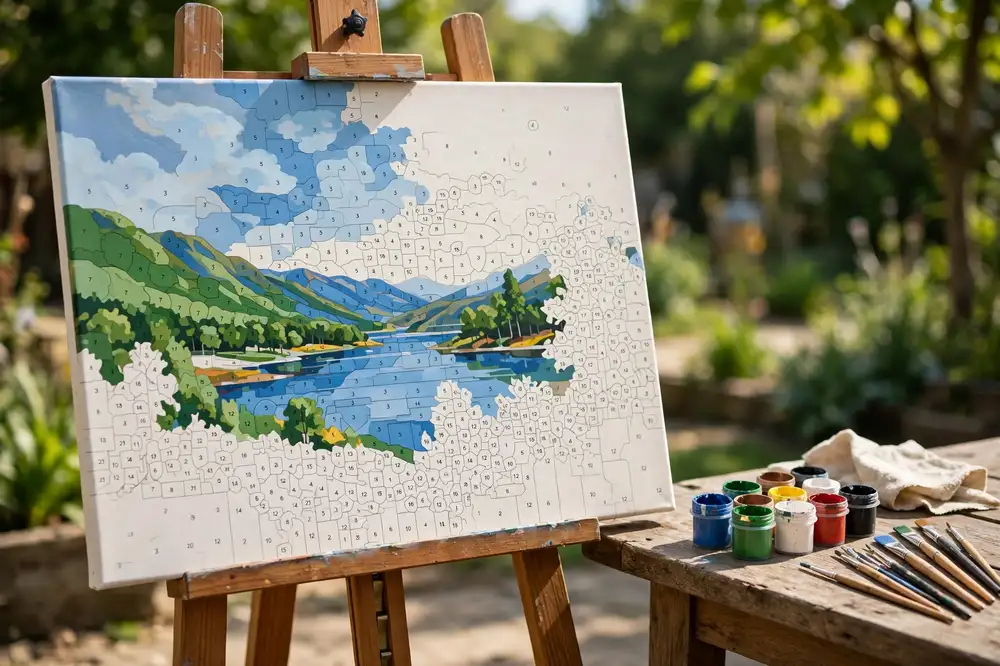
Paint by numbers is the easiest way for a complete beginner to create a beautiful painting, and it is also one of the most relaxing hobbies you can pick up at home. Each canvas comes printed with numbered sections, each number matches a small pot of paint, and all you have to do is fill in each section with its matching color. When you finish, the numbers disappear under the paint and a detailed landscape, animal, or floral scene appears, painted entirely by you. No drawing skill is needed, no color mixing is required, and the result looks far more impressive than most people expect from a first painting.
What Is Paint by Numbers and How Does It Work?
A paint by numbers kit includes a pre-printed canvas, a set of numbered acrylic paints, and two or three fine brushes. The canvas is divided into many small shapes, and each shape carries a number that tells you exactly which paint to use. You simply match the number on the canvas to the number on the paint pot, fill in the shape, and move on to the next one. As you work, the picture slowly emerges, section by section, like a puzzle coming together in color.
Most kits use acrylic paint, which dries quickly, covers well, and is easy to clean up with water. The paints are ready to use straight from the pot, so you never have to mix colors or worry about getting a shade wrong. Some kits also include a printed reference sheet showing the finished image. If you have painted with acrylics before, you may already know how forgiving they are, and acrylic painting techniques for beginners explains how to get the most from them.
Choosing Your First Paint by Numbers Kit
Your first kit sets the tone for the whole hobby, so choose one you will genuinely enjoy working on. Pick an image you love, whether that is a mountain landscape, a cute cat, a field of sunflowers, or a famous painting you have always admired. You will spend many happy hours with this picture, so it should be something you want on your wall when it is done. Kits range from simple designs with large sections to detailed scenes with hundreds of tiny shapes, and beginners should start in the middle: detailed enough to look impressive, but not so tiny that it feels frustrating.
Size matters too. A sixteen by twenty inch canvas is a popular first choice, because it is large enough to show detail but small enough to manage on a table or lap desk. Check that the kit includes enough paint, brushes in at least two sizes, and a clear reference sheet. Reading reviews before you buy is worth the few minutes it takes, since paint quality varies between brands, and a good kit makes the whole experience smoother. For inspiration on subjects, landscape painting for beginners shows why scenery remains the most loved choice for new painters.
Setting Up Your Painting Workspace
Many painters like to work with the canvas taped to a board, which keeps it flat and lets them move it easily. Others prefer a small tabletop easel, which holds the canvas at a comfortable angle and reduces neck strain. If you plan to paint for more than an hour, take breaks to stretch, and keep your water fresh so your brushes stay clean. A tidy workspace also helps you relax into the rhythm of painting, which is half the pleasure of the hobby. For more ideas on creative spaces, mixed media art for beginners shows how a dedicated art corner can spark new projects.
Paint by Numbers Technique: Tips That Make a Big Difference
Work From Light to Dark, Top to Bottom
The classic advice for paint by numbers is to start with the lightest colors and move toward the darkest, working from the top of the canvas downward. Light colors are easier to cover if you make a small mistake, while dark colors can stain light areas if they smudge. Working top to bottom also keeps your hand from dragging across wet paint, which prevents smears and keeps your lines crisp. You do not have to follow this order rigidly, but it is a helpful default when you are not sure where to begin.
Paint One Color at a Time
Another popular method is to finish all the sections of one color before moving to the next, which means you open each paint pot only once and your brush stays clean between colors. This approach feels efficient and satisfying, because you can watch one color appear across the whole canvas like magic. It also reduces the risk of mixing colors by accident. Whichever method you prefer, rinse your brush thoroughly when you switch colors, and dry it on a paper towel so water does not thin your paint.
Use the Right Amount of Paint
The goal is to cover each numbered section completely, so the printed number and lines no longer show through. Load your brush with enough paint to fill the shape in one or two smooth strokes, and do not be afraid to apply a second coat once the first has dried if a number still peeks through. Very thin paint leaves numbers visible, while very thick paint can crack as it dries, so aim for a smooth, even layer. If a section is tiny, use the tip of your smallest brush and steady your hand by resting your wrist on the table.
Blending is an optional step that can make your painting look more professional. Where two colors meet, you can gently feather the edge while both are still wet, which softens the boundary and makes the image look less like a coloring page. This technique takes practice, so try it on a background area first, such as a sky, before attempting it on a face or detailed feature. Learning how colors work together will help here, and color theory for beginners explains the basics in plain language.
Fixing Mistakes Without Stress
If a paint pot dries out, add a single drop of water and stir gently with a toothpick, which usually brings it back to life. If a number is hard to read, use a magnifying glass or your phone camera to zoom in, and keep the reference sheet nearby for tricky areas. The most important rule is not to panic or rush, because most mistakes are invisible once the painting is finished and framed. This forgiving nature is one reason paint by numbers is recommended for anyone returning to art after years away, much like gouache painting for beginners is praised for its easy corrections.
Finishing, Sealing, and Framing Your Painting
When every section is filled, step back and look at your painting from a few feet away, because that is how it will be seen on a wall. Touch up any spots where numbers still show, and check the edges of the canvas for missed shapes. Once you are happy, let the painting dry for at least twenty-four hours before handling it much. Some painters apply a clear acrylic varnish, which protects the surface, deepens the colors, and gives the finished piece a polished, gallery-like look.
Framing transforms a finished canvas from a craft project into real home decor. A simple wooden or black frame suits most images, and a frame with glass protects the painting from dust. If your canvas came rolled rather than stretched, you can stretch it over a wooden frame or mount it on a board before framing. Hang your finished work where you will see it every day, because it is a reminder of hours of calm, focused creativity. For placement ideas, bedroom wall art ideas offers practical ways to display handmade art beautifully.
Going Beyond the Kit: Advanced Paint by Numbers Ideas
You can also combine paint by numbers with other crafts, for example by adding hand-painted details after the numbered sections are done, or by mounting the finished canvas in a handmade frame. As your confidence grows, you might try freehand painting alongside your kits, using the color sense and brush control you have built up. Many painters find that paint by numbers rekindles a love of art they had as children, and it often leads to new hobbies. If that happens to you, acrylic pour painting is a fun, messy, and joyful next adventure, while oil painting techniques every beginner should know opens the door to a classic medium.
Paint by Numbers as Relaxation and a Gift
If you enjoy making things to share or sell, a finished paint by numbers piece can also be the start of a small creative side project. Some painters take commissions for custom kits, while others simply enjoy filling their homes with art they made themselves. Whatever your reason for starting, the hobby rewards patience with beauty, and it asks for nothing more than a brush, a canvas, and a little time. For gentle next steps in art, pastel drawing for beginners is another low-pressure medium to explore, and sell art online explains how artists turn handmade work into income.
Conclusion: Your First Paint by Numbers Masterpiece Is Waiting
Paint by numbers proves that anyone can paint, regardless of experience, talent, or training. Choose a kit with an image you love, set up a comfortable workspace, and work through the numbers one color at a time. Use the light-to-dark and top-to-bottom tips, fix mistakes calmly with a second coat, and finish with a frame that shows your work at its best. The process is relaxing, the progress is satisfying, and the finished painting is something to be genuinely proud of.
So order a kit, clear a table, and paint your first section today. By the time the last number disappears under the paint, you will have more than a picture: you will have a new hobby, a calmer evening routine, and a piece of art made entirely by your own hands. That is a wonderful return on a simple kit, and it is why paint by numbers continues to win new fans across the United States every single year. If you love a sparkling finished canvas, diamond painting for beginners is another relaxing beginner craft to try next.