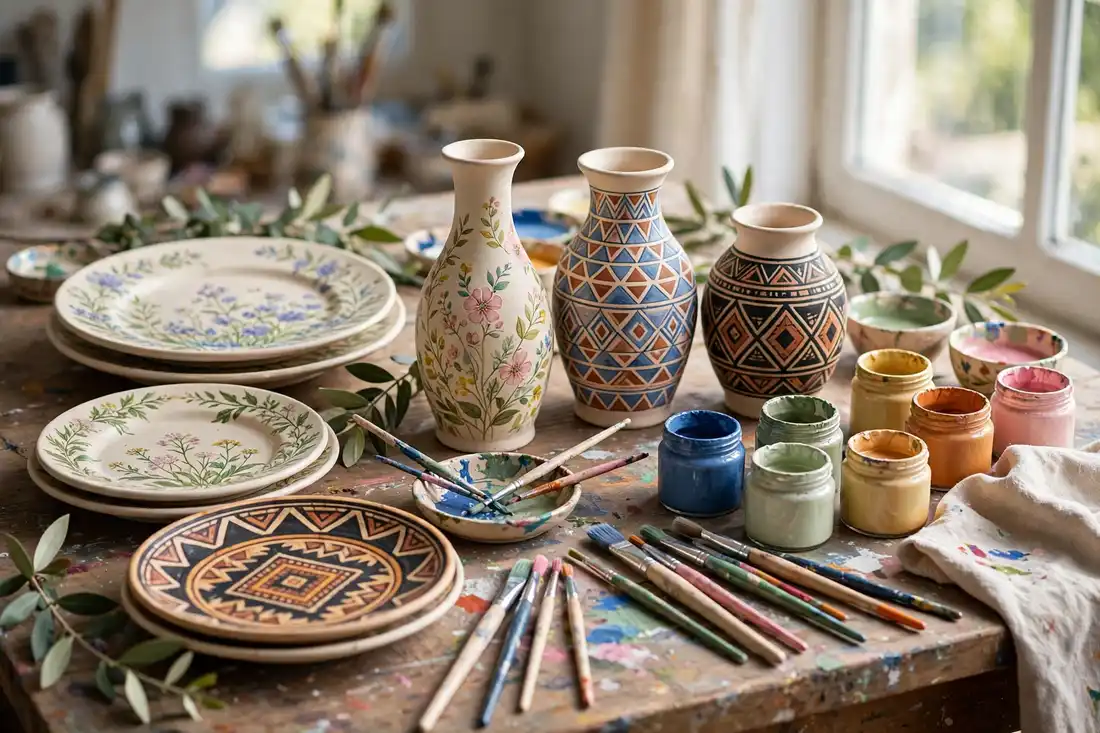
Pottery painting ideas turn plain bisque ware into personal, colorful pieces, and they suit everyone from first-time painters to experienced ceramic artists. You do not need drawing talent to start, since patterns, stamps, and simple motifs produce beautiful results.
A natural companion is pottery for beginners, which builds the same eye for color and balance that makes painted pottery feel intentional.
This guide shares pattern families, color tips, and techniques for mugs, plates, and vases, plus advice on avoiding muddy colors and uneven coats. A related craft is acrylic painting techniques for beginners.
What Is Pottery Painting Ideas?
Pottery painting means decorating bisque-fired ceramics with underglazes, glazes, or ceramic paints, then firing the piece so color becomes permanent. Paint-your-own-pottery studios have made this craft widely popular in the United States, because visitors can finish a piece in one visit and collect it after firing.
The appeal is creative freedom with low risk: a plain mug or plate becomes a canvas, mistakes can often be wiped away before firing, and the finished piece is useful as well as decorative. That mix of art and function keeps pottery painting popular for gifts, parties, and family activities.
Once the basics feel comfortable, a related craft such as watercolor techniques for beginners can show how similar skills transfer to a new medium, and it often sparks ideas for your next project.
Tools and Materials for Pottery Painting Ideas
Most painting projects need only a small set of brushes and paints, which keeps the craft affordable and portable.
- Bisque ware pieces: mugs, plates, bowls, or tiles to decorate
- Underglazes or ceramic paints in a palette you love
- Round and flat brushes in small, medium, and large sizes
- A pencil and tracing paper for planning designs before painting
- Painter tape and stencils for crisp geometric patterns
- A clear glaze and access to a kiln firing service or studio
Test colors on a tile first, since many ceramic paints change shade during firing and look different wet than finished. Buy the basics first and add specialty items later, once you know which parts of the process you enjoy most and where your current kit falls short.
Pottery Painting Ideas Techniques to Learn First
Four pattern approaches cover most pottery painting, from simple dots to detailed florals.
Florals and botanicals
Florals start with simple petal shapes built from dots and teardrops, then grow into leaves, vines, and layered blooms. Paint larger shapes first, add detail last, and leave breathing space so the design feels fresh rather than crowded. A related craft is resin art for beginners, where plant forms also teach observation and patience.
Geometric patterns
Geometric patterns use stripes, dots, triangles, and grids for a modern, graphic look. Use tape for straight lines, a steady hand for dots, and repeat one motif consistently so the pattern reads as intentional.
Seasonal and themed designs
Seasonal designs match the calendar: autumn leaves, winter snowflakes, spring flowers, and summer fruit. Themed pieces make thoughtful gifts, since the design connects the piece to a moment or a person.
Layering and sgraffito
Layering builds depth by painting one color over another once the first coat dries, while sgraffito scratches through a top layer to reveal the color beneath. Both techniques add richness, but both need patience between coats for clean results.
Step by Step: Your First Pottery Painting Ideas Project
A painted mug is a great first project, since it is small, useful, and easy to plan in advance.
- Choose a simple design and sketch it on paper at the same size as the mug.
- Clean the bisque surface with a damp sponge so paint adheres evenly.
- Trace or lightly pencil the main shapes onto the piece.
- Paint large background areas first, letting each coat dry before adding more.
- Add details and outlines last, using the smallest brush for fine lines.
- Let the piece dry fully, apply clear glaze if needed, and fire according to the paint instructions.
Work slowly through each step the first few times, and do not worry if early results look rough, since steady repetition is what builds real skill. A related skill worth exploring is modern abstract art trends.
Common Mistakes to Avoid
Painted pottery problems usually come from impatience: thick coats, wet layers, or untested colors.
- Painting thick coats that crack or peel during firing.
- Adding detail over wet paint, which smears and muddies colors.
- Skipping a color test, so fired colors surprise you.
- Painting over the foot ring, which can fuse the piece to the kiln shelf.
Most of these mistakes come from rushing, so slowing down by even a few minutes usually prevents them and improves the result noticeably. For fresh inspiration, browse bedroom wall art ideas.
Tips for Better Results
Clean, bright results come from planning and restraint more than from fancy supplies.
- Limit your palette to three or four colors for a cohesive design.
- Keep brushes clean between colors to avoid muddy mixes.
- Step back often to check balance, since close work hides uneven spacing.
- Sign and date the bottom of gift pieces for a personal touch.
Short, regular sessions beat rare long ones, and a simple routine you actually keep will carry your skills further than any single tutorial. Two crafts that pair well with this one are visiting an art exhibition and embroidery stitches for beginners.
Pottery Painting Ideas Project Ideas to Try Next
Once your first piece is finished, the best way to keep improving is to try a small project that stretches one skill at a time. The ideas below move from simple to slightly more ambitious, so you can pick one that matches your confidence today.
- Paint a set of plates with a single floral motif repeated in different colors.
- Design a mug with a geometric border and a simple central image.
- Create a seasonal tile series: one design for each season of the year.
- Paint a vase with layered dots in a gradient from dark to light.
- Decorate a serving bowl with a hand-drawn pattern inspired by a favorite textile.
Common Questions About Pottery Painting Ideas
Do I need drawing skill to paint pottery?
No, many beautiful pottery designs use dots, stripes, stamps, and stencils that need no drawing skill at all. Simple repeated motifs often look more professional than ambitious freehand work attempted without practice.
Why do my pottery paint colors change after firing?
Ceramic paints and underglazes often shift shade during firing as minerals react to heat, so colors look different wet than finished. Always test colors on a tile first, and keep a fired color chart for reference.
Can I fix a mistake while painting pottery?
Before firing, most mistakes can be wiped away with a damp sponge or scraped gently once dry. After firing, color is permanent, so plan designs on paper and paint patiently to avoid rushed errors.
What is the difference between underglaze and glaze?
Underglaze is a colored coating applied to bisque ware before a clear glaze, giving crisp color and detail. Glaze itself is the glassy coating that seals the piece, and colored glazes combine color and sealing in one layer.
Displaying and Caring for Your Pottery Painting Ideas Work
Display painted pottery where light shows the colors, hand wash pieces with detailed painting when possible, and avoid abrasive scrubbers that dull glaze over time. For pieces used daily, check rims and handles for wear, and keep treasured gift pieces in a spot where they are seen and enjoyed.
Finished pieces also make thoughtful gifts, especially when you include a short note about the materials and the making process. A personal note turns a handmade object into a story, and recipients tend to treasure that story as much as the piece itself.
Setting Up a Workspace for Pottery Painting Ideas
A comfortable workspace makes pottery painting ideas far more enjoyable, because you will practice more often when setup takes minutes rather than half an hour. Choose a sturdy table you can wipe clean, keep your bisque ware pieces: mugs, plates, bowls, or tiles to decorate, underglazes or ceramic paints in a palette you love, and round and flat brushes in small, medium, and large sizes within easy reach, and add a bright lamp so you can see detail clearly in the evening. Store supplies in labeled boxes or a single tote, keep finished pieces away from heavy items that could crush or scratch them, and protect the table surface if your craft involves water, paste, dust, or dye. A tidy, ready-to-use corner invites daily practice, and daily practice is what turns a beginner into a confident maker.
After your first project, revisit the techniques in this guide, Florals and botanicals, Geometric patterns, Seasonal and themed designs, Layering and sgraffito, and practice each one on a small sample before your next finished piece. Short focused practice sessions build muscle memory faster than long unfocused ones, and a shelf of samples becomes a useful reference whenever you plan something new. Over time you will notice which techniques feel natural and which need more work, and that awareness is the real sign of growing skill.
Getting Started With Pottery Painting Ideas
Pottery painting ideas work best when you start simple, test colors, and let patterns grow with practice. Every finished piece teaches color and composition lessons that carry into the next one. For more creative ideas, explore botanical illustration for beginners.
Pick a plain mug, choose one pattern family from this guide, and paint it this week. Finished, useful art beats a perfect plan that never leaves the sketchbook. You may also enjoy gouache painting for beginners.