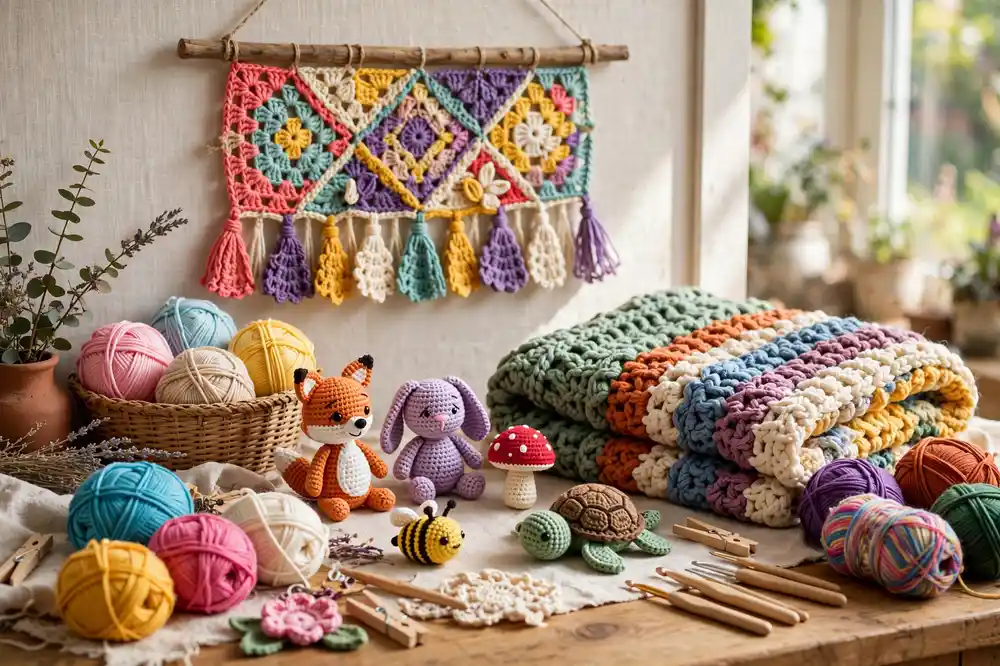
Crochet art projects go far beyond blankets and scarves, reaching into sculpture, wall art, and wearable pieces that blur the line between craft and fine art. A single hook and a ball of yarn can build texture, color, and form in ways that surprise first-time makers.
A natural companion is color theory for beginners, which builds the same sense of color and composition that makes crochet art feel intentional.
This guide covers essential stitches, yarn choices, amigurumi, wall art, and larger projects, so you can choose a first art project with confidence. A related craft is mixed media art for beginners.
What Is Crochet Art Projects?
Crochet uses a hooked needle to pull loops of yarn through other loops, building fabric row by row or round by round. Unlike knitting, crochet works with one live stitch at a time, which makes it forgiving for beginners and flexible for sculptural shapes.
Modern crochet art includes amigurumi, which are small stuffed figures, freeform wall pieces, tapestry crochet with color patterns, and large installations. The craft suits all ages and budgets, since hooks cost little and yarn comes in endless colors and textures.
If you enjoy this kind of hands-on work, pottery for beginners is a natural next step, since it builds the same patience, observation, and attention to detail.
Tools and Materials for Crochet Art Projects
Crochet needs a hook, yarn, and a few small notions, all of which fit in a project bag you can carry anywhere.
- Crochet hooks in several sizes, usually starting with 4mm or 5mm
- Worsted-weight yarn in colors you love for practice and projects
- Stitch markers to track rounds and pattern repeats
- A yarn needle for weaving in ends and sewing pieces together
- Scissors and a measuring tape for gauge and sizing
- Safety eyes and stuffing for amigurumi figures
Match hook size to yarn weight and check gauge on a swatch, since the wrong combination makes fabric too stiff or too loose. A small, well-chosen kit beats a large one you never use, so start simple, keep everything in one place, and upgrade one tool at a time.
Crochet Art Projects Techniques to Learn First
Four stitch skills unlock most crochet art, from flat panels to three-dimensional figures.
Basic stitches
Basic stitches include chain, single crochet, half double crochet, and double crochet, each building height and texture differently. Practice even tension first, since consistent stitches matter more than speed. A related craft is watercolor techniques for beginners, where even tension also decides the result.
Working in the round
Working in the round builds circles and tubes for amigurumi, hats, and baskets, using increases to keep shapes flat or shaped. Mark the first stitch of each round, count stitches often, and fix mistakes early before they compound.
Color and tapestry
Color work carries unused yarn along the row or switches colors to form pictures and patterns. Keep carried yarn loose enough to avoid puckering, and weave ends in carefully so color changes look clean from both sides.
Shaping and assembly
Shaping uses increases and decreases to sculpt curves, limbs, and forms, while assembly sews pieces together with a yarn needle. Stuff amigurumi firmly but evenly, position parts with pins first, and sew with matching yarn for invisible joins.
Step by Step: Your First Crochet Art Projects Project
A small amigurumi animal is a delightful first art project, since it teaches rounds, shaping, and assembly in miniature.
- Choose a simple pattern and gather yarn, hook, stuffing, and safety eyes.
- Crochet a gauge swatch to check that your stitches match the pattern size.
- Work the body in rounds, increasing and decreasing as the pattern directs.
- Crochet smaller parts such as ears and limbs, stuffing them lightly.
- Pin parts in place, check proportions, then sew them securely.
- Weave in all ends, add eyes and details, and photograph your finished figure.
Repeat the sequence on small practice pieces before starting a finished work, so mistakes stay cheap and lessons stay clear. A related skill worth exploring is resin art for beginners.
Common Mistakes to Avoid
Crochet art mistakes usually come from tension, counting, or skipping the gauge swatch.
- Crocheting with uneven tension, which makes fabric wavy or lopsided.
- Losing count in rounds, so shapes bulge or flatten unexpectedly.
- Skipping gauge, which produces pieces far larger or smaller than planned.
- Stuffing amigurumi unevenly, which creates lumps instead of smooth forms.
If a piece goes wrong, treat it as a test piece rather than a failure, since it still teaches you exactly what to change next time. For fresh inspiration, browse how to sell art online.
Tips for Better Results
Enjoyable crochet art comes from relaxed hands, good light, and projects matched to your current skill.
- Practice new stitches on a swatch before starting a full project.
- Take breaks to rest hands, especially during large blankets or installations.
- Keep a project journal with yarn, hook, and pattern notes for repeats.
- Join a crochet group or online community for pattern ideas and encouragement.
Share finished work with friends or a local makers group when you feel ready, since honest feedback often points out strengths you cannot see yourself. Two crafts that pair well with this one are modern abstract art trends and bedroom wall art ideas.
Crochet Art Projects Project Ideas to Try Next
Once your first piece is finished, the best way to keep improving is to try a small project that stretches one skill at a time. The ideas below move from simple to slightly more ambitious, so you can pick one that matches your confidence today.
- Crochet a small amigurumi animal as a first sculptural project.
- Make a textured wall hanging with bobbles, shells, and color changes.
- Create a tapestry crochet pouch with a simple geometric picture.
- Crochet a set of coasters in a mandala pattern for a table display.
- Design a large freeform piece by joining motifs in varied stitches and colors.
Common Questions About Crochet Art Projects
What is amigurumi?
Amigurumi is the Japanese art of crocheting small stuffed figures, from animals to food to fantasy characters. Pieces are worked in the round with tight stitches, stuffed firmly, and assembled with a yarn needle.
What yarn is best for crochet art?
Worsted-weight yarn suits most art projects, since it shows stitch texture clearly and works up at a comfortable pace. Cotton yarn gives crisp stitch definition for wall art, while wool offers warmth and stretch for wearables.
How do I read a crochet pattern?
Crochet patterns use abbreviations for stitches, with repeats marked by asterisks or brackets. Read the whole pattern first, note special stitches, and mark your place row by row to avoid losing count.
Why does my crochet curl or pucker?
Curling usually means tension is too tight or stitch counts changed accidentally, especially in rounds. Check counts often, relax your hands, and block finished pieces to even out minor curling.
Displaying and Caring for Your Crochet Art Projects Work
Store crochet art away from moths and direct sun, hand wash pieces when needed, and reshape them while drying. Keep stuffed figures out of reach of pets that may chew yarn, and repair loose ends promptly so small unraveling never becomes a large one.
Finished pieces also make thoughtful gifts, especially when you include a short note about the materials and the making process. A personal note turns a handmade object into a story, and recipients tend to treasure that story as much as the piece itself.
Setting Up a Workspace for Crochet Art Projects
A comfortable workspace makes crochet art projects far more enjoyable, because you will practice more often when setup takes minutes rather than half an hour. Choose a sturdy table you can wipe clean, keep your crochet hooks in several sizes, usually starting with 4mm or 5mm, worsted-weight yarn in colors you love for practice and projects, and stitch markers to track rounds and pattern repeats within easy reach, and add a bright lamp so you can see detail clearly in the evening. Store supplies in labeled boxes or a single tote, keep finished pieces away from heavy items that could crush or scratch them, and protect the table surface if your craft involves water, paste, dust, or dye. A tidy, ready-to-use corner invites daily practice, and daily practice is what turns a beginner into a confident maker.
After your first project, revisit the techniques in this guide, Basic stitches, Working in the round, Color and tapestry, Shaping and assembly, and practice each one on a small sample before your next finished piece. Short focused practice sessions build muscle memory faster than long unfocused ones, and a shelf of samples becomes a useful reference whenever you plan something new. Over time you will notice which techniques feel natural and which need more work, and that awareness is the real sign of growing skill.
Getting Started With Crochet Art Projects
Crochet art projects reward patience with pieces that are soft, colorful, and deeply personal, from tiny figures to bold wall art. Start with one stitch, finish one project, and let curiosity guide the next. For more craft inspiration, see visiting an art exhibition.
Pick a simple amigurumi or wall piece, gather yarn and a hook, and start this week. Every row builds skill, and every finished piece proves it. You may also like embroidery stitches for beginners.