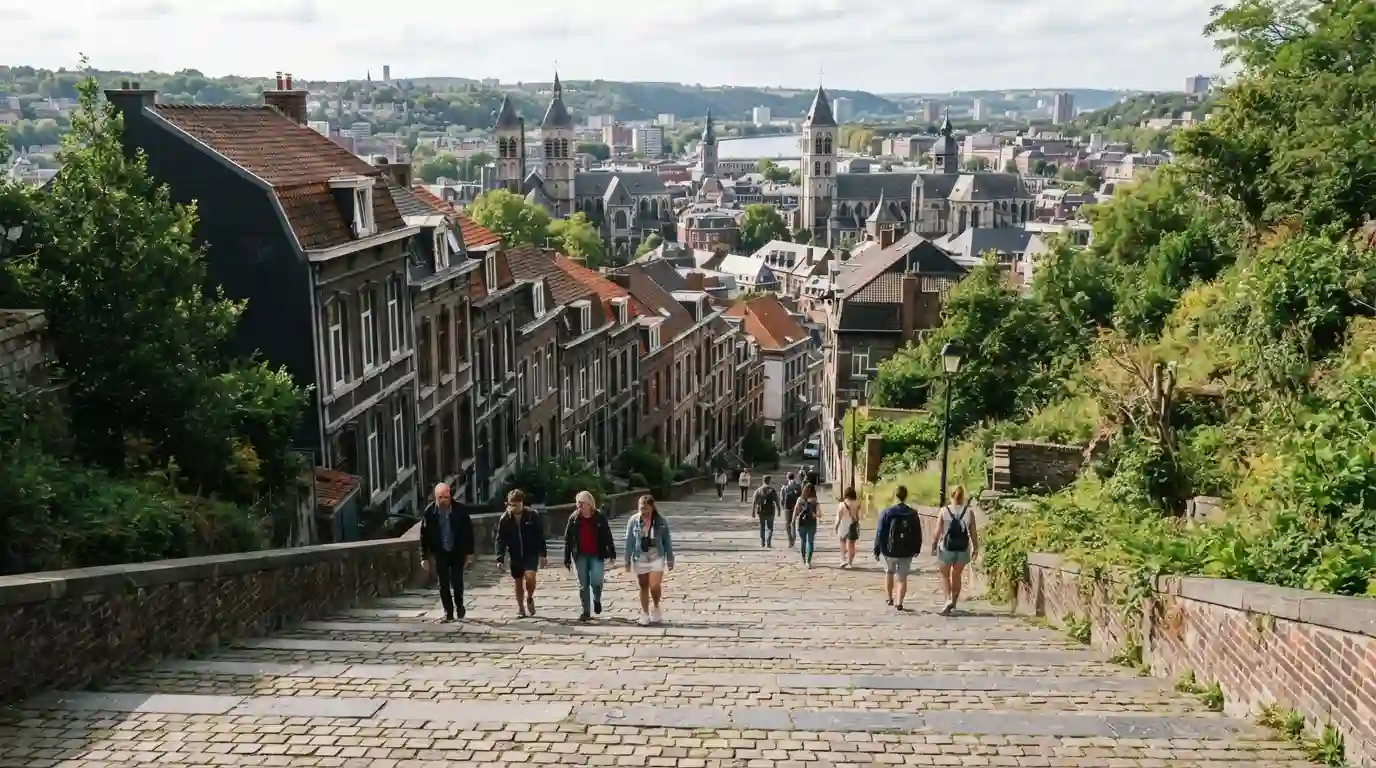
Liège is compact enough to explore on foot while offering enough attractions for a full weekend or longer stay. The historic center is particularly convenient for sightseeing because many major landmarks are located within walking distance of one another. From the dramatic Montagne de Bueren staircase and the peaceful slopes of the Citadel to museums, churches, public squares, and the Meuse River, there is plenty to discover.
If you are planning a European trip, you can also compare Liège with other destinations through our guides to less crowded places to visit in Europe, the best places to visit in Albania, and places to visit in Greece for young couples.
Why Visit Liège, Belgium?
Liège has a personality that feels different from Belgium’s most heavily visited tourist cities. Its history stretches across centuries, but the city also has a youthful cultural atmosphere shaped by universities, restaurants, cafés, galleries, nightlife, and public spaces.
The city is especially appealing to travelers interested in architecture and history. Historic churches, former religious buildings, elegant public spaces, old streets, and the Palace of the Prince-Bishops provide a glimpse into Liège’s long development as an important regional center.
Travelers who prefer outdoor experiences can explore the hills around the Citadel, walk beside the Meuse, or simply wander through the city’s neighborhoods. Food is another reason to visit, with Liège known for specialties such as Liège waffles and local-style meatballs.
1. Montagne de Bueren
The Montagne de Bueren is one of the most recognizable attractions in Liège and should be near the top of any sightseeing itinerary. This imposing staircase climbs the hillside toward the Citadel area and provides a memorable physical challenge as well as an unusual urban viewpoint.
The staircase has hundreds of steps, making the climb demanding, particularly for visitors who are not accustomed to steep walks. However, the experience is part of the attraction. As you climb, the changing perspective over the surrounding streets makes the effort worthwhile.
The area is also connected with Liège’s military and political history. Once you reach the higher sections, you can continue exploring the green spaces and pathways around the Citadel.
For travelers interested in unusual city attractions, the Montagne de Bueren is one of the places that gives Liège a character of its own.
2. The Slopes of the Citadel
The Slopes of the Citadel offer one of the best opportunities to experience Liège’s combination of nature, history, and city views. The area contains walking paths, greenery, hillside landscapes, and quiet corners surprisingly close to the busy center.
It is an excellent choice for travelers who want a break from museums and architecture. The paths can be explored at a relaxed pace, making the area suitable for photographers, walkers, couples, and visitors looking for panoramic views.
The Citadel area also works well as part of a walking itinerary that begins in the historic center and gradually climbs toward the city’s higher ground.
3. Grand Curtius Museum
The Grand Curtius Museum is one of Liège’s most important cultural attractions. The museum brings together collections covering art, archaeology, decorative arts, religious art, weaponry, glass, and other aspects of the region’s heritage.
Its extensive collections make it particularly useful for visitors who want to understand Liège beyond its streets and monuments. Instead of focusing on a single historical period, the museum provides a broader view of the city’s cultural development.
Allow several hours if you want to explore the collections carefully. Combining the museum with a walking tour of the surrounding historic district can create a well-rounded day of sightseeing.
4. Liège Historic Center
One of the easiest ways to discover Liège is simply to explore its historic center on foot. The area brings together old streets, churches, public squares, museums, cafés, shops, and architectural landmarks.
The historic center is particularly useful for first-time visitors because many attractions can be connected into one walking route. Instead of visiting individual landmarks separately, travelers can move naturally from one part of the old city to another.
Architecture enthusiasts may also enjoy comparing Liège with other historic European destinations, including the Amalfi Coast, Italy, and Switzerland.
5. Saint Bartholomew’s Collegiate Church
Saint Bartholomew’s Collegiate Church is another important stop for visitors interested in Liège’s religious and architectural heritage. Its distinctive historic character makes it an important part of the city’s old quarter.
The church is particularly interesting for travelers who appreciate Romanesque architecture and historic religious buildings. Its location also makes it convenient to combine with nearby attractions during a walking tour.
Visitors who enjoy historic churches may want to include several religious landmarks in the same itinerary rather than treating this church as an isolated stop.
6. Place du Marché and the Perron
Place du Marché is one of the city’s traditional public spaces and a natural place to pause while exploring central Liège. The square provides a more relaxed environment where visitors can experience the rhythm of the city, enjoy nearby cafés, and admire historic architecture.
The Perron, one of Liège’s best-known civic symbols, is located in this area. Exploring the square and its surroundings is particularly enjoyable after visiting nearby historic landmarks.
7. Palace of the Prince-Bishops
The Palace of the Prince-Bishops reflects the political and religious importance Liège held for centuries. Its architecture makes it one of the city’s most significant historic landmarks.
The palace is an excellent addition to a walking itinerary through the old center. Together with Place du Marché, the Perron, historic churches, and nearby streets, it helps visitors understand how Liège developed as an important European city.
8. La Boverie Museum and Park
Art lovers should make time for La Boverie, one of Liège’s major cultural attractions. The museum combines fine art with temporary exhibitions, while the surrounding park provides an opportunity to relax after exploring the galleries.
The combination of art and outdoor space makes La Boverie suitable for different types of travelers. You can spend time inside the museum and then continue with a leisurely walk through the park.
Visitors interested in European art and culture can also expand their itinerary with destinations such as Germany, Liège, and Edinburgh.
9. Saint Paul’s Cathedral
Saint Paul’s Cathedral is another major religious landmark in central Liège. Its Gothic architecture and historic interior make it a worthwhile stop for travelers interested in the city’s religious heritage.
The cathedral is particularly easy to include in a walking tour because it sits within the central urban area. After visiting the cathedral, travelers can continue through surrounding pedestrian streets, shops, restaurants, and other historic sites.
10. Guillemins Railway Station
Liège-Guillemins railway station offers a striking contrast to the city’s medieval and historic architecture. Its contemporary design makes it one of the city’s most recognizable modern structures.
Even travelers arriving by train can treat the station as part of their sightseeing experience. Its sweeping architectural forms create excellent opportunities for photography, especially when viewed from different angles around the station.
11. Outremeuse
Outremeuse offers another perspective on Liège. Located across the Meuse, this neighborhood has its own cultural identity, street art, cafés, local atmosphere, and connections with the city’s literary traditions.
Walking through Outremeuse is a good way to move beyond the standard tourist route. It is particularly appealing to visitors who enjoy discovering neighborhoods rather than concentrating only on major monuments.
If you enjoy destination guides focused on local character, you may also like our guide to places to visit in Southend-on-Sea and our guide to Palma de Mallorca.
12. The Meuse River
The Meuse River is central to Liège’s identity and offers a scenic way to experience the city. Riverside paths provide opportunities for walking, photography, and relaxed sightseeing.
A river-focused itinerary can also help you see the city’s architecture from a different perspective. Depending on the season and operating schedule, visitors may also have opportunities to explore Liège by river shuttle.
Travelers who enjoy destinations shaped by rivers and waterfronts can compare the experience with other European destinations in our guides to Victoria and Vancouver Island and Lake Como.
13. La Cité Miroir
La Cité Miroir is a cultural and educational space located in a former historic bath complex. Its exhibitions and events give visitors another way to explore social, historical, and cultural subjects.
It is a useful addition to an itinerary for travelers who want something different from traditional museums. Depending on the current program, exhibitions can provide opportunities for reflection and deeper engagement with contemporary themes.
14. Museum of Walloon Life
The Museum of Walloon Life provides insight into the everyday culture and heritage of Wallonia. For visitors who want to understand the region rather than simply photograph its landmarks, this type of museum can add valuable context.
It pairs naturally with a visit to the historic center because it helps connect the city’s architecture and traditions with the lives of the people who have lived in the region.
15. The Carré
For a livelier side of Liège, head toward Le Carré. This central district is known for pedestrian streets, cafés, restaurants, bars, and an energetic atmosphere.
The neighborhood becomes especially appealing later in the day when visitors have finished sightseeing and want to experience Liège’s social scene. It can easily be added after exploring the cathedral district or central shopping streets.
16. Street Art Around Liège
Liège is not limited to historic architecture. Street art has become another part of the city’s visual identity, with murals and contemporary works appearing in different neighborhoods.
Exploring street art is a good option for repeat visitors who have already seen the major landmarks. It also provides photographers with a different subject and encourages travelers to explore streets they might otherwise overlook.
If visual culture is an important part of your travels, you may also enjoy exploring the artistic character of Tokyo or the cultural attractions featured in our guide to Stockholm.
17. Parks and Green Spaces
Liège has several parks and green areas where visitors can slow down between sightseeing stops. These spaces are particularly useful for families and travelers who want to balance museums and historic attractions with outdoor time.
La Boverie Park and the green areas around the Citadel are especially convenient because they can be incorporated into broader sightseeing routes.
If you are planning a wider European nature-focused trip, consider comparing Liège with nature destinations in Maharashtra, New Mexico, or Croatia.
18. Liège’s Local Food Experience
No visit to Liège is complete without trying some of its best-known local specialties. The city is particularly associated with the Liège waffle, a richer and more caramelized style of waffle that differs from the lighter Brussels variety.
Local restaurants may also serve Liège-style meatballs, while cafés and chocolatiers provide plenty of opportunities to sample Belgian sweets and drinks.
Food-focused travelers can also explore our destination guides featuring culinary experiences, such as Dublin, Naples, and the Cayman Islands.
Best Time to Visit Liège
The best time to visit depends on what you want from the trip. Spring and summer are comfortable choices for travelers who want to spend more time outdoors, walk through parks, explore the Citadel slopes, and enjoy riverside areas.
Autumn can be attractive for travelers who prefer cooler weather and seasonal scenery, while winter creates a different atmosphere around the historic center and Christmas period.
If seasonal European travel interests you, our guides to winter destinations, spring travel in Ireland, and summer in Switzerland can provide additional ideas.
How Many Days Do You Need in Liège?
A two-day Liège itinerary is enough for many first-time visitors to experience the city’s major highlights without rushing. One day can focus on the historic center, museums, churches, and Montagne de Bueren, while the second can include the Citadel slopes, Outremeuse, La Boverie, and riverside areas.
Travelers with more time can slow down and explore smaller neighborhoods, museums, parks, cafés, and cultural attractions. This approach allows you to experience Liège as a city rather than simply checking attractions off a list.
Tips for Exploring Liège
- Wear comfortable shoes: Several attractions involve walking and some areas include steep streets or stairs.
- Start in the historic center: Many major attractions can be connected on foot.
- Allow extra time for museums: Liège has more cultural attractions than you may expect from a short city break.
- Explore beyond the main landmarks: Neighborhoods such as Outremeuse can reveal a more local side of the city.
- Try local specialties: Make time for a Liège waffle and regional dishes.
- Check seasonal activities: River transport, exhibitions, events, and guided tours can vary throughout the year.
- Combine attractions geographically: Group nearby landmarks together to reduce unnecessary walking between distant parts of the city.
Final Thoughts on the Best Places to Visit in Liège Belgium
The best places to visit in Liège, Belgium reveal a city where history, culture, architecture, nature, food, and modern urban life exist side by side. From climbing the Montagne de Bueren and exploring the Citadel slopes to visiting Grand Curtius, La Boverie, historic churches, and the Palace of the Prince-Bishops, there is enough variety to keep a short city break interesting.
Liège is also a destination worth exploring slowly. Leave time to walk through its streets, sit at a café, discover street art, explore Outremeuse, and enjoy the Meuse River. For travelers looking for a European destination with substantial history and a less conventional tourist experience, Liège can make a memorable addition to a Belgium itinerary.