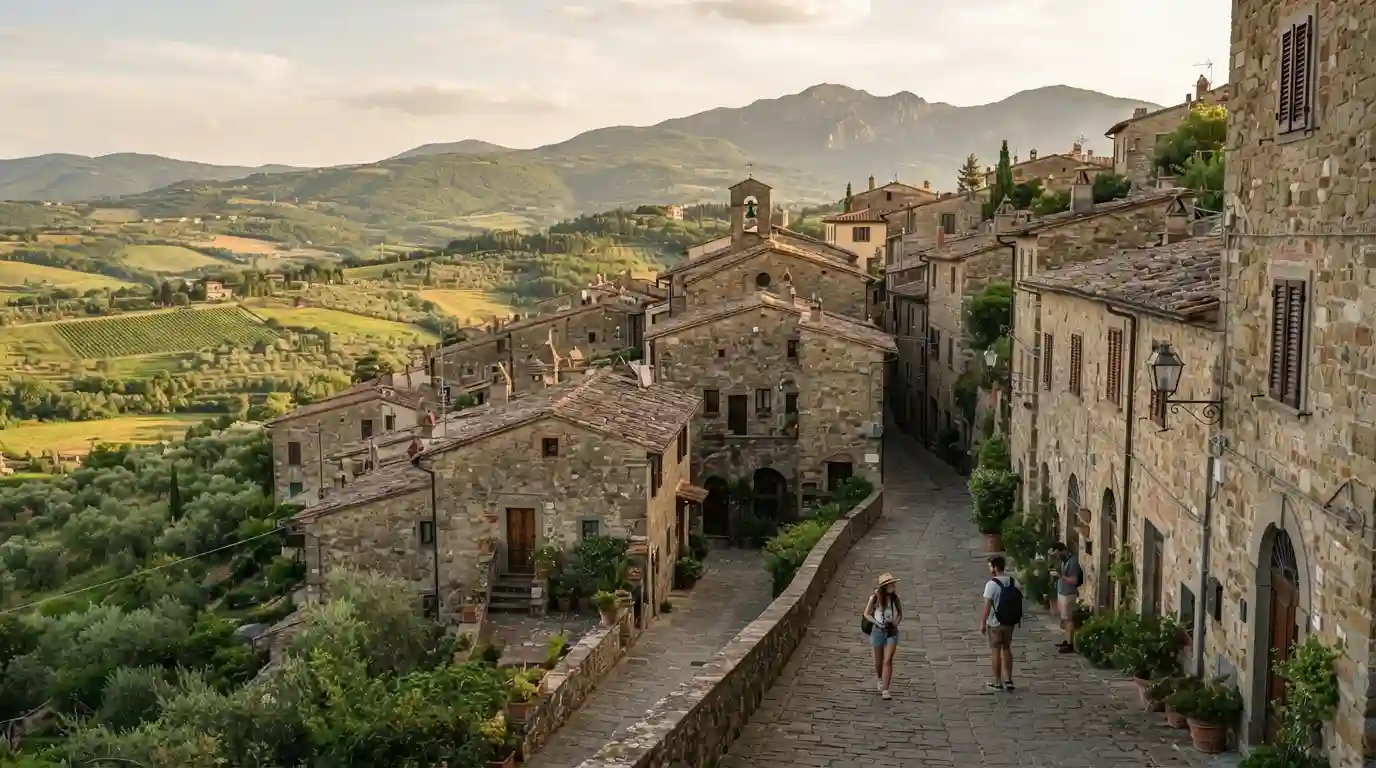
Quieter European destinations do not necessarily mean remote or difficult to reach. Many are historic cities, mountain regions, coastal communities, and countryside areas that simply receive fewer international visitors than the continent’s biggest attractions. They can offer a slower pace while still providing impressive architecture, museums, landscapes, outdoor activities, and authentic local experiences.
From northern European towns to Mediterranean villages and lesser-known mountain destinations, these places can help travelers experience a different side of the continent. Here are some destinations worth considering when you want scenic beauty and cultural depth without the busiest crowds.
Why Choose Less Crowded Destinations in Europe?
Traveling away from Europe’s busiest tourist centers can change the character of a trip. Instead of moving from one crowded landmark to another, travelers often have more time to explore neighborhoods, walk historic streets, visit local restaurants, and appreciate the surrounding landscape.
Quieter destinations can also make it easier to create a flexible itinerary. Travelers may find more opportunities for spontaneous walks, scenic drives, local markets, and conversations with residents. In many cases, smaller cities and regions also provide a more relaxed introduction to European culture.
If you are planning several European destinations in one trip, you can also compare quieter options with guides such as 52 best places to visit in 2025 and the cheapest places to visit in the world when building a broader itinerary.
1. Ljubljana, Slovenia
Ljubljana offers an appealing combination of historic architecture, riverside scenery, green spaces, and a relaxed urban atmosphere. Slovenia’s capital is compact enough to explore on foot, making it suitable for travelers who want culture without the scale and intensity of Europe’s largest capitals.
The Ljubljanica River runs through the center of the city, while bridges, cafes, historic buildings, and the hilltop castle create an attractive setting for exploring. Travelers can spend a morning walking through the old town and then use the afternoon to discover nearby natural areas.
Ljubljana is also a useful base for exploring other parts of Slovenia. Travelers interested in alpine scenery can combine the city with quieter mountain and lake destinations rather than concentrating only on the country’s most photographed locations.
2. Plovdiv, Bulgaria
Plovdiv is one of Europe’s most interesting destinations for travelers who enjoy history and architecture. The Bulgarian city combines ancient Roman remains with colorful historic houses, cobbled streets, creative neighborhoods, and a lively cultural atmosphere.
The Ancient Theatre is one of its most recognizable attractions, but the experience extends beyond a single monument. The Old Town provides opportunities to explore traditional architecture and discover galleries, museums, restaurants, and small cultural venues.
For travelers who want a European city with substantial history but a different atmosphere from Prague, Paris, or Rome, Plovdiv can be a compelling addition to an itinerary.
3. Lake Bohinj, Slovenia
Travelers attracted to the scenery of Lake Bled may also want to consider Lake Bohinj. Surrounded by mountains and forests, Bohinj provides a more nature-focused experience with opportunities for walking, hiking, swimming, photography, and peaceful sightseeing.
The lake is particularly appealing for travelers who want to spend time outdoors rather than moving between crowded attractions. Mountain scenery provides a dramatic backdrop, while nearby villages and traditional landscapes add cultural character to the experience.
It can also work well as part of a broader Slovenia itinerary that combines urban exploration with outdoor activities.
4. Inland Istria, Croatia
Croatia’s Adriatic coast attracts large numbers of visitors, but inland Istria provides a different perspective on the country. Hilltop villages, vineyards, forests, stone architecture, and regional food make this part of Croatia particularly attractive for travelers who enjoy slow travel.
Motovun is one of the area’s best-known hill towns, offering panoramic views over the surrounding countryside. Smaller settlements provide opportunities to explore local traditions, food, and architecture at a more relaxed pace.
Autumn can be especially appealing for food-focused travelers because Istria is associated with truffles, wine, and seasonal regional cuisine. Those considering a Croatian summer trip can also compare this experience with places to visit in Croatia in summer.
5. Tübingen, Germany
Tübingen combines a historic old town with a strong university atmosphere and scenic riverside surroundings. Its colorful buildings, narrow streets, bridges, and traditional architecture make it enjoyable for travelers who prefer smaller European cities.
The city has a long academic and cultural history, while its compact center makes sightseeing relatively straightforward. Visitors can spend time walking through the old town, exploring historic buildings, enjoying cafes, or taking a relaxed walk beside the river.
Travelers interested in Germany can use Tübingen as an alternative to concentrating their entire trip around the country’s largest tourist centers. It can also complement broader planning around the best places to visit in Germany.
6. The Peloponnese, Greece
Greece is often associated with Santorini, Mykonos, and Athens, but the Peloponnese offers an extensive combination of beaches, mountains, archaeological sites, villages, and historic towns.
The region is particularly suitable for travelers who want to combine scenery with cultural exploration. Ancient ruins, Byzantine settlements, coastal landscapes, traditional food, and mountain roads can all form part of the same journey.
Instead of staying in one highly concentrated resort area, travelers can create a road-trip itinerary that moves between smaller communities and historic locations. This approach can provide a more varied view of Greece.
7. Alentejo and the Costa Vicentina, Portugal
Portugal’s major cities and Algarve resorts attract significant tourism, but the Alentejo and Costa Vicentina provide a quieter combination of countryside, coastal scenery, traditional villages, and regional cuisine.
The Costa Vicentina is particularly appealing to travelers who enjoy dramatic coastlines and outdoor activities. The Alentejo, meanwhile, offers rolling landscapes, vineyards, historic towns, and a slower rural rhythm.
Visitors can use this region to experience Portugal beyond its most heavily visited destinations. Those building a broader European itinerary may also be interested in family destinations in Spain or Costa Rica travel ideas when comparing warm-weather options.
8. Vilnius, Lithuania
Vilnius combines baroque architecture, historic streets, churches, courtyards, cultural institutions, and a youthful atmosphere. Its historic center offers plenty to explore on foot, while neighborhoods outside the main tourist areas provide another perspective on everyday Lithuanian life.
The city works particularly well for travelers who enjoy architecture and history but prefer a smaller urban environment. Museums, churches, cafes, public spaces, and viewpoints can easily be combined into a flexible city itinerary.
For travelers interested in northern Europe, Vilnius can also serve as a starting point for exploring the Baltic region.
9. Sibiu, Romania
Sibiu is an attractive option for travelers interested in medieval architecture and Central European history. Its historic center features colorful buildings, public squares, towers, and distinctive architectural details that make walking through the city an experience in itself.
The surrounding Transylvania region adds mountains, fortified settlements, forests, and rural landscapes to the itinerary. Travelers can therefore combine cultural sightseeing with outdoor exploration.
Romania is especially useful for travelers who want to experience a European destination with a strong regional identity while avoiding the intensity of the continent’s most heavily visited cities.
10. Abruzzo, Italy
Italy has no shortage of famous destinations, but Abruzzo provides a quieter alternative for travelers interested in mountains, villages, food, and historic landscapes. The region sits east of Rome and includes the dramatic peaks and countryside of the central Apennines.
Small mountain communities provide opportunities to explore traditional architecture and local food, while national park landscapes offer hiking and scenic drives. Places such as Santo Stefano di Sessanio demonstrate how historic villages can become destinations in their own right.
Travelers planning an Italian journey can compare Abruzzo with