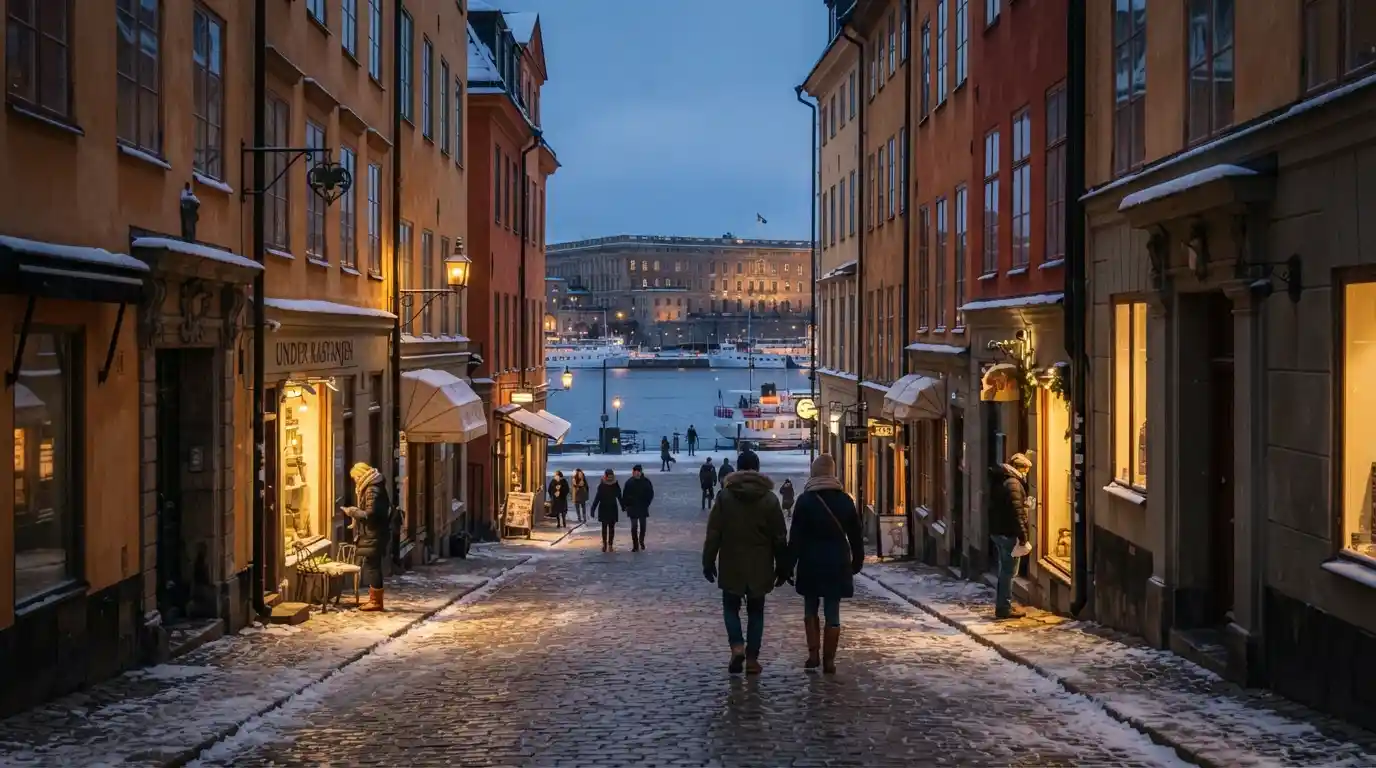
If you are planning a Scandinavian getaway, winter can be an excellent time to experience Stockholm at a slower pace. The city’s compact central areas make sightseeing relatively convenient, while its islands and surrounding waterways create beautiful winter scenery. Travelers interested in seasonal European destinations can also compare this experience with winter destinations in Norway, Switzerland’s scenic destinations, or Ireland’s seasonal attractions.
Why Visit Stockholm in Winter?
Stockholm’s winter season offers a different perspective on the city than its busy summer months. Shorter daylight hours create opportunities to experience illuminated streets and evening city walks, while museums and cultural attractions provide warm indoor alternatives when the weather becomes particularly cold.
Winter also brings a quieter atmosphere to many popular attractions. Gamla Stan, Stockholm’s historic old town, can feel especially atmospheric when its narrow streets are decorated for the season. Cafés become inviting places to take a break, and the Swedish tradition of enjoying coffee and something sweet makes winter sightseeing easier to pace.
For travelers who enjoy seasonal scenery, Stockholm also fits naturally into a wider European winter itinerary. Other useful destination ideas include Edinburgh’s historic city center, Germany’s popular destinations, and Albania’s attractions.
1. Gamla Stan
Gamla Stan, Stockholm’s historic old town, is one of the first places many visitors should explore. Its narrow cobblestone streets, colorful historic buildings, small squares, independent shops, cafés, and historic architecture create a picturesque setting during winter.
Stortorget is particularly photogenic when winter decorations and seasonal lighting complement the surrounding buildings. Walking through the old town does not require a complicated itinerary. Instead, allow time to explore side streets, stop for a warm drink, and discover smaller shops and historic corners.
Because many streets are pedestrian-friendly, Gamla Stan works well as part of a relaxed winter walking tour. Wear footwear with good traction if snow or ice is present.
2. Vasa Museum
The Vasa Museum is one of Stockholm’s most distinctive attractions and an excellent choice when you want to escape cold weather. The museum centers on the remarkably preserved Vasa warship, which sank on its maiden voyage in 1628 and was recovered centuries later.
The museum provides an opportunity to learn about maritime history, shipbuilding, archaeology, and life in seventeenth-century Sweden. Since the attraction is indoors, it is particularly useful for a winter itinerary when outdoor sightseeing may need to be balanced with warmer activities.
3. Skansen
Skansen combines open-air cultural experiences with historic buildings, traditional environments, and Nordic wildlife. Visiting during winter provides a different experience from exploring the attraction in summer.
The seasonal atmosphere can make historic streets and traditional Scandinavian settings feel especially distinctive. Winter visitors should check seasonal opening hours and dress appropriately because much of the experience takes place outdoors.
Skansen is also a good option for travelers who want to understand Swedish traditions rather than focusing exclusively on modern city attractions.
4. Stockholm Palace
Located in Gamla Stan, Stockholm Palace is an important historic landmark and one of the city’s major architectural attractions. Its interiors, ceremonial spaces, museums, and royal history make it particularly suitable for a winter visit.
Combining the palace with a walk around Gamla Stan allows visitors to cover several major attractions within the same general area. This can be especially convenient when daylight is limited.
5. Fotografiska
Photography enthusiasts should consider adding Fotografiska to their Stockholm itinerary. The photography museum offers exhibitions in an indoor environment, making it another practical choice for cold or snowy days.
Beyond the exhibitions, the venue’s elevated location provides opportunities to enjoy views over parts of Stockholm. A winter afternoon or early evening visit can pair well with the city’s changing light and illuminated skyline.
6. Stockholm City Hall
Stockholm City Hall is one of the city’s most recognizable architectural landmarks. Its waterfront position gives it additional visual appeal during winter, particularly when surrounding areas are covered with snow.
The building is also associated with the Nobel Prize banquet, adding cultural significance to an already prominent Stockholm landmark. Guided visits and seasonal access can vary, so travelers should check current arrangements before planning their visit.
7. Djurgården
Djurgården is an island and recreational area known for museums, green spaces, walking routes, and cultural attractions. During winter, the landscape takes on a quieter character, and snow can transform paths and waterfront views.
Because Djurgården contains several major attractions, it can be useful to combine an outdoor walk with an indoor museum visit. This approach helps you enjoy the scenery without spending an entire day outside in cold conditions.
8. ABBA The Museum
Music fans can add ABBA The Museum to a winter Stockholm itinerary. The interactive museum explores the history, music, performances, and cultural impact of the famous Swedish pop group.
Its indoor setting makes it especially convenient during winter. It can also provide a lively contrast to Stockholm’s historic museums and architectural landmarks.
9. Östermalm and Stockholm’s Food Scene
Winter is a natural time to explore Stockholm’s food culture. Östermalm is known for its elegant streets, restaurants, cafés, and food-focused destinations. Spending part of an afternoon exploring the neighborhood can provide a warmer alternative to extended outdoor sightseeing.
Travelers who enjoy combining destinations with food experiences may also find inspiration in other culinary-focused travel pages, such as the Amalfi Coast, Naples, Italy, and Dublin.
10. Södermalm
Södermalm offers a different side of Stockholm, with independent stores, cafés, restaurants, creative spaces, and elevated viewpoints. It is a good neighborhood to explore when you want to move beyond the city’s most traditional tourist attractions.
Winter weather can make the neighborhood’s cafés particularly appealing. If conditions are suitable, visitors can also explore viewpoints around the district for photographs of Stockholm’s waterways and historic areas.
11. Stockholm’s Archipelago
Stockholm is closely connected to an extensive archipelago made up of numerous islands. Winter conditions can create dramatic scenery across the waterways, although access and transportation schedules can differ from the summer season.
If you want to explore beyond the central city, check transportation schedules and weather conditions before setting out. A winter archipelago experience can be rewarding, but it requires more planning than visiting central museums and historic attractions.
12. Ice Skating in Stockholm
Ice skating can be one of the most enjoyable seasonal activities when conditions and local facilities allow it. Stockholm has opportunities for both recreational skating and winter activities, depending on the season and weather.
Outdoor skating conditions can change quickly, so visitors should use established skating areas and follow local safety guidance rather than assuming that naturally frozen waterways are safe.
13. Stockholm’s Christmas Markets
If you visit during the Christmas season, Stockholm’s markets can add another layer to the winter experience. Historic squares and central neighborhoods may feature seasonal decorations, food, crafts, and traditional treats.
Gamla Stan is particularly appealing during the festive period because its historic architecture provides a natural backdrop for seasonal events. If Christmas travel is your focus, you can also compare Stockholm with destinations covered in holiday and New Year’s travel ideas.
14. Monteliusvägen Viewpoint
Monteliusvägen is a popular walking route in Södermalm known for views across Stockholm. On a clear winter day, the viewpoint can provide memorable photographs of the city’s historic skyline, waterways, and surrounding islands.
Because winter surfaces can become slippery, appropriate footwear is important. Visiting around sunset can also create a striking combination of fading daylight and city lights, although travelers should plan according to the short winter daylight period.
15. Stockholm Metro Art
Stockholm’s metro system is famous for stations featuring artwork, murals, sculptures, colors, and architectural designs. Exploring selected stations can be an excellent winter activity because it combines transportation with an indoor cultural experience.
Rather than trying to see every station, choose several notable stops and incorporate them into your sightseeing route. This is particularly useful on days when cold temperatures make long outdoor walks less comfortable.
16. Nordic Museum
The Nordic Museum on Djurgården offers another opportunity to explore Swedish and Nordic cultural history indoors. Exhibitions provide insight into traditions, lifestyles, design, clothing, celebrations, and everyday life.
It works well as part of a museum-focused day, particularly when combined with other attractions on Djurgården.
How to Plan a Stockholm Winter Itinerary
A successful winter itinerary should balance indoor and outdoor activities. Instead of spending an entire day walking between outdoor attractions, group nearby landmarks together and schedule museums, cafés, and cultural venues between walks.
For example, you could spend a morning exploring Gamla Stan and Stockholm Palace, enjoy lunch nearby, and then visit an indoor museum in the afternoon. Another day could combine Djurgården’s attractions with a shorter outdoor walk.
Travelers building a broader European itinerary can also explore destinations such as South Bali, Lake Como, Greece, and Tokyo for different seasonal travel experiences.
What to Wear in Stockholm in Winter
Warm, layered clothing is essential. A typical winter packing list can include a warm insulated coat, thermal layers, gloves, a hat, a scarf, and waterproof footwear with good traction.
Layering is particularly useful because you may move repeatedly between cold outdoor streets and heated museums, restaurants, shops, and public transportation. Waterproof outerwear can also be helpful when snow or wet winter weather is present.
Getting Around Stockholm in Winter
Stockholm’s public transportation network makes it possible to reach many attractions without relying entirely on walking. Metro, buses, and other public transport options can be useful when temperatures are low or snow makes longer walks uncomfortable.
For outdoor sightseeing, allow additional time for winter conditions. Snow and ice can slow walking speeds, while limited daylight means that itinerary planning becomes more important than during summer.
Tips for Visiting Stockholm in Winter
- Dress in layers so you can adapt between outdoor and indoor temperatures.
- Wear shoes with strong traction for snowy or icy streets.
- Plan indoor attractions around outdoor sightseeing.
- Check opening hours because some attractions have seasonal schedules.
- Keep daylight hours in mind when planning viewpoints and outdoor walks.
- Use public transportation when weather conditions make long walks uncomfortable.
- Leave flexibility in your itinerary for changing winter weather.
- Book popular indoor attractions ahead of time when required.
Is Stockholm Worth Visiting in Winter?
Stockholm can be a rewarding winter destination for travelers who enjoy historic architecture, museums, Scandinavian culture, seasonal scenery, cafés, food, and atmospheric city walks. The cold weather requires appropriate clothing and planning, but it also contributes to the distinctive character of the city during this season.
From the narrow streets of Gamla Stan and the Vasa Museum to Djurgården, Södermalm viewpoints, cultural museums, and winter markets, there are plenty of ways to build an itinerary that works even when temperatures are low.
If you are comparing Stockholm with other cold-weather destinations, explore winter destinations in the Pacific Northwest, West Virginia in winter, Upstate New York in winter, and Maine travel ideas for additional seasonal inspiration.
Whether you are visiting for a weekend city break or including Sweden in a larger European journey, Stockholm in winter offers a combination of culture, history, architecture, food, and seasonal atmosphere that can make the colder months memorable.