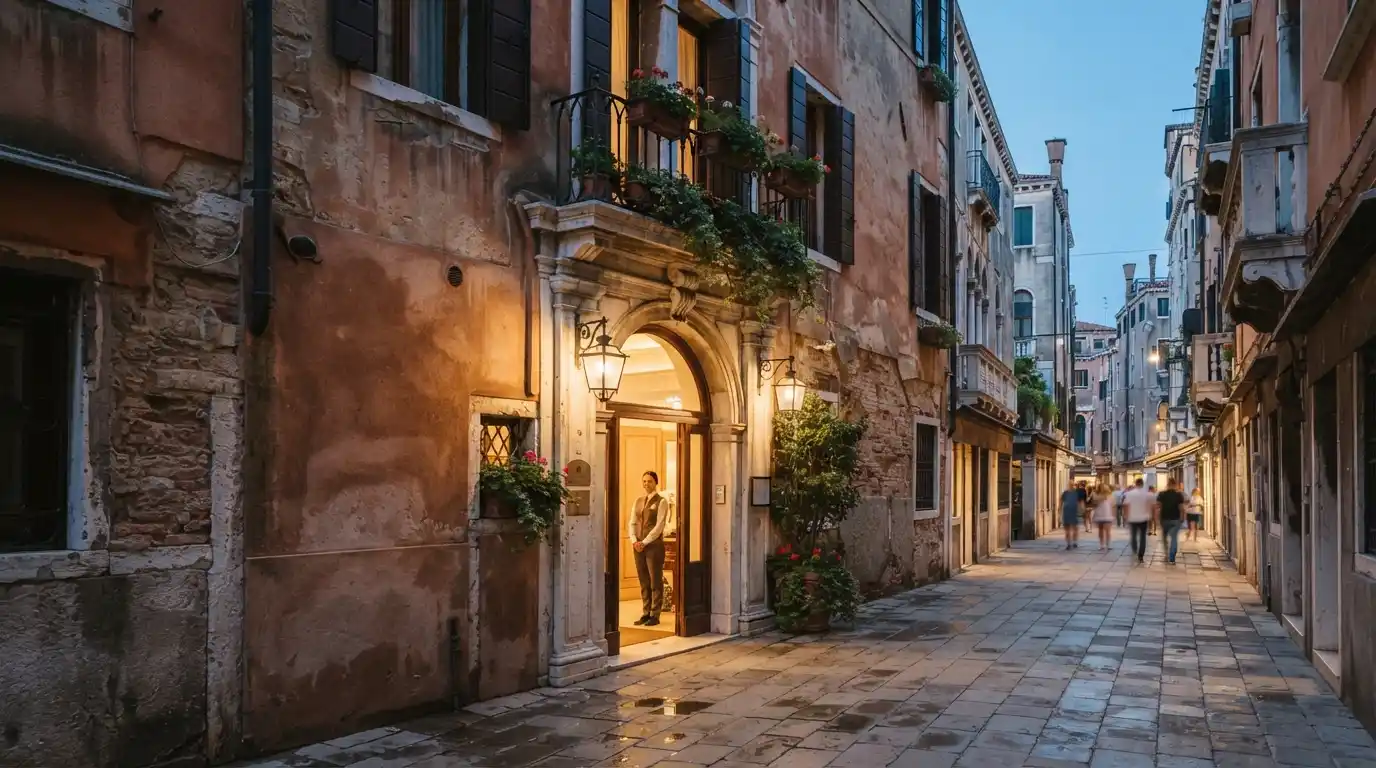
Whether you are planning a romantic city break, a cultural getaway, or a short European vacation, staying near the historic center can reduce travel time between major attractions. This guide explores what travelers should know about Hotel Lux Venice, including its location, rooms, amenities, nearby attractions, transportation considerations, and tips for planning a comfortable stay.
Where Is Hotel Lux Venice?
Hotel Lux is situated on Calle Delle Rasse in the Castello district of Venice. Its location places guests within easy reach of Piazza San Marco and many of the city’s best-known historic sights.
Castello is one of Venice’s historic sestieri and offers a useful combination of tourist attractions, residential streets, restaurants, small shops, and pedestrian routes. From this part of Venice, travelers can explore the city largely by walking, while water buses provide another way to move around the lagoon.
If you are building a broader European itinerary, you can also explore our guide to less crowded places to visit in Europe for alternatives to the busiest destinations.
What Makes the Location Convenient?
One of the biggest advantages of Hotel Lux Venice is its proximity to the heart of the historic city. Piazza San Marco, the Basilica of San Marco, the Doge’s Palace, and the waterfront around the Riva degli Schiavoni are all within the central sightseeing area.
This makes the hotel particularly convenient for visitors who want to spend much of their trip exploring Venice on foot. Instead of depending on transportation for every attraction, guests can combine walking with occasional vaporetto journeys when traveling farther across the lagoon.
Travelers planning an Italy-focused trip can pair Venice with destinations covered in our guide to the top places to visit in Italy. Other useful planning ideas include our guide to the top places to visit in Naples and our overview of the top places to visit on the Amalfi Coast.
Rooms and Venetian Style
Hotel Lux offers rooms designed around a traditional Venetian aesthetic while incorporating modern conveniences. Current property information describes the accommodation as having Venetian-style furnishings and facilities intended for contemporary travelers.
Room configurations can vary, so travelers should check the available room type for their dates before booking. Depending on your group, options may include double, twin, triple, or family accommodation.
When selecting a room, consider more than just the number of beds. Couples may prioritize a comfortable double room, while families or groups may need additional sleeping capacity and a private bathroom. Travelers staying several nights should also consider room size, air conditioning, soundproofing, and storage space.
Hotel Amenities and Services
Hotel Lux provides several practical amenities for visitors exploring Venice. Current accommodation information includes free Wi-Fi, air conditioning, daily housekeeping, luggage storage, a safety deposit box, and a 24-hour front desk.
Breakfast is also available, giving guests an opportunity to start the day before heading into Venice’s historic center. Having a reception service can be particularly useful for travelers who need assistance with transportation, tours, restaurant reservations, or other arrangements during their stay.
For travelers interested in comparing accommodation experiences across Europe, our guide to Hotel Central Classic Stuttgart provides another example of city-center accommodation.
Exploring Piazza San Marco
Piazza San Marco is one of the most important places to visit during a Venice trip. The square is surrounded by major architectural and cultural landmarks, including St. Mark’s Basilica, the Doge’s Palace, and the Campanile.
Staying near the square allows travelers to visit the area at different times of day. Early morning can offer a quieter atmosphere, while evening brings a different character as the crowds change and the surrounding buildings become illuminated.
Rather than rushing through the area in a single visit, consider returning at different times. Venice changes noticeably between morning, afternoon, and evening, and walking through the surrounding streets can reveal quieter corners beyond the main tourist routes.
Visit the Doge’s Palace
The Doge’s Palace is another major attraction near Hotel Lux. The historic palace represents an important part of Venetian political and architectural history and is closely associated with St. Mark’s Square.
Visitors interested in museums, historic buildings, and European architecture can make the palace part of a wider cultural itinerary. Booking arrangements and opening details should be checked before visiting because schedules and admission conditions can change.
Walk Toward the Rialto Area
The Rialto area is another essential part of a Venice itinerary. Walking from the Castello district toward Rialto allows travelers to experience the city’s bridges, narrow streets, canals, small squares, shops, and historic buildings along the way.
The journey itself can be as interesting as the destination. Venice is best experienced at walking speed, where visitors can notice architectural details and discover smaller streets away from the busiest routes.
If you enjoy combining famous landmarks with less crowded experiences, you may also enjoy reading about places to visit around Lake Como and the best places to visit in Albania when planning future European trips.
Getting Around Venice
Venice is different from most major European cities because its historic center has no conventional road network for regular car travel. Walking and water transportation are therefore central to the visitor experience.
Vaporettos, or public water buses, connect different parts of Venice and the surrounding islands. They can be useful when walking would take too long or when travelers want to reach another part of the lagoon.
Walking remains one of the simplest ways to explore the historic center. However, visitors should allow extra time because Venice’s bridges, narrow passages, canals, and winding streets can make seemingly short journeys take longer than expected.
Is Hotel Lux Venice Suitable for a Short City Break?
Hotel Lux can be a practical option for travelers planning a short Venice visit because of its central location. When you only have two or three days, staying close to the main sightseeing area can help maximize the time available for exploration.
A short itinerary could include Piazza San Marco on the first day, the Rialto area and surrounding neighborhoods on the second day, and additional museums, islands, or quieter districts on the final day.
Travelers extending their European vacation can also compare their plans with our guides to the best places to visit in Germany, places to visit in Dublin, and places to visit in Croatia.
Tips for Choosing the Right Room
Before booking, identify what matters most for your trip. A solo traveler may prioritize price and location, while couples may care more about comfort and atmosphere. Families should check the maximum occupancy and sleeping arrangements carefully.
It is also useful to check whether the selected room is in the building or section specified in the reservation. Historic Venetian properties can have layouts that differ considerably from modern chain hotels.
For travelers who value a quiet night’s sleep, soundproofing and room location may also be worth considering. Asking about available room features before arrival can help avoid surprises.
When Should You Visit Venice?
Venice can be visited throughout much of the year, but each season creates a different travel experience. Spring and autumn can offer comfortable conditions for walking, while summer generally brings longer daylight hours and heavier visitor demand.
Winter can provide a different atmosphere, with cooler weather and a quieter feel in some areas. Travelers should always consider seasonal events, weather conditions, accommodation demand, and personal preferences when selecting travel dates.
If seasonal travel interests you, explore our guides to Italy travel with kids, Switzerland in summer, and Ireland in spring.
How to Plan a Venice Itinerary
A good Venice itinerary should balance famous attractions with time for unplanned exploration. Schedule your major attractions first, then leave space for walking through nearby neighborhoods.
For example, a three-day itinerary might look like this:
- Day 1: Piazza San Marco, St. Mark’s Basilica, Doge’s Palace, and the waterfront.
- Day 2: Rialto, historic streets, canals, local restaurants, and shopping.
- Day 3: Museums, additional neighborhoods, or a trip to one of the lagoon islands.
Building your itinerary around geographical areas rather than individual attractions can save time. Instead of crossing Venice repeatedly, explore one neighborhood thoroughly before moving to the next.
Venice as Part of a Larger European Trip
Venice works well as one stop on a longer European itinerary. Depending on your travel schedule, you could combine northern Italy with other destinations across Italy or continue t