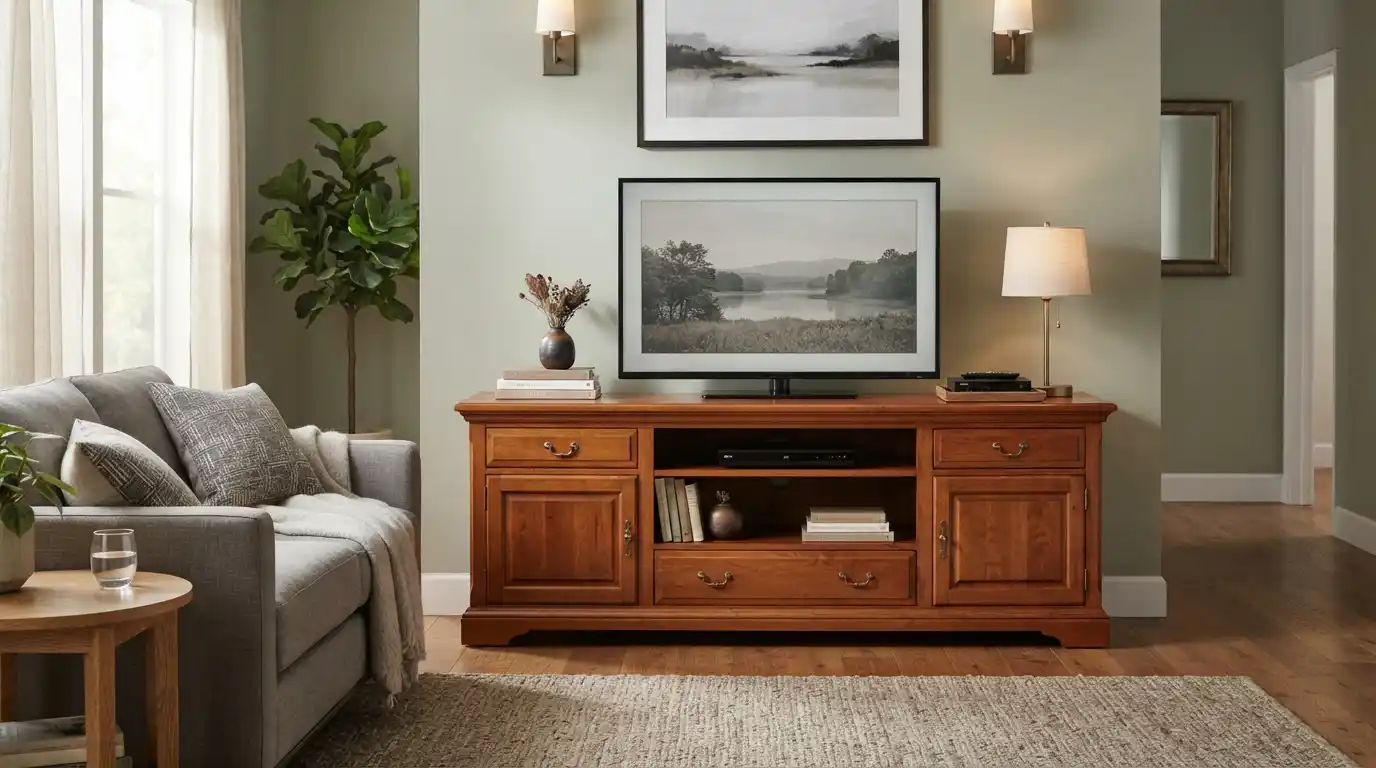
Whether you are furnishing a new home, refreshing an existing room, or replacing an outdated TV stand, the right console should balance size, storage, design, and usability. This guide explains what to consider when choosing and styling an entertainment console so that it becomes a useful part of the room rather than simply a place to put a television.
Why an Entertainment Console Matters in a Living Room
The entertainment area often becomes one of the visual focal points of a living room. The television naturally attracts attention, but the furniture underneath it can determine whether the area looks polished or cluttered.
A properly sized console can create a visual foundation for the television while providing enclosed and open storage. This makes it easier to keep remote controls, gaming accessories, streaming devices, books, and other items organized.
The broader goal is to create a comfortable room where furniture, technology, lighting, and decoration work together. If you are also making other changes around the home, related home improvement solutions can help coordinate larger projects.
What Makes a Broyhill Entertainment Console Appealing?
Broyhill furniture is associated with substantial furniture designs that can work well in traditional and transitional interiors. An entertainment console in this style can introduce a stronger furniture presence than a lightweight metal or minimalist TV stand.
The appeal often comes from the combination of appearance and practicality. A console can look like a conventional piece of furniture while still accommodating modern entertainment equipment.
That balance is useful for homeowners who want technology to fit naturally into the room instead of making the television area look like a dedicated electronics station.
Consider the Size Before Choosing a Console
One of the most important considerations is proportion. Measure the wall, television, and available floor space before purchasing or positioning a console.
A console that is too small can make a large television appear visually heavy. On the other hand, an oversized piece can dominate a compact room and make movement around the furniture difficult.
Ideally, the console should provide enough width to visually support the television while leaving comfortable clearance around doors, windows, seating, and walking paths.
Measure These Areas First
- Available wall width
- Available floor depth
- Television width and stand footprint
- Distance between the console and nearby furniture
- Door, cabinet, and drawer clearance
- Access points for power and media cables
Taking measurements before arranging the room can prevent many common furniture-placement problems.
Storage Is One of the Biggest Benefits
An entertainment console can help hide the small objects that quickly make a living room appear untidy. Depending on the design, cabinets, drawers, shelves, and compartments can accommodate media accessories and household items.
Closed storage is particularly useful when you want a cleaner appearance. Open shelving, meanwhile, can be used for books, decorative objects, photographs, or equipment that requires ventilation or easy access.
Think about what you actually need to store before deciding which configuration works best. A beautiful console with insufficient storage may become frustrating if everyday items have nowhere to go.
Creating a Balanced Entertainment Wall
The console should not be considered in isolation. Look at the entire wall as a composition. The television, console, artwork, lighting, plants, and accessories should feel visually connected.
For example, a substantial wooden-style console can be balanced with simple decorative objects rather than a large collection of accessories. Keeping some empty space around the television can also prevent the wall from feeling overcrowded.
If your room includes a sound system, a wireless soundbar can complement the entertainment setup while reducing visible cabling. You can also explore ideas related to a wireless soundbar and home audio setup when planning the media area.
How to Style a Broyhill Entertainment Console
Styling should enhance the furniture rather than hide it. Start with a few functional pieces and then add decorative elements gradually.
1. Keep the Television as the Focal Point
The television will usually remain the main visual element. Avoid placing so many objects around it that the entire wall becomes distracting.
2. Add Books and Decorative Objects
Books, framed photographs, ceramics, baskets, or small decorative objects can make the console feel more personal. Choose pieces that complement the existing room instead of introducing too many unrelated colors.
3. Use Lighting Carefully
Ambient lighting can make the entertainment area more inviting in the evening. Table lamps positioned on suitable surfaces can add warmth, while indirect lighting can provide a softer alternative to bright overhead fixtures.
4. Hide Unnecessary Cables
Cable management is essential. Use appropriate cable-management solutions to keep power cords and device cables organized and out of sight where possible. Leave sufficient access for maintenance rather than permanently trapping cables behind furniture.
Matching the Console With Other Furniture
A console works best when it complements the rest of the room. Consider the existing sofa, coffee table, side tables, flooring, curtains, and accent pieces before selecting a visual style.
If your interior has a traditional character, a substantial wood-look console can reinforce that atmosphere. If the rest of the room is contemporary, you can soften the traditional appearance with modern accessories, neutral textiles, and simple lighting.
Furniture does not have to come from one collection to coordinate successfully. Similar finishes, proportions, textures, or colors can create visual continuity.
Entertainment Furniture and Home Organization
A console can also contribute to broader home organization. Instead of allowing electronics, books, chargers, controllers, and remote controls to spread across tables, dedicated storage gives each category a place.
This approach can make everyday cleaning easier as well. When storage is simple and accessible, family members are more likely to return items to their proper locations.
If you are undertaking a wider home refresh, consider how the entertainment area connects with other improvements. Resources covering home solutions, home care services, and healthy home cleaning can provide broader inspiration for maintaining a comfortable living environment.
Choosing a Console for Different Room Sizes
Small Living Rooms
In a compact room, prioritize a console with an appropriate depth and enough storage to reduce visual clutter. Avoid selecting furniture simply because it offers maximum storage; physical proportion matters just as much.
Medium-Sized Rooms
Medium rooms provide more flexibility. You can combine a larger console with bookshelves, plants, accent seating, or decorative wall elements while maintaining reasonable walking space.
Large Living Rooms
A larger room can accommodate a substantial entertainment console that becomes part of a broader furniture arrangement. Additional seating and decorative elements can help prevent the entertainment wall from looking isolated.
Think About Your Entertainment Equipment
Before finalizing a console, list the equipment you intend to place inside or around it. This may include a streaming device, game console, speakers, Blu-ray player, cable equipment, or other electronics.
Check ventilation requirements and make sure equipment can be accessed when needed. Wireless technology can reduce visible wires, but devices still need appropriate power and connectivity.
If entertainment is a major part of your home, you can also explore related entertainment experience ideas and entertainment-focused lifestyle concepts when planning a multifunctional living space.
How to Keep the Console Looking Organized
Good organization is easier when the console is not overloaded. Divide stored items into practical categories and keep frequently used accessories within easy reach.
- Use baskets for small accessories.
- Group remote controls in one location.
- Keep gaming accessories together.
- Use cable ties or appropriate organizers for loose wires.
- Leave ventilation space around electronic equipment.
- Rotate decorative objects instead of filling every shelf.
For larger home projects, remember that furniture planning often works alongside other practical improvements. A coordinated approach can make the room more functional without requiring a complete redesign.
When a Traditional Console Works With Modern Decor
Traditional furniture can work surprisingly well in a contemporary home when the surrounding pieces are kept simple. A classic console can add warmth and visual weight to rooms dominated by glass, metal, screens, and modern electronics.
Neutral accessories, contemporary artwork, streamlined lighting, and uncluttered shelves can bridge the gap between traditional furniture and modern technology.
The same principle applies to other areas of lifestyle and home design: a strong foundational piece can provide character while smaller accessories can be changed as your tastes evolve.
Entertainment Consoles as Long-Term Furniture
Unlike many technology products, a well-built console can remain useful even when your entertainment equipment changes. Television sizes, streaming devices, speakers, and gaming systems may evolve, but a quality furniture piece can continue serving the room.
This makes flexibility an important consideration. Rather than designing the entire console around one specific device, think about how the storage and surface could work with future equipment.
If you are planning other household purchases or improvements, consider the long-term role of each item. Practical furniture should ideally provide value beyond a single decorating trend.
Final Thoughts
A Broyhill entertainment console can provide more than a place for a television. With thoughtful placement, appropriate storage, careful cable management, and complementary decoration, it can become a central part of a comfortable and organized living room.
The key is to consider the complete room rather than focusing only on the console itself. Measure the available space, understand your storage needs, account for your entertainment equipment, and choose accessories that support the furniture’s existing character.
Whether your goal is a traditional living room, a modern entertainment area, or a comfortable transitional space, the right console can bring structure and personality to the room while keeping everyday technology organized.
Related Home & Lifestyle Reading
- Home solutions and improvement ideas
- Home services and household solutions
- Home care and household support
- Healthy home and cleaning ideas
- Home service solutions
- Wireless soundbar and home audio
- Entertainment console ideas
- Entertainment experiences
- Entertainment lifestyle ideas
- Gaming and entertainment
- Entertainment and music
- Entertainment and events
- Living room entertainment furniture
- Home improvement planning
- Lifestyle and style inspiration