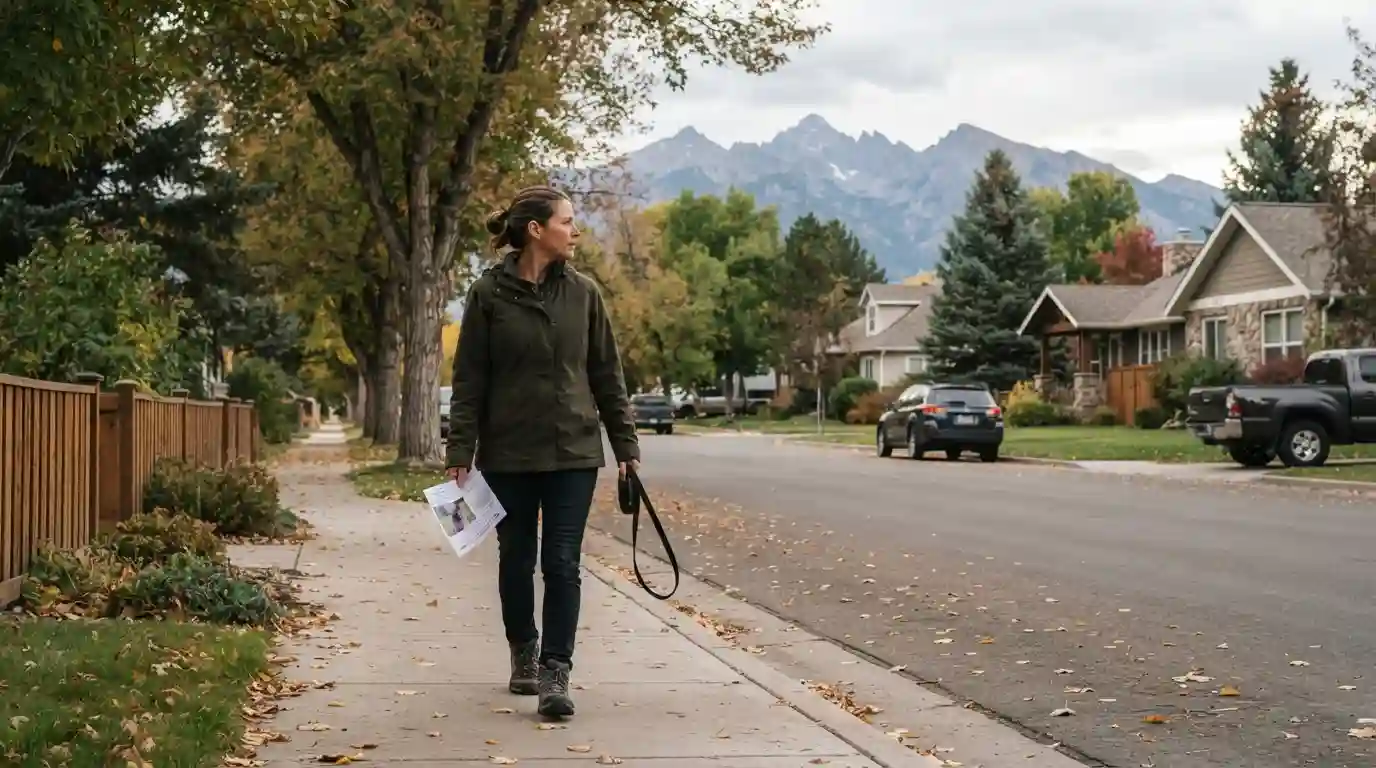
Bozeman pet owners can also benefit from understanding how animals behave when frightened. A missing pet may hide rather than travel far, especially after becoming scared by traffic, fireworks, storms, unfamiliar people, or another animal. A calm and methodical search is often more useful than simply covering a large area.
What to Do Immediately After Your Pet Goes Missing
Begin by checking your home and property carefully. Look beneath decks, inside garages, sheds, bushes, vehicles, crawl spaces, and other areas where a frightened animal could hide. Ask everyone in the household when they last saw the pet and whether a door, gate, or window may have been left open.
Once you have searched the immediate property, walk the surrounding streets. Bring a leash, treats, a favorite toy, and an item carrying a familiar scent. Call your pet in a normal, calm voice rather than shouting repeatedly.
It can also help to organize your search around practical local information. Pet owners who enjoy exploring Montana and other destinations may find related travel resources such as places to visit in New Mexico and pet-friendly trip planning considerations for seasonal travel useful when thinking about how unfamiliar environments can affect animals.
Search the Area Where Your Pet Was Last Seen
Do not assume that a missing pet has traveled several miles. Start with the location where the animal was last seen and gradually expand the search area. Check alleys, yards, parks, parking areas, drainage areas, vacant spaces, sheds, and other quiet locations.
Ask neighbors to check their garages, sheds, fenced yards, porches, and other enclosed spaces. A cat may become trapped somewhere without making enough noise for someone to notice. A dog may also enter a neighboring yard and remain there because it is frightened.
If your pet disappeared during outdoor activity, retrace the route. For owners who regularly travel with animals, the same principle applies away from home: identify the last confirmed location first and then work outward. Resources about traveling around Texas, places near San Diego Airport, and the Twin Cities demonstrate how different environments can create different navigation and planning challenges.
Create a Clear Lost Pet Notice
A good missing-pet notice should make identification easy. Use a recent, clear photograph and include the animal’s name, species, approximate size, color, distinctive markings, last known location, date or time of disappearance, and a reliable contact method.
Avoid adding unnecessary information that makes the notice difficult to read. The most important goal is helping someone recognize the animal quickly and contact you.
Post notices in appropriate nearby locations and share the same information through local community groups and lost-and-found pet platforms. Consistency matters: using the same photograph and description across multiple posts reduces confusion.
Contact Local Shelters, Animal Control, and Veterinary Clinics
Contact local animal shelters, animal control agencies, veterinary clinics, and rescue organizations as soon as possible. Give them a clear description and ask whether they have received a pet matching your animal’s appearance.
Do not rely on one phone call. Continue checking because a found animal may be reported after your first inquiry. Visit appropriate shelters in person when practical and review their current lost-and-found information.
The GalleryDaily sitemap also includes related pet-care resources, including pet boarding and care information and premium pet-care services. These topics reinforce an important part of responsible ownership: knowing where pets may receive care and assistance when owners are away from home.
Check Identification and Microchip Information
If your pet has a collar and identification tag, make sure the contact information is current. If the animal has a microchip, contact the microchip registry and report the pet as missing. Confirm that your phone number and other contact information are correct.
Microchips do not function as GPS trackers. They are identification tools that can help a shelter or veterinary professional connect a recovered animal with its registered owner. A current registration is therefore important.
Identification is especially valuable for pets that spend time outdoors. GalleryDaily also covers animal-related topics such as a case involving a dog and legal questions surrounding pets, horse behavior and evolution, and freshwater tortoise wildlife. These subjects are different from a lost-pet search, but they highlight why understanding animal behavior and identification can be useful when interacting with animals.
Use Social Media Carefully
Social media can rapidly increase the number of people looking for a missing pet. Share your pet’s photograph, last known location, distinctive characteristics, and contact information in relevant local groups.
Ask people to report sightings with the exact location, time, and direction the animal was traveling. This information can help you identify a movement pattern instead of sending multiple people randomly across the area.
Be cautious about publicly sharing sensitive personal information. Use a dedicated contact method when possible and avoid publishing details that are unnecessary for identifying your pet.
What to Do If Someone Reports a Sighting
A sighting does not necessarily mean your pet will approach immediately. A frightened animal may run when its owner or another person gets too close. If you receive a sighting, ask the person to stay calm and observe from a safe distance if possible.
Record the exact location and time. Then search the surrounding area quietly. Bring familiar food, treats, a leash, and an item carrying your scent. Avoid having a large crowd chase the animal because this can cause it to move farther away.
If the animal appears injured, aggressive, trapped, or otherwise unsafe to approach, contact an appropriate animal-control agency or veterinary professional rather than putting yourself or the animal at additional risk.
Weather Can Change a Lost Pet Search
Bozeman’s changing weather conditions can affect how you organize a search. Cold, snow, rain, heat, and strong winds may change where an animal seeks shelter and how long it can remain outdoors safely.
During severe weather, prioritize personal safety while searching. Check sheltered areas first and coordinate with people who can help. If conditions are dangerous, contact appropriate local authorities or animal professionals rather than taking unnecessary risks.
Seasonal travel can create similar concerns for pet owners. Resources such as winter travel in the USA, spring travel in California, and winter destinations in the Pacific Northwest show how significantly outdoor conditions can vary across regions.
If You Find Someone Else’s Missing Pet
If you find a dog or cat that appears lost, approach carefully. Look for an identification tag and avoid assuming that an animal without an immediate owner is abandoned.
If it is safe to do so, contact a shelter, animal control agency, or veterinary clinic about having the pet scanned for a microchip. Share a clear photograph and the location where the animal was found through appropriate lost-and-found channels.
Healthy outdoor cats can sometimes be close to their homes even when they appear to be wandering. Before moving a healthy cat a long distance, consider contacting local animal organizations for guidance.
Understanding animals in different environments can also be useful. GalleryDaily’s articles on frogs in protected areas, bird behavior and vulnerability, and marine wildlife experiences provide broader animal-related context, although domestic pets require a different approach when they are lost or found.
How to Improve Your Chances of Finding a Lost Pet
- Start searching immediately after confirming that your pet is missing.
- Search your home and property thoroughly before expanding outward.
- Ask nearby residents to check enclosed areas.
- Use a recent and recognizable photograph.
- Contact shelters, animal control agencies, veterinary clinics, and rescue organizations.
- Report the pet missing through appropriate lost-and-found services.
- Update the microchip registry if your pet is chipped.
- Share consistent information on local social media groups.
- Record every confirmed sighting with its time and location.
- Keep the search organized instead of having everyone cover the same area.
- Take weather and personal safety into account.
- Do not chase a frightened animal unless immediate intervention is necessary.
Preventing Future Lost-Pet Emergencies
The best time to prepare for a lost-pet situation is before one happens. Keep identification tags current, maintain accurate microchip registration information, and make sure household members know how doors, gates, and outdoor areas should be secured.
When traveling, use secure carriers or properly fitted leashes and check identification before leaving home. During visits from guests, remind everyone to watch doors and gates carefully.
Pet owners can also plan ahead by identifying nearby shelters, veterinary clinics, animal-control contacts, and local lost-pet groups. Keeping a recent photograph of your pet readily available makes it much easier to create a useful notice quickly.
For broader travel planning, related GalleryDaily resources such as fall travel in Maine, New York weekend travel, and summer destinations across the USA can be useful when planning trips where pet-safety preparation should be part of the itinerary.
Final Thoughts on Bozeman Lost Pets
Finding a missing animal requires speed, patience, and organization. Start near the last known location, search carefully, notify local organizations, create clear lost-pet notices, use online community networks, and keep checking for new sightings.
Most importantly, keep the search focused on practical information. A recent photograph, accurate description, precise last-seen location, current identification information, and reliable contact details can make it easier for someone to recognize your pet and help bring them home safely.
If you are currently searching for a missing animal, begin with the immediate area and work outward systematically. Staying calm and keeping good records can make the search more effective while protecting both you and your pet.