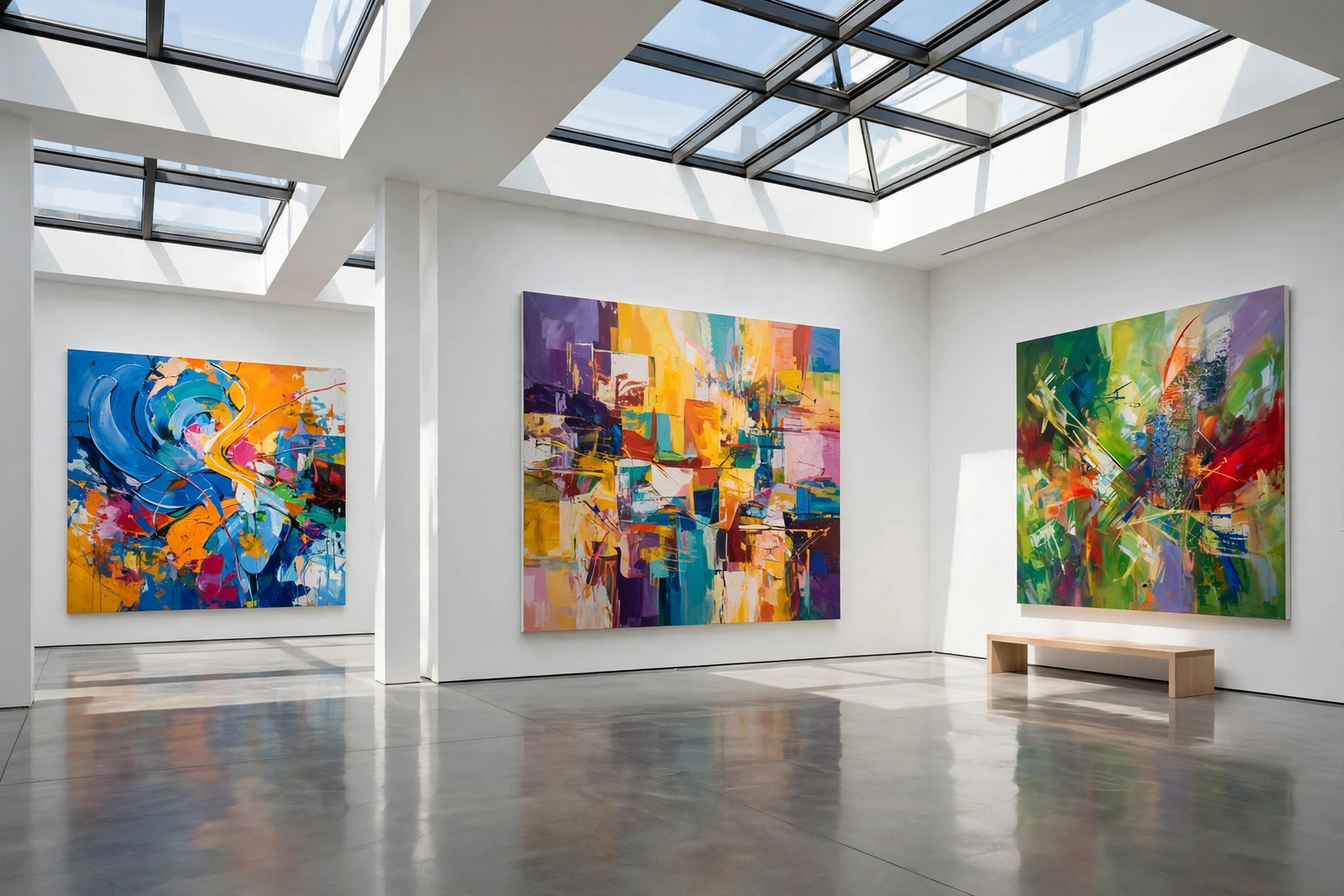
Walk into any major American gallery this season and you will feel the shift immediately. Abstract art is not just surviving in 2026 — it is thriving, evolving, and pulling in an entirely new generation of collectors. From the white-walled spaces of Chelsea in New York to the converted warehouses of the Arts District in Los Angeles, bold non-representational work is commanding attention, setting auction records, and reshaping what American art looks like right now.
Whether you are a seasoned collector, a first-time buyer, or simply someone who loves how a great painting can transform a room, understanding the abstract art trends of 2026 will help you navigate today’s exciting market. Here are the styles dominating American galleries this year.
1. The Triumphant Return of Bold Color
After several years of muted, earthy palettes dominating both interior design and gallery walls, color is roaring back. Artists across the United States are embracing saturated magentas, electric cobalt blues, and sun-drenched oranges in sweeping color-field compositions. This is not the quiet minimalism of a decade ago — it is joyful, confident, and unapologetic.
Gallerists in Miami and New York report that large color-driven canvases are among the fastest-selling works of the year. The same fearless approach to color is reshaping runways too, where fashion designers leading the charge in modern style prove that bold palettes belong everywhere. For home buyers, these paintings double as powerful focal points, capable of anchoring an entire living room with a single canvas.
2. Textured Mixed-Media Works You Want to Touch
Flat is out; tactile is in. One of the most noticeable abstract art trends of 2026 is the rise of heavily textured mixed-media painting. Artists are layering acrylics with plaster, sand, fabric, and even recycled paper to build surfaces with real physical depth. It is part of a broader revival of handcrafted texture — the same movement behind the renewed love for traditional crafts like darning.
These works reward close viewing. As you move around a textured piece, shifting light reveals new ridges and valleys in the surface. Collectors describe the experience as almost sculptural. If you are shopping for original art, run your eyes — not your hands — across the surface and notice how the texture changes the emotional temperature of the piece.
3. Digital Abstraction and AI-Assisted Art
Perhaps the most talked-about development in American galleries this year is the mainstream arrival of digital abstraction. Artists are using generative algorithms, code-based drawing tools, and AI-assisted workflows to create compositions that would be impossible by hand alone — then often finishing them as physical prints or paintings. Just as infrared photography revealed an invisible spectrum of light, digital tools reveal new visual possibilities.
Major fairs in New York, Chicago, and Los Angeles now dedicate entire sections to digital and new-media abstraction. Purists once dismissed the category, but the market has spoken: collectors in their twenties and thirties, raised on screens and online communities built around fan art and digital illustration, connect with this work instinctively. Expect to see more hybrid pieces that begin on a tablet and end on canvas.
4. Eco-Conscious Materials Take Center Stage
Sustainability has moved from a talking point to a genuine movement in the American art world. A growing number of abstract painters are working with natural pigments, reclaimed canvases, and non-toxic binders — and galleries are proudly labeling these choices in their exhibitions.
This trend resonates strongly with younger collectors who want their purchases to reflect their values. Earth-derived palettes — ochres, umbers, mineral greens — pair naturally with the eco-friendly story, creating work that feels both contemporary and timeless.
5. Oversized Statement Pieces
American homes are getting bolder, and gallery artists have noticed. Oversized abstract canvases — six, eight, even ten feet wide — are selling briskly as homeowners look for single dramatic pieces to define open-plan living spaces.
The logic is practical as well as aesthetic. For homeowners planning a living room makeover, one large painting often costs less than a curated gallery wall of smaller works, and it delivers far more visual impact. If you have a tall blank wall, 2026 is the year to go big.
How to Start Collecting Abstract Art in 2026
Feeling inspired? Here is how to take the first step without feeling overwhelmed.
Where to Discover New Artists
Start with local art fairs, university MFA exhibitions, and open-studio events in your city — these are where tomorrow’s stars show first. Online, curated platforms and gallery Instagram accounts make it easy to follow emerging American abstract painters. Many galleries now offer virtual viewings, so you can preview works from anywhere in the country.
What to Budget
Original abstract paintings by emerging artists typically start between $500 and $3,000, while mid-career artists range from $5,000 to $25,000. Set a firm budget before you fall in love with a piece, and remember to factor in professional framing and insured shipping, which can add several hundred dollars.
Pro tip: When buying abstract art online, always ask the gallery for a photo of the piece hanging in a real room. Scale is the number one surprise for first-time buyers, and seeing the work in context will help you judge whether those bold 2026 colors will sing in your space or overwhelm it.
The abstract art trends of 2026 share a common thread: optimism. Bold color, rich texture, new technology, and honest materials — American abstraction right now is confident about the future. Whether you buy your first piece this year or simply enjoy following the movement, pair your new artwork with smart living room ideas that let the art take center stage.