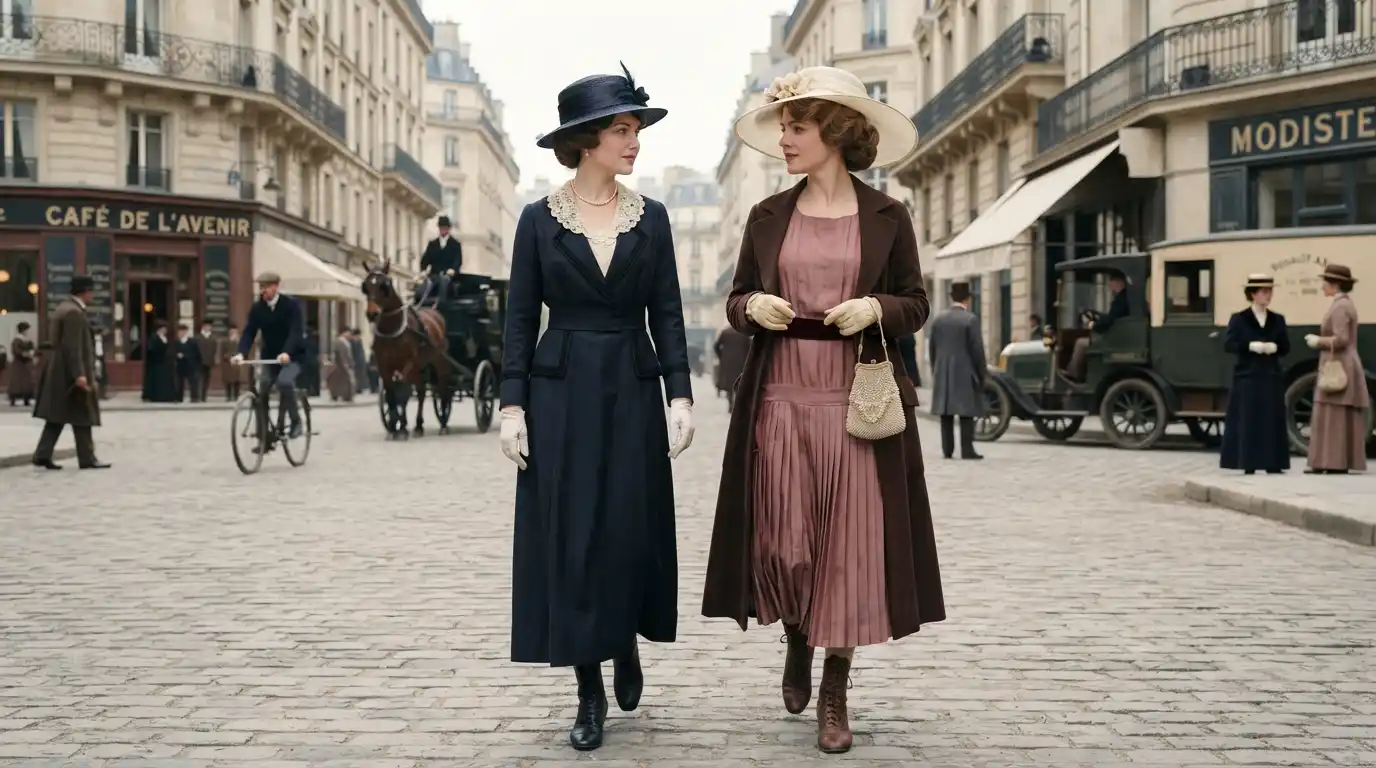
Rather than looking like the fully developed flapper style of the 1920s, women’s fashion in 1919 occupied an important middle ground. Long dresses, hats, gloves, tailored jackets, decorative details, and carefully coordinated accessories remained important, while restrictive construction was gradually giving way to greater practicality.
This transitional character is what makes 1919 women’s fashion so distinctive. It connected the refined clothing traditions of the prewar era with the more relaxed and modern styles that would become prominent during the 1920s.
The Changing Silhouette of 1919 Women’s Fashion
One of the most noticeable changes in 1919 was the movement away from the strongly shaped Edwardian figure. Earlier fashions had emphasized the waist and relied heavily on corsetry and structured garments. By the late 1910s, women’s clothing increasingly favored a straighter and softer outline.
Dresses could still appear elegant and feminine, but they were less dependent on creating an exaggerated hourglass shape. The waist was often positioned higher or became less visually important, while skirts and tunics created a longer vertical effect.
This developing silhouette can also be seen in the broader evolution of traditional craftsmanship and timeless style, where construction, fabric, and detail played an important role in the overall appearance of a garment.
The changes were not identical for every woman. Fashion varied according to income, occupation, age, location, and occasion. Formal clothing could remain elaborate while everyday clothing became increasingly practical.
What Did Women Wear in 1919?
Women’s wardrobes in 1919 included dresses, skirts, blouses, tailored suits, coats, capes, hats, gloves, shoes, and carefully selected accessories. Different garments served different purposes, from work and shopping to afternoon social events and evening occasions.
A typical daytime outfit could combine a relatively simple dress or skirt and blouse with a jacket or coat. Fabrics and decoration varied considerably, with practical materials appearing alongside luxurious textiles for special occasions.
The period’s interest in coordinated clothing can be compared with the modern idea of building a complete look rather than selecting individual pieces in isolation. Contemporary discussions of women’s clothing and personal style reflect a similar principle: the overall combination of garments and accessories helps define an outfit.
1919 Dresses and Their Distinctive Shape
Dresses were central to women’s fashion in 1919. Compared with the highly structured dresses of earlier decades, many designs featured softer construction and a more relaxed relationship between the bodice and skirt.
Skirts were generally longer than the later knee-length dresses associated with the 1920s. The silhouette could be narrow, straight, or gently shaped, while layered tunics and decorative panels added visual interest.
For formal occasions, dresses could feature embroidery, beading, lace, fringe, silk, satin, or other decorative elements. Day dresses tended to be more restrained and practical.
The variety of dress styles also demonstrates why fashion should not be reduced to a single silhouette. Historical clothing changed gradually, and several styles could exist simultaneously. The same principle can be seen when comparing historical fashion with later occasions such as formal dress and prom fashion.
Hats Were an Essential Part of the Look
Headwear was one of the most recognizable features of women’s fashion during the 1910s and remained important in 1919. Hats were not merely decorative additions. They completed an outfit and could dramatically change its overall proportion.
Women wore hats in different shapes and sizes, with decorative ribbons, feathers, flowers, bows, and other embellishments. Some designs had substantial height or broad shapes, while others were more closely fitted to the head.
The importance of hats also shows how accessories could transform an otherwise simple outfit. Fashion history is full of examples where a carefully selected accessory became central to a complete look, much like jewelry and other details explored in the history and appeal of earrings.
Coats, Jackets, and Practical Clothing
Outerwear was another important component of the 1919 wardrobe. Coats and jackets needed to provide warmth and protection while maintaining the fashionable silhouette of the period.
Tailored pieces became increasingly useful as women’s daily activities expanded. Clothing needed to accommodate shopping, commuting, professional work, travel, and social activities rather than being designed exclusively around formal domestic occasions.
The practical side of fashion also connected clothing with new forms of mobility. Women increasingly needed garments that allowed them to move more easily, contributing to the gradual shift away from restrictive construction.
This balance between practical design and visual appeal remains relevant to modern fashion discussions, including contemporary clothing designed for different lifestyles and occasions.
Women’s Shoes in 1919
Footwear changed alongside dress silhouettes. As skirts became somewhat shorter than the floor-length styles of earlier periods, shoes became more visible and therefore more important to the overall outfit.
Women commonly wore shoes and boots with different heel heights and decorative treatments. Lace-up styles and practical footwear could be suitable for daytime use, while more refined shoes were appropriate for evening or formal occasions.
The growing visibility of footwear was part of a larger transformation in women’s clothing. Fashion was gradually becoming less about hiding the body beneath layers of elaborate construction and more about creating a coordinated appearance that allowed greater freedom of movement.
Accessories Added Personality
Accessories gave women an opportunity to personalize clothing without changing an entire wardrobe. Gloves, handbags, belts, jewelry, scarves, hats, and other details could change the appearance of a dress or suit.
This was particularly useful at a time when clothing remained relatively formal. Small changes in accessories could help adapt an outfit for different social situations.
The enduring importance of accessories can also be seen in modern style discussions, including articles about beauty, outfits, and personal presentation and contemporary wardrobe trends.
How World War I Influenced Women’s Clothing
The First World War had a major influence on women’s lives and consequently on clothing. Large numbers of women entered workplaces and took on responsibilities that had previously been dominated by men. Clothing needed to become more practical for these activities.
Wartime restrictions also affected fabric use, decoration, and manufacturing. The result was not simply a single new fashion trend but a gradual adjustment in what women needed from their clothing.
By 1919, the war had ended, but its influence on everyday life remained. Women’s clothing reflected this transition between older formal conventions and the demands of a changing society.
This relationship between social change and clothing is one reason historical fashion remains so useful. Clothing can reveal changes in work, mobility, technology, economics, and cultural expectations.
The Influence of Women’s Changing Social Roles
Fashion does not develop independently from society. In 1919, women’s increasing participation in public life helped create demand for clothing that could accommodate different activities.
Tailored suits and practical separates became increasingly useful, while dresses continued to dominate many social settings. Women could therefore build wardrobes that combined practicality with elegance.
The same relationship between clothing and social identity can be explored through later developments in fashion. For example, fashion designers and modern style movements demonstrate how clothing can reflect broader cultural changes.
Colors, Fabrics, and Decorative Details
Color and fabric choices varied widely in 1919. Wartime years had encouraged restraint in many areas, but the postwar period gradually allowed more decorative possibilities.
Silk, satin, wool, cotton, lace, embroidery, and other textiles appeared in different types of clothing. The quality and availability of fabric often depended on the garment’s purpose and the wearer’s budget.
Decoration could include embroidery, pleating, beading, fringe, ribbons, floral motifs, and carefully placed panels. Rather than relying entirely on a dramatic silhouette, designers could create visual interest through texture and surface detail.
This appreciation for craftsmanship connects naturally with the broader history of fashion and equestrian-inspired clothing, where materials, tailoring, and functional details also contribute to the final appearance.
1919 Fashion and the Road to the 1920s
Perhaps the most important feature of 1919 fashion is that it helped bridge two different eras. The year did not suddenly produce the classic flapper dress. Instead, it continued trends that had already been developing while preparing the way for the more radical styles of the following decade.
By the early 1920s, women’s clothing increasingly featured tubular shapes, lower waistlines, shorter hems, and simpler construction. The transformation was gradual, and 1919 provides an excellent snapshot of the transition.
Later 1920s fashion would become famous for its cloche hats, straight silhouettes, decorative evening dresses, and increasingly visible legs. Understanding the clothing of 1919 makes that later transformation easier to appreciate.
Why 1919 Women’s Fashion Still Matters Today
The appeal of 1919 fashion goes beyond nostalgia. Designers, costume historians, vintage enthusiasts, and fashion researchers continue to examine the period because it captures a moment when traditional clothing was being transformed by modern life.
The period also demonstrates that fashion rarely changes overnight. New styles usually emerge from several existing trends, with older and newer ideas overlapping for years.
Modern interest in vintage clothing reflects this continuing fascination with historical design. Articles about old-fashioned craftsmanship, formal fashion, and women’s clothing show how ideas from earlier eras can continue to influence discussions about personal style.
From 1919 Elegance to Modern Fashion
There is a clear connection between the design principles of 1919 and some modern approaches to fashion. Practicality, coordinated accessories, quality materials, adaptable garments, and personal expression remain important considerations.
Today’s fashion is far more diverse, but the basic idea of using clothing to balance comfort, function, personality, and appearance remains familiar. The popularity of historical-inspired clothing and vintage aesthetics demonstrates that older design ideas can continue to find new audiences.
Even modern seasonal clothing illustrates how fashion repeatedly revisits earlier concepts. The idea of adapting garments to weather, activity, and personal preference can be seen in topics such as seasonal clothing and dressing.
The Lasting Legacy of 1919 Fashion Women
1919 fashion women captures a pivotal moment between the formal elegance of the early twentieth century and the modern style revolution that followed. Women still wore beautiful dresses, carefully decorated hats, gloves, and sophisticated accessories, but clothing was becoming less restrictive and more adaptable.
The year therefore deserves attention not because every woman dressed exactly the same way, but because it reveals fashion in transition. The softer silhouettes, practical garments, changing proportions, and growing importance of mobility helped establish the visual language that would become increasingly prominent during the 1920s.
For anyone interested in vintage style, 1919 offers an especially rich period to explore. It combines the craftsmanship and elegance of an earlier generation with the practical spirit of a society moving toward modernity.