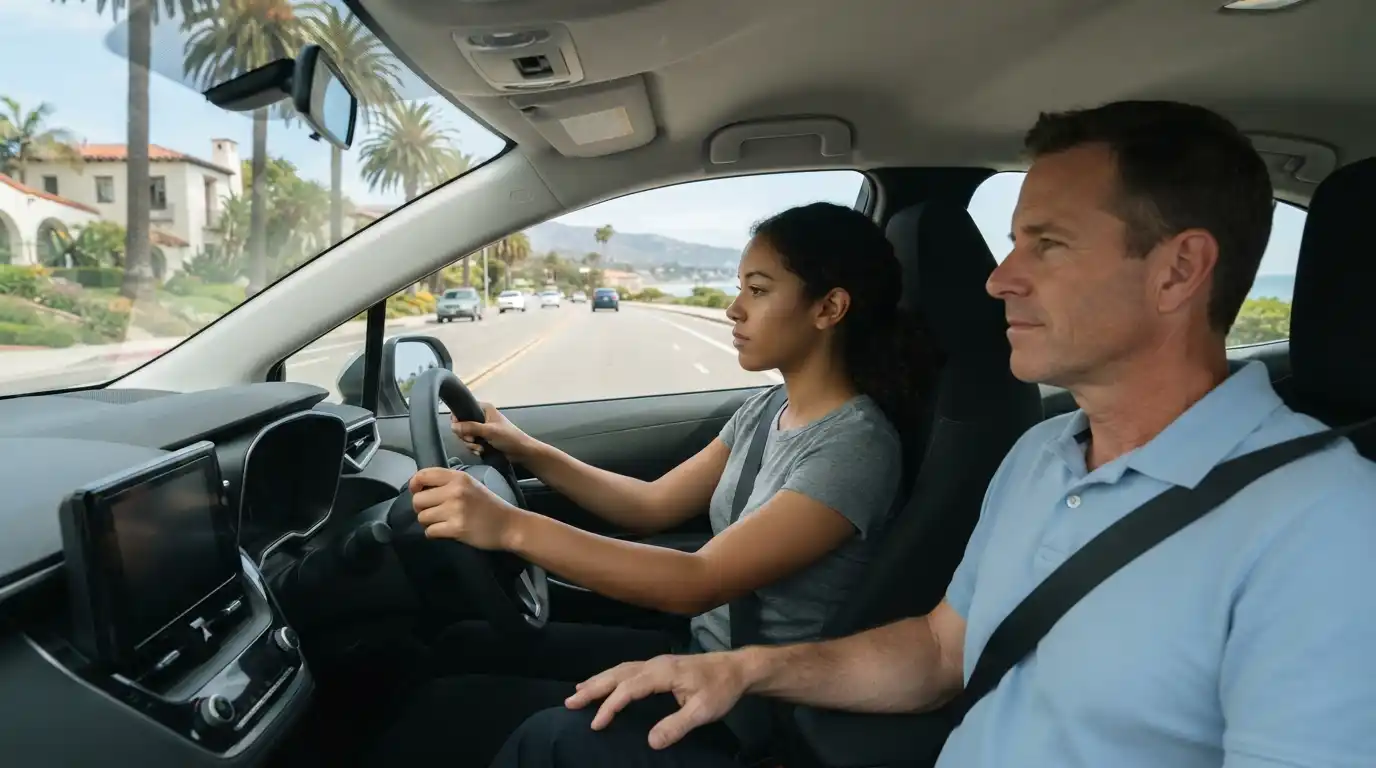
For students preparing to drive independently, structured education can make the transition from classroom concepts to real-world roads much easier. Santa Barbara also offers a useful learning environment because drivers may encounter city streets, busy intersections, residential areas, highways, hills, cyclists, pedestrians, and changing traffic conditions.
Whether you are a first-time driver, a young learner, an adult improving your skills, or someone preparing for a California driving test, a well-organized education program can provide a stronger foundation for confident and responsible driving.
What Is Santa Barbara Driver Education?
Driver education is a structured learning process designed to teach motorists the knowledge and judgment required to operate a vehicle responsibly. It commonly combines traffic-law instruction with lessons about defensive driving, road awareness, vehicle control, and safe decision-making.
For new drivers, education can help explain concepts that are difficult to learn simply by sitting behind the wheel. Understanding right-of-way, following distances, signs, lane positioning, speed management, and hazard recognition gives learners a framework they can apply during practical driving lessons.
Why Driver Education Matters for New Drivers
New drivers have to process many different pieces of information at once. They must control the vehicle while watching traffic, reading signs, anticipating other road users, and making appropriate decisions.
A structured learning approach makes these skills easier to develop progressively. Instead of attempting to master everything at once, learners can focus on individual skills and gradually combine them during more complex driving situations.
This approach is particularly valuable for anyone planning road trips or exploring unfamiliar destinations. GalleryDaily’s travel resources include guides such as places to visit in California during spring break and places to visit in San Diego, where understanding safe driving practices can be useful when traveling by car.
Key Skills Taught Through Driver Education
A strong driver education program should cover both knowledge and practical decision-making. Several core skills deserve particular attention.
1. Vehicle Control
Learners need to become comfortable with steering, braking, accelerating, changing lanes, turning, parking, and maintaining appropriate vehicle positioning. Smooth vehicle control gives drivers more attention for observing their surroundings.
2. Traffic Awareness
Good drivers continuously scan the road rather than focusing only on the vehicle directly ahead. Traffic awareness includes checking mirrors, identifying developing hazards, observing pedestrians and cyclists, and anticipating what other motorists might do.
3. Defensive Driving
Defensive driving means anticipating potential problems and creating enough time and space to respond. Maintaining a safe following distance, avoiding distractions, monitoring blind spots, and adjusting speed to conditions are important defensive habits.
4. Understanding Intersections
Intersections can present several challenges at once. Drivers need to understand signals, signs, turning procedures, pedestrian crossings, lane markings, and right-of-way. Practicing these situations repeatedly helps learners make decisions more naturally.
5. Parking and Low-Speed Maneuvers
Parking is an essential practical skill. Learners should practice parallel parking, backing, turning into parking spaces, checking surroundings, and maneuvering in confined areas without rushing.
Learning to Drive in Different Road Conditions
Safe driving requires adapting to the environment. A driver who is comfortable on a quiet residential street may need additional experience before confidently handling heavier traffic or unfamiliar roads.
Different road environments can require different approaches. Urban streets may involve pedestrians, cyclists, parked vehicles, and frequent intersections. Highways require careful merging, lane discipline, speed management, and greater awareness of surrounding traffic.
Drivers who enjoy traveling should also understand how road conditions can change between destinations. GalleryDaily’s guides to winter destinations in the USA, Texas in spring, and New Mexico illustrate how different travel environments may involve different road and weather considerations.
How to Prepare for a Driving Test
Preparation should involve more than memorizing traffic rules. Drivers should practice applying those rules consistently during real-world situations.
Review the Rules
Begin by reviewing traffic signs, signals, lane rules, right-of-way principles, speed management, and other essential concepts. Understanding the reason behind a rule can make it easier to remember.
Practice Regularly
Short, consistent practice sessions can be more productive than occasional long sessions. Repetition helps learners build automatic responses while leaving room to work on individual weaknesses.
Practice Common Test Skills
Practice turns, stops, lane changes, parking, intersections, mirror checks, signaling, and appropriate speed control. A learner should be able to perform these actions without becoming overwhelmed by the surrounding traffic.
Work on Confidence
Confidence should come from preparation rather than rushing. Drivers should learn to make safe decisions even when another motorist is impatient or traffic becomes more complicated.
Driver Education and Responsible Travel
Driving skills become especially valuable when traveling outside familiar areas. A traveler may encounter unfamiliar intersections, different road layouts, busy tourist areas, parking restrictions, or longer distances than those normally driven at home.
GalleryDaily’s extensive travel collection includes destinations such as South Bali, Switzerland in summer, Norway in winter, and Croatia in summer. Travel planning should always account for the practical realities of getting around safely, particularly when a trip involves extensive driving.
For domestic travelers, destinations such as San Antonio, Boston, San Jose, and Florida can involve very different driving environments. Good preparation allows motorists to concentrate on navigating responsibly instead of reacting to unfamiliar conditions at the last moment.
Common Mistakes New Drivers Should Avoid
Many driving mistakes are caused by habits that seem minor but can become dangerous when repeated.
- Using a phone while driving: Distracted driving reduces attention and reaction time.
- Following too closely: Insufficient space leaves less time to respond to sudden braking.
- Failing to check blind spots: Mirrors do not provide a complete view around the vehicle.
- Driving too fast for conditions: Posted limits do not eliminate the need to adjust speed for circumstances.
- Rushing through intersections: Intersections require active observation and careful decision-making.
- Ignoring fatigue: Tired drivers may have slower reactions and reduced concentration.
- Assuming other drivers will behave perfectly: Defensive drivers prepare for mistakes made by others.
Building Better Driving Habits
Safe driving is ultimately a collection of habits. A learner should develop a routine that includes checking mirrors, scanning ahead, maintaining space, signaling early, controlling speed, and staying focused.
Drivers should also become comfortable with the idea that conditions can change quickly. Traffic volume, weather, road construction, pedestrians, cyclists, and unexpected vehicle movements can all require adjustments.
This principle is useful for travelers as well. Someone planning a trip to the Pacific Northwest during winter, Upstate New York in fall, or the Charlotte area in winter should consider how seasonal conditions may affect driving plans.
How to Choose a Driver Education Program
When comparing driver education options, look beyond convenience. A useful program should provide clear instruction, organized lessons, opportunities for questions, and practical preparation that matches the learner’s experience level.
Consider whether the program explains defensive driving, traffic awareness, safe vehicle operation, and real-world decision-making rather than focusing exclusively on passing an examination.
It is also worth considering the learner’s individual needs. A teenager learning for the first time may need a different structure from an experienced adult driver who wants additional practice or greater confidence.
Safe Driving for Road Trips
Once a driver has developed fundamental skills, longer journeys can provide valuable experience. However, road trips should be planned carefully.
Before leaving, drivers should understand their route, allow adequate travel time, inspect the vehicle, plan rest breaks, and avoid driving when excessively tired. Navigation should be handled in a way that minimizes distraction.
Travelers researching destinations can explore resources such as Japan travel destinations, Spain for families, Mauritius for families, and Italy with kids. When a trip involves driving, transportation planning should be treated as part of the overall travel experience.
Why Safe Driving Is a Long-Term Skill
Completing driver education is not the end of learning. Drivers continue developing their judgment through experience. New situations can teach motorists how to manage traffic, weather, unfamiliar roads, and unexpected hazards.
The goal should therefore be to develop habits that remain useful long after a driving test has been completed. Patience, awareness, preparation, and responsible decision-making are valuable regardless of where the vehicle is being driven.
Final Thoughts
Santa Barbara driver education can provide new motorists with the knowledge and practical foundation needed to approach the road responsibly. By combining traffic knowledge with defensive driving, regular practice, hazard awareness, and good decision-making, learners can become safer and more capable drivers.
Whether you are preparing for your first license, improving existing skills, or planning future road trips, the most valuable objective is not simply passing a test. It is developing driving habits that support safety, awareness, and confidence every time you get behind the wheel.