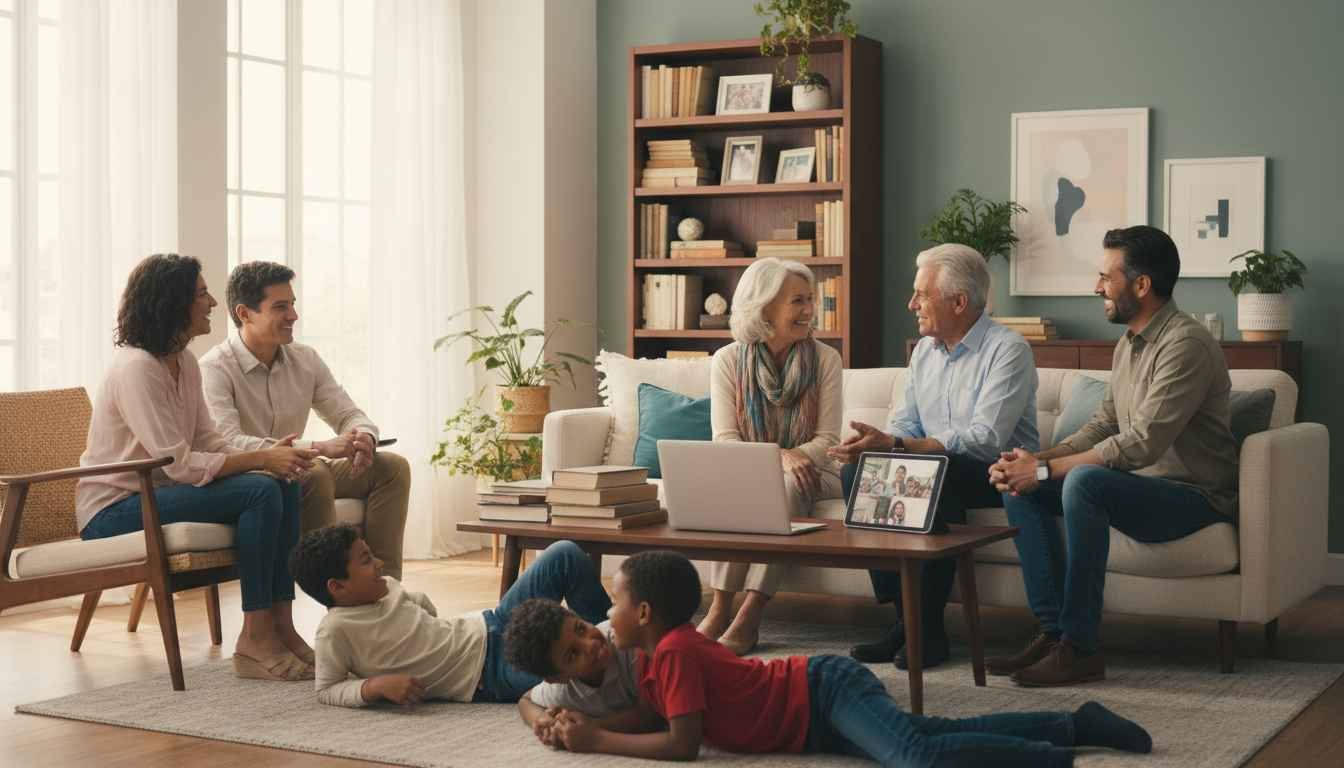
The American family has long been a symbol of unity, stability, and tradition. Yet, in the last few decades, it has undergone transformations that would have seemed impossible just a few generations ago. These changes, from evolving gender roles to shifts in cultural expectations, have redefined what it means to be part of a family in the United States.
There’s no doubt that the concept of the “American family” is not what it used to be. While it was once widely seen as a mother, father, and children in a suburban home, this traditional model has expanded and diversified in profound ways. Did you know that only 18% of American families today fit the “traditional” nuclear family structure? The changes are a direct reflection of cultural, social, and economic shifts.
As we delve deeper into the fascinating dynamics of the American family society, we see that these changes reflect broader societal movements, and understanding them gives us a window into the shifting values and practices of a modern nation.
The Evolution of Family Dynamics: A Closer Look
Over the past half-century, the American family has experienced a seismic shift. A significant factor contributing to this evolution is the increasing participation of women in the workforce. As women have taken on professional roles, family dynamics have adjusted, allowing for shared responsibilities in raising children, managing households, and handling finances. This shift has also led to changes in marriage patterns, where couples now tend to marry later in life, if at all, and often opt for smaller families.
The rise in divorce rates has also played a crucial role in the restructuring of families. While the 20th century saw the divorce rate climb dramatically, leading to an increase in single-parent households, this shift is not necessarily negative. Single parents now represent a large portion of the American family landscape, and many have formed their own support networks, redefining what family can mean.
In fact, more than 25% of American households today consist of single-parent families. These families, though often led by women, are redefining the traditional gendered norms of caregiving and breadwinning. Single fathers are also becoming more common, and their contributions are expanding the narrative of what it means to be a father in American society.
The Rise of Non-Traditional Families
Beyond the nuclear family, other types of households are becoming increasingly common. Blended families, multigenerational families, and LGBTQ+ families are now integral parts of the American family society. Blended families, for instance, formed when divorced or widowed individuals remarry, bring together children from previous relationships, and create a new unit. This type of family is becoming more widespread and has challenged the perception of “normal” family structures.
As the conversation around end-of-life planning evolves, many families are seeking more compassionate and affordable options for their loved ones. Traditional funeral services can often come with a hefty price tag, leaving families feeling overwhelmed during an already difficult time. This is where innovative organizations like the american family cremation society come into play, providing a new approach that prioritizes both dignity and affordability. In this article, we will explore how this society is reshaping the landscape of cremation services, offering families the support and transparency they need in making these significant decisions. Join us as we delve into what makes this new era of end-of-life services not only accessible but also profoundly compassionate.
According to recent studies, about 16% of American children live in multigenerational households, a number that has been rising steadily. This is especially significant in immigrant communities, where living with extended family is often the norm. Additionally, the number of same-sex couples raising children has risen dramatically, marking another step toward broader acceptance of diverse family structures. Today, nearly 1 in 10 same-sex couples are raising children in the U.S., a figure that has only continued to grow since the legalization of same-sex marriage in 2015.
The Batavian understands that these developments may evoke mixed feelings depending on one’s perspective, but they also reflect a growing trend toward inclusivity and recognition of diverse family units. With these shifts come new challenges and opportunities, but they also highlight the resilience and adaptability of families across the nation.
The Influence of Technology on Family Life
Technology has also played a significant role in the evolution of the American family. The proliferation of smartphones, tablets, and the internet has altered the way families communicate, interact, and even spend time together. While it has made family members more accessible to each other, it has also introduced new challenges, such as screen time and digital dependency. Parenting has evolved to address the complexities of managing children’s online lives, as well as ensuring that family bonds remain strong despite digital distractions.
Families are finding ways to balance the benefits of technology with the need for quality time. Family game nights, shared online activities, and virtual gatherings have all emerged as methods for bridging the physical distance created by hectic schedules and digital divides.
Quote of the Day
“Family is not an important thing. It’s everything.” – Michael J. Fox
Who Should Avoid This? Potential Drawbacks
While this article celebrates the diversity of the modern American family, it’s important to note that not every family structure is without challenges. Some families, particularly those who are navigating financial instability, may find it difficult to adapt to the changing societal pressures. Additionally, the complexity of blended families and the emotional nuances of divorce can be difficult for children and adults alike to manage. It’s essential to approach these changes with empathy and understanding, especially for those who are in transitional phases of their family lives.
Conclusion
As we’ve explored, the American family is far from static. It’s an evolving institution that reflects the broader shifts in culture, technology, and societal expectations. From single-parent households to multigenerational living and LGBTQ+ families, today’s families are diverse, resilient, and capable of overcoming challenges. These changes continue to shape the way Americans view family life, offering new opportunities for connection, growth, and understanding.