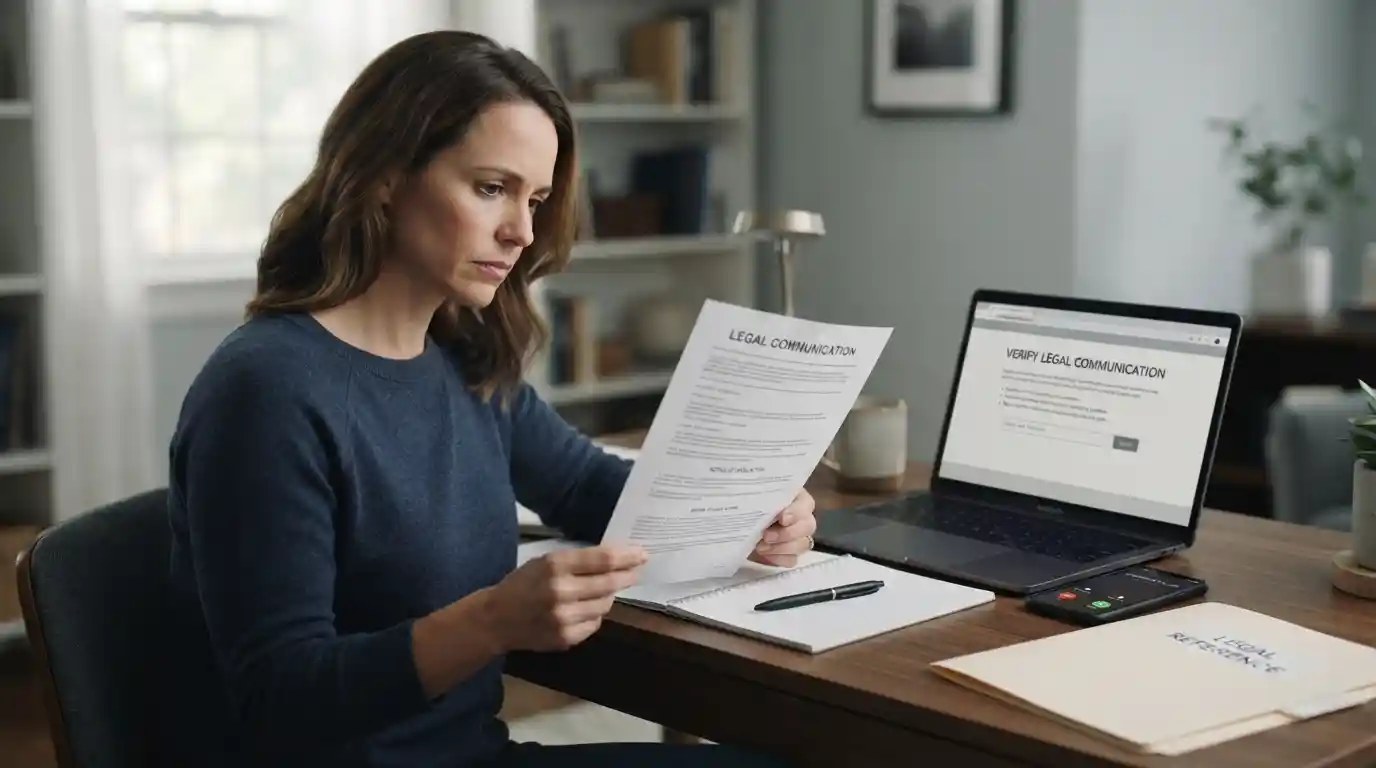
The name of a legal organization alone does not establish that a communication is legitimate. A responsible approach is to confirm the identity of the organization, determine what type of matter is being discussed, request appropriate documentation, and use independently verified contact information.
This guide explains how to approach communications associated with Reinhardt Legal Group, what information to look for, which warning signs deserve attention, and how to protect yourself while determining whether a legal claim is genuine.
What Is Reinhardt Legal Group?
Reinhardt Legal Group is a name that may appear in communications involving alleged debts, legal claims, or requests for a recipient to contact an office. However, consumers should not assume that every communication using a particular business or law-firm name was actually sent by the organization named in the message.
Names, phone numbers, business identities, and other professional information can be misused in fraudulent communications. For that reason, the safest approach is to evaluate the specific communication rather than relying only on the name displayed on caller ID, a voicemail, an email address, or a letter.
If you are researching a legal organization because you received a demand for payment or a threat of legal action, it can also be useful to understand related topics such as legal guidance and assistance, legal service organizations, and legal compliance and verification.
Why Verification Matters
Legal communications can create pressure because they often involve serious consequences. A person who receives a message mentioning a lawsuit, summons, court date, or additional charges may feel compelled to respond immediately.
That urgency is precisely why verification matters. A legitimate legal matter should be capable of being independently investigated. You should be able to determine who is contacting you, why they are contacting you, what legal matter they are referring to, and how you can verify the claim through appropriate channels.
Verification is especially important when the communication does not provide enough information to identify the underlying matter. A vague demand without supporting documentation should not automatically be treated as proof that a legal case exists.
Common Information to Check
When you receive a communication connected to Reinhardt Legal Group or any other legal organization, start by collecting the information contained in the message.
- The exact name of the organization
- The name of the person contacting you
- The organization’s physical address
- The telephone number used to contact you
- The alleged creditor or claimant
- The amount allegedly owed, if applicable
- The reference, account, or case number
- The alleged court or jurisdiction
- The date associated with the claimed legal action
- Instructions for requesting written documentation
Keep the original voicemail, email, letter, text message, or other communication. Having the original information available makes it easier to compare details and identify inconsistencies.
Do Not Rely Only on Caller ID
Caller ID is useful for identifying a caller at a basic level, but it should not be treated as conclusive proof of identity. Phone numbers and displayed caller information can be manipulated or misrepresented.
If someone contacts you claiming to represent a legal organization, avoid assuming that the number appearing on your phone is the correct number for that organization. Instead, independently locate reliable contact information and use that information to verify the communication.
This principle applies beyond legal calls. Similar verification habits are useful when dealing with insurance organizations, financial companies, collection-related communications, and other businesses handling sensitive personal information.
Be Careful With Requests for Personal Information
A caller may ask for information to confirm your identity or discuss an alleged account. However, you should be cautious before providing sensitive information during an unsolicited communication.
Do not automatically provide your Social Security number, bank account information, debit card number, credit card information, passwords, security codes, or other sensitive credentials simply because someone claims to be calling from a legal organization.
Instead, explain that you will independently verify the matter before discussing sensitive information. A legitimate organization should not require you to abandon reasonable verification practices.
What If the Communication Mentions a Debt?
Some communications using legal language may relate to an alleged debt or financial obligation. If the message concerns money you supposedly owe, identify the original creditor and request sufficient information to understand the claim.
Do not assume that an unfamiliar debt is automatically yours. Check your own records and compare the details against accounts you recognize.
It can also help to understand the difference between a genuine financial obligation, a disputed account, a collection communication, and a potentially fraudulent demand.
For broader financial context, you can also review related topics such as financial services and funding, financial solutions, and financial agreements involving property.
Ask for Written Documentation
When a communication concerns a legal or financial claim, written documentation can provide important context. Ask for information that allows you to understand the identity of the claimant, the basis of the claim, and the nature of the alleged obligation.
Documentation is particularly useful when a caller gives only a short verbal explanation. Rather than making decisions based entirely on a phone conversation, review the information carefully and determine what additional verification is appropriate.
Keep copies of everything you receive. If you send correspondence, retain your own copy along with the date and method of delivery.
Understand the Difference Between a Demand and a Court Document
People sometimes use terms such as “lawsuit,” “summons,” “court,” or “legal action” interchangeably. These terms can have very different meanings.
A demand or collection communication is not necessarily the same thing as an officially filed court case. Similarly, receiving a telephone call about possible legal action is not the same as being formally served with court documents.
If someone claims that a court case exists, ask for enough information to independently determine the relevant court, jurisdiction, case number, and parties involved. If actual court documents are served, read them carefully and pay attention to any deadlines.
When documents are involved, proper handling is important. Topics such as legal document preparation and document organization can provide useful general context, although they do not replace advice from a qualified attorney.
Warning Signs That Deserve Attention
Several characteristics should encourage you to pause and verify a communication before taking action.
- The caller refuses to provide basic identifying information.
- You are pressured to pay immediately.
- The communication relies heavily on threats or intimidation.
- You are told not to discuss the matter with anyone else.
- You are asked to send money through an unusual payment method.
- The caller refuses to provide documentation.
- The alleged debt or legal matter is completely unfamiliar.
- Contact information changes repeatedly.
- The communication contains inconsistent names, case details, or amounts.
- You are discouraged from independently verifying the claim.
One warning sign does not necessarily prove that a communication is fraudulent. However, several warning signs together should make independent verification a priority.
What You Should Do Before Making a Payment
Never let an unexpected legal communication force you into an immediate financial decision.
Before paying, determine exactly who is requesting the payment and why. Verify the underlying obligation, obtain appropriate documentation, and confirm the organization through independently sourced contact information.
Be particularly cautious if the caller insists that payment must be made immediately to avoid arrest, additional criminal charges, or some other extraordinary consequence. Statements involving serious legal consequences should be independently verified rather than accepted at face value.
If the matter involves an insurance dispute or claim, understanding the relevant coverage may also be important. Related resources such as insurance coverage information, insurance-related services, and medical insurance coverage can provide broader background on insurance-related matters.
How to Verify a Legal Organization
A practical verification process can be completed in several steps.
- Write down the organization’s exact name. Avoid relying on an abbreviated name or a name you remember from a voicemail.
- Record the contact information. Save the phone number, email address, mailing address, and any website provided.
- Look for independent information. Do not rely exclusively on links or contact details supplied in an unexpected message.
- Check the relevant professional licensing authority. If the organization claims to represent attorneys, determine which jurisdiction is involved and whether the relevant attorneys can be independently verified.
- Confirm the underlying case or claim. If a court proceeding is alleged, identify the court and case information when possible.
- Request documentation. Ask for written information explaining the claim.
- Get professional advice when necessary. If you believe an actual legal proceeding may affect your rights, consult a qualified attorney in the relevant jurisdiction.
Why Legal Verification Is Different From Legal Advice
Verifying whether a communication is genuine is not the same as receiving legal advice about the underlying dispute.
You may be able to determine whether information appears consistent without deciding whether you are legally responsible for a debt, whether a claim is enforceable, or how you should respond to a lawsuit.
Those questions can depend on jurisdiction, contracts, statutes, procedural rules, deadlines, and the specific facts of your situation. If the matter appears genuine or you have received formal legal documents, professional legal advice may be appropriate.
Resources about other legal organizations, including legal service providers, can help readers understand how different legal organizations may present their services, but every organization should still be evaluated independently.
Keep a Complete Record
If you are dealing with an unexpected legal communication, create a simple record of what happens.
Save voicemails, emails, letters, screenshots, payment requests, caller numbers, names, dates, and any documents you receive. Write down when you spoke with someone and summarize what was discussed.
A detailed record can become particularly valuable if the situation develops into a formal dispute or if you need to explain the communication to an attorney, consumer-protection organization, financial institution, or another relevant authority.
Do Not Ignore Genuine Court Documents
Being cautious about suspicious communications does not mean ignoring every legal notice. If you receive documents that appear to come from a court, take them seriously and review the information promptly.
Court documents can contain response deadlines that are different from ordinary business correspondence. If you are unsure whether documents are genuine, independently verify them through the appropriate court rather than simply ignoring them.
The same principle applies to legal notices involving property, insurance, employment, contracts, or other disputes. Understanding the difference between ordinary correspondence and formal legal documents can help you respond appropriately.
Questions to Ask Before Responding
If you receive a communication associated with Reinhardt Legal Group, consider asking the following questions before taking action:
- Who exactly is contacting me?
- What organization do they represent?
- What is the legal or financial basis of the communication?
- Who is the original claimant or creditor?
- What is the account, reference, or case number?
- Which court or jurisdiction is involved, if any?
- Can I receive the information in writing?
- How can I independently verify the organization?
- What documentation supports the claim?
- Is there an actual deadline, and where is that deadline documented?
Protecting Yourself From Legal-Communication Scams
Scammers often use professional-sounding language because it can make a demand appear more credible. Legal terminology can be especially intimidating when the recipient is unfamiliar with court procedures or debt-collection practices.
The best defense is not simply recognizing one particular name or phone number. It is developing a repeatable verification process that works regardless of which organization contacts you.
That process should include independent verification, careful documentation, skepticism toward unexpected payment demands, and professional advice when the situation involves genuine legal rights or obligations.
When You Should Speak With an Attorney
Consider consulting a qualified attorney when you have received formal court documents, believe a lawsuit has actually been filed, face a significant financial claim, are unsure about your legal rights, or need help responding to a legal demand.
An attorney can evaluate the facts of your individual situation and explain what options may be available under the law applicable to your jurisdiction.
Do not assume that an online article, a telephone caller, or an organization’s marketing material can substitute for individualized legal advice.
Final Thoughts on Reinhardt Legal Group
Searching for Reinhardt Legal Group may happen because someone has contacted you about an alleged legal matter, debt, or other obligation. The safest response is neither to panic nor to automatically dismiss the communication.
Instead, verify the identity of the organization, preserve the original communication, request appropriate documentation, independently confirm any claimed legal proceeding, and avoid sharing sensitive financial information until you understand who you are dealing with.
If the matter appears genuine, especially if formal court documents are involved, obtain advice from a qualified attorney who can assess your specific circumstances. A careful verification process gives you time to separate legitimate legal issues from suspicious or misleading communications and make a more informed decision about what to do next.
For readers researching broader legal and compliance topics, related resources covering legal assistance, legal compliance, legal solutions, and legal requirements and regulations can provide additional context.